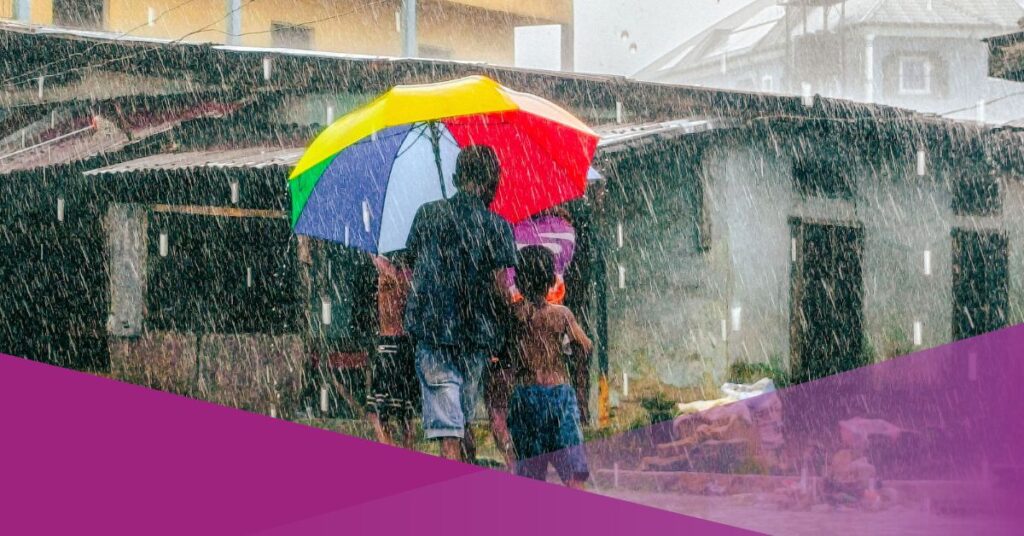
Residents of Banjarsari Hamlet in Bareng Village, Bareng District, Jombang Regency, East Java, have revived an ancestral ritual involving the bathing of a cat as they wait for rain following a prolonged dry season.
The ritual took place on Sunday, 4 October 2026, after the hamlet’s farmland remained parched through the end of September. With irrigation water in short supply, farmers had been unable to begin planting rice.
Around 90 per cent of residents in Banjarsari depend on agriculture, making the lack of water a growing concern for the community.
The situation eventually prompted residents to approach Samiaji Mijek, an artist, arts activist and community leader in the hamlet, to ask what could be done.
“Residents came to me asking what to do, wondering why it hadn’t rained for so long,” Mijek said, as quoted by Pikiran Rakyat.
According to Mijek, the ritual is part of the community’s ancestral heritage. In the past, villagers used ilmu titen, a traditional practice of observing natural signs to understand seasonal changes. If there were still no signs of rain by September, village elders would consider taking other measures.
This time, the community turned to the old tradition as a form of prayer and spiritual effort, rather than simply waiting for the weather to change.
A Cat, Dawet and a Genderuwo Mask
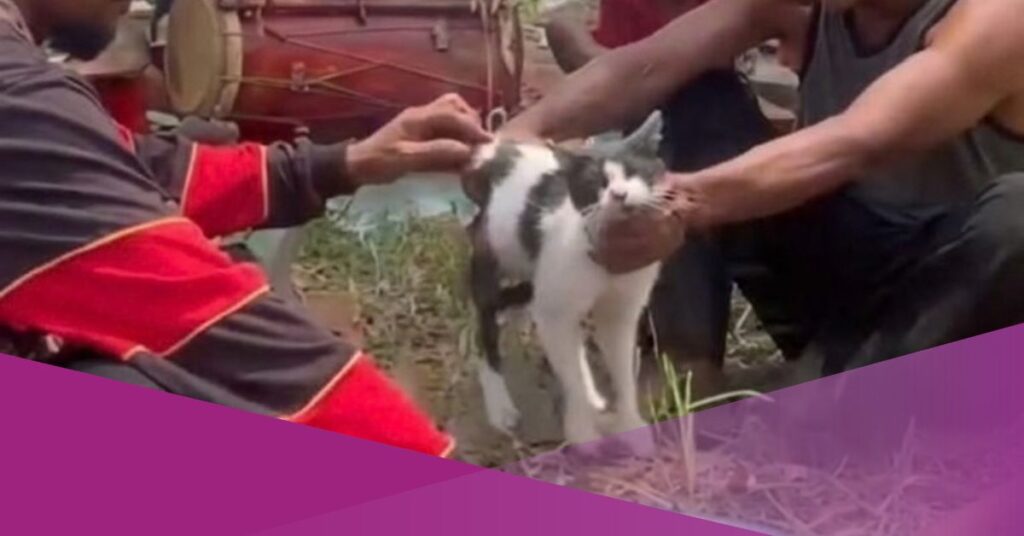
The ritual was held in the local rice fields, where a condromowo cat was bathed using dawet, a traditional Indonesian drink similar to cendol, mixed with floral-infused water.
The cat chosen for the ritual was a male condromowo, identified by its three-coloured coat, known in Javanese as belang telon. Mijek said the choice carries a symbolic meaning connected to religion, customary practices and tradition.
“A condromowo is a male cat with three colours—belang telon. Belang telon implies the resolution of complexities—unravelling the knots—represented by these three elements: religion, customary practices and tradition,” he said.
The cat was bathed by a person wearing a genderuwo mask. In Javanese folklore, a genderuwo is a mythical forest spirit, and its appearance in the ritual has a more symbolic role than simply adding an unusual character to the procession.
“The person performing as the genderuwo—a mythical forest spirit—wears the mask to symbolise the nature of prayer: a private communion known only to the individual and God. Others should not actually know our deepest wishes,” Mijek explained.
The genderuwo mask dance has also historically been associated with efforts to ward off misfortune, including plagues and other calamities.
The dawet used during the ritual carries its own meaning. Mijek explained that, in Javanese interpretation, it represents the hope that complicated matters will gradually be untangled.
“As for the dawet—in Javanese terms, it signifies—God willing—the unravelling of tangled matters. It is meant to bring calm to the anxious and hasten the arrival of rain,” he said.
Lihat postingan ini di Instagram
Sebuah kiriman dibagikan oleh The Smart Local Indonesia (@thesmartlocalid)
For the farmers involved, the ritual was prompted by a dry season that had lasted longer than expected. Mijek said the tradition is not normally performed during an ordinary dry season, but is considered when drought becomes severe enough to disrupt farming.
“At its core, this tradition is a plea for rain; because the drought has felt excessively long due to global warming and the likely influence of the El Niño phenomenon, the farmers took the initiative to carry out this ritual,” he said.
The community’s message was ultimately simple: they need water to get back to work.
“This dry season has dragged on for quite a while; we wouldn’t be performing this tradition if it hadn’t. The drought has been excessive. Rain should have started falling by now. That is why we are holding this as a final prayer, asking God for rain to come soon,” Mijek said.
“We can’t plant crops because there is no water yet—no irrigation available for farming. Usually, God willing, we would have started by this time of year,” he added.