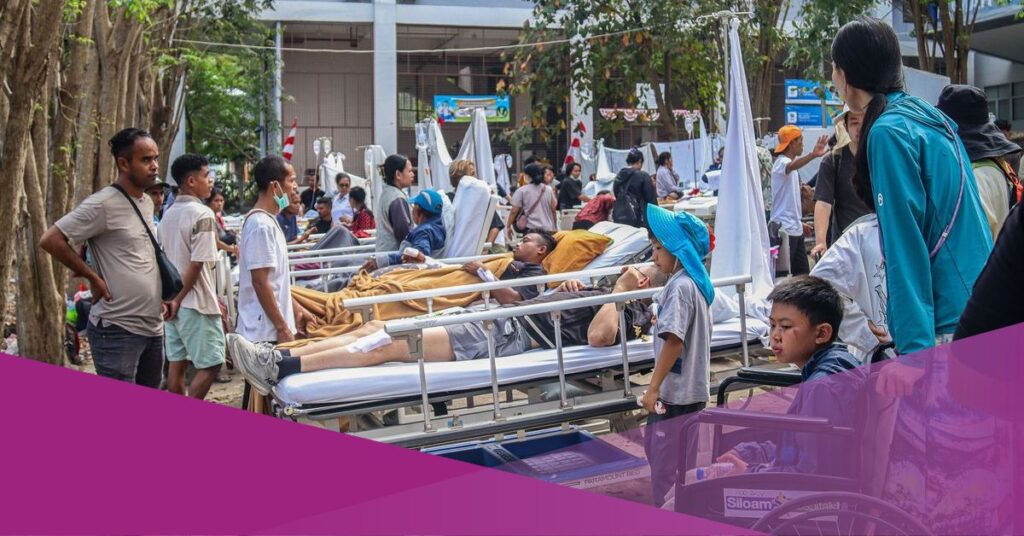
The death toll from the magnitude 7.7 earthquake that struck East Nusa Tenggara (NTT) on Saturday, 15 August 2026, has risen to 68, with 213 people reported injured, according to Indonesia’s National Disaster Management Agency (BNPB), as reported by ANTARA News.
The earthquake struck Flores early on Saturday morning, with its epicentre near Nagekeo in NTT. The shallow earthquake caused widespread damage across several regencies, triggering landslides, disrupting roads and communications, and forcing thousands of residents to seek temporary shelter.
The disaster has become one of Indonesia’s deadliest earthquakes in recent years, coming as the country marked its 81st Independence Day on 17 August.
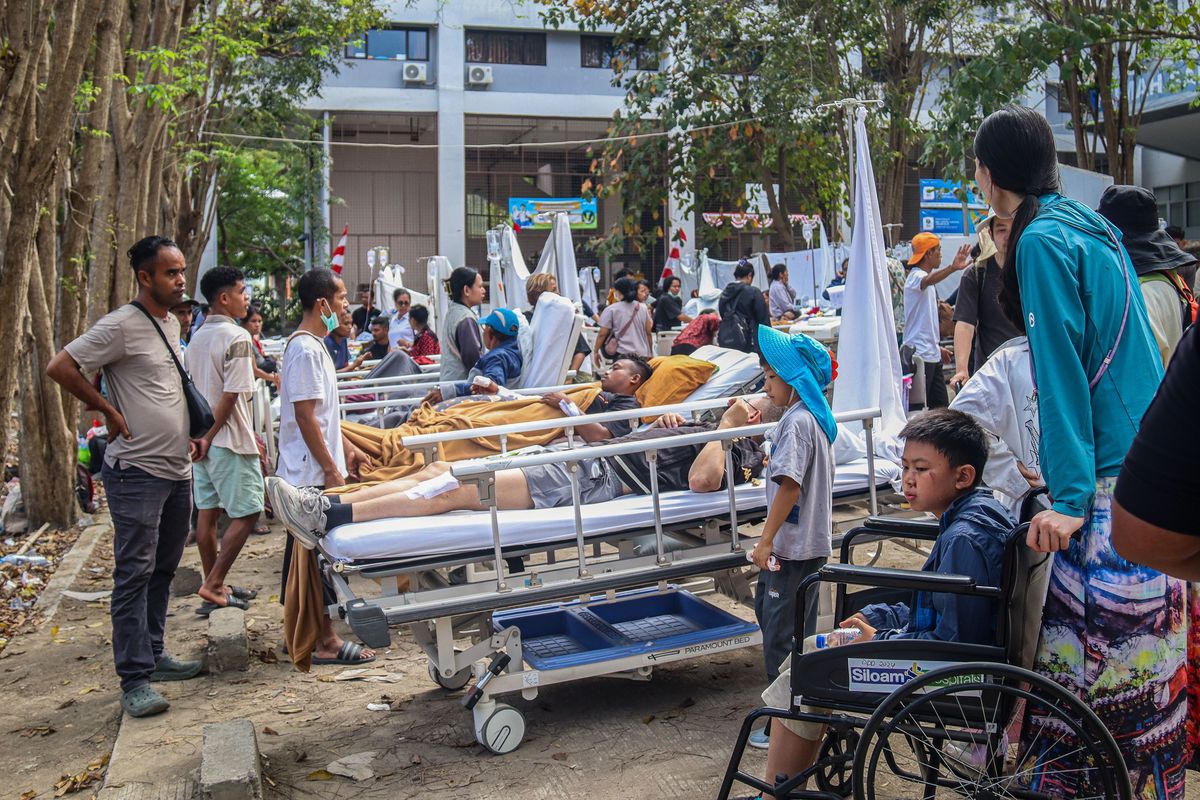
NTT Declares 14-Day Emergency Response
The East Nusa Tenggara provincial government has declared a 14-day emergency response period, running from 15 to 28 August 2026.
The declaration allows authorities to accelerate rescue operations, damage assessments, evacuation, medical assistance and the distribution of essential supplies to affected communities.
BNPB said emergency teams remain deployed across the worst-hit areas, while local disaster management agencies continue updating information on casualties and infrastructure damage.
Death Toll Rises to 68
As of Monday, 17 August, BNPB reported 68 deaths and 213 injuries. The fatalities were recorded across several regencies, with Manggarai and East Manggarai among the hardest-hit areas. BNPB said the casualty figures remained subject to verification as emergency teams continued working in affected communities.
Rescue and relief operations have also been complicated by damaged roads, landslides, power disruptions and difficult access to several villages.
More Than 4,500 Homes Damaged
Thousands of homes have been damaged across NTT, with the latest figures showing more than 4,500 residential properties affected. BNPB said local disaster management agencies were continuing to verify the extent of the damage.
According to BNPB’s update on Monday evening, the recorded residential damage included:
- Nagekeo: 116 homes severely damaged, six moderately damaged and 42 lightly damaged.
- Ende: 108 homes severely damaged, 85 moderately damaged and 268 lightly damaged.
- Manggarai: 761 homes severely damaged, 76 moderately damaged and 147 lightly damaged.
- East Manggarai: 23 homes severely damaged, 15 moderately damaged and 11 lightly damaged.
- West Manggarai: 481 homes severely damaged, 202 moderately damaged and 231 lightly damaged.
- Ngada: 1,796 homes affected. The local BPBD is still verifying the classification of the damage.
- Sikka: 145 homes severely damaged, 16 moderately damaged and 12 lightly damaged.
The figures indicate at least 4,541 homes with recorded damage, although the total remains subject to further verification.
The earthquake has also damaged public infrastructure, including places of worship, health facilities, schools, government offices and roads.
The scale of damage to health infrastructure has forced some medical services to operate from temporary facilities, while emergency supplies continue to be delivered to affected communities.
Search and Rescue Teams Remain on Standby
Although authorities have reported that no residents are currently missing, joint search and rescue teams remain deployed.
BNPB said the operation includes 63 personnel from Basarnas and around 1,799 members of the wider Search and Rescue potential network.
Teams have been prioritising Manggarai and East Manggarai, where difficult terrain and damaged infrastructure continue to complicate access.
Authorities have also continued distributing food, water, medicine, tents and other emergency supplies. Military and police personnel have been involved in the logistics operation, with more than 100 tonnes of emergency supplies reportedly being transported to affected areas.
Aftershocks Continue Across Flores
The earthquake has been followed by a prolonged sequence of aftershocks. Indonesia’s National Support Post recorded 1,576 aftershocks, with the strongest measuring magnitude 6.2.
The Meteorology, Climatology and Geophysical Agency (BMKG) said 54 of the aftershocks were felt by residents.
Seismic activity remains fluctuating, and BMKG said a clear pattern of decline has yet to emerge. Authorities expect conditions to gradually become more stable over the next two to three weeks, while warning residents to remain alert.
The initial earthquake was shallow, increasing the impact of the shaking across Flores. The disaster also temporarily prompted tsunami warnings before authorities lifted them after monitoring showed no continuing major tsunami threat.
International Condolences and Offers of Support
The scale of the disaster has drawn attention beyond Indonesia, with expressions of sympathy and support emerging from several governments and international leaders.
Iran’s President expressed condolences to Indonesia and indicated a willingness to provide assistance. The president of South Korea also conveyed condolences through social media, while Vietnam and Saudi Arabia were among the countries expressing solidarity with Indonesia.
China has also offered support. Chinese Foreign Ministry spokesperson Lin Jian said Beijing was closely monitoring developments and was prepared to extend assistance according to the needs identified by the Indonesian government.
The Vatican has likewise expressed solidarity with those affected by the disaster, with Pope Leo XIV joining international calls for prayers for victims and their families.
The international response comes as Indonesia mobilises its own national resources for the emergency operation, with the government prioritising search and rescue, medical treatment, shelter and the restoration of access to isolated communities.
Damage to Public Facilities and Tourism Infrastructure
The earthquake has also affected infrastructure important to daily life and tourism across Flores.
Public facilities, including schools, health centres, religious buildings, government offices and roads, have sustained damage. The disruption is particularly significant in communities that rely on road connections between towns and regencies.
Tourism infrastructure has also been affected in parts of Flores. The Jayakarta Suites Komodo-Flores is located in Labuan Bajo, one of the island’s major tourism gateways, although reports currently available do not provide sufficient verified information to establish the extent of earthquake damage to the property.
Air transport remains another important consideration for the region. Several airports in Flores have faced operational disruptions during 2026 due to other emergencies, including volcanic activity, underscoring the logistical challenges involved in maintaining access to the island.
Relief Efforts Continue
For residents across NTT, the immediate priority remains finding safe shelter, accessing medical care and receiving food, clean water and other essential supplies.
With aftershocks continuing and damage assessments still underway, authorities have urged residents to follow official information and avoid entering buildings that may have been structurally compromised.
The full scale of the disaster is expected to become clearer as BPBD teams reach more remote communities and complete their assessments.
Indonesia, which sits along the Pacific Ring of Fire, remains highly exposed to earthquakes, volcanic eruptions and other geological hazards. The events in Flores have once again highlighted the importance of resilient infrastructure, emergency preparedness and rapid access to affected communities.
This article will be updated as BNPB, BMKG and local authorities release new information.