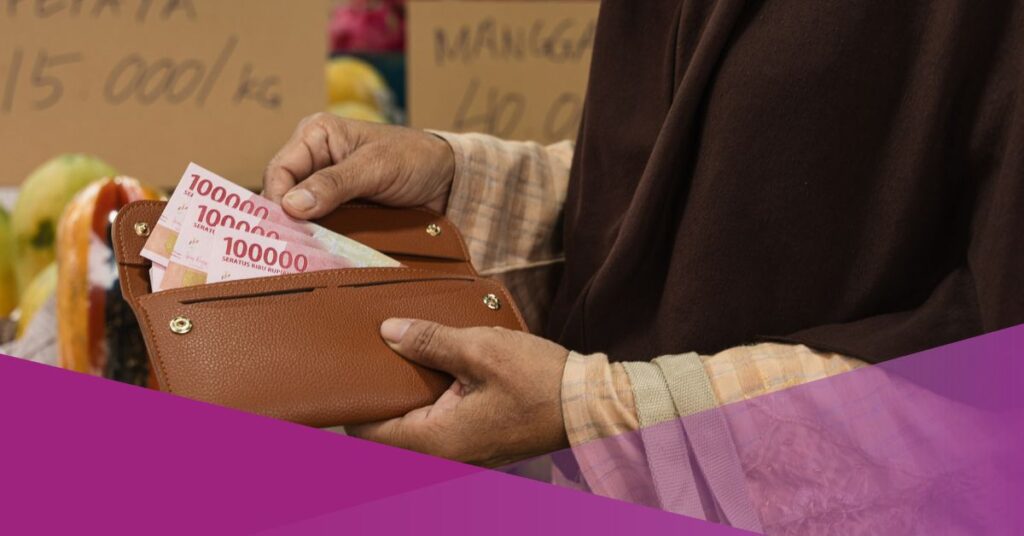
The exchange rate of the rupiah against the US dollar has once again become a focus of public attention after hitting a level of around Rp17,600 per US dollar in recent weeks. This depreciation has sparked concerns among market participants and the public as it has the potential to affect the prices of imported goods, inflation and purchasing power.
According to market trading data on Friday (15 May 2026), the rupiah briefly stood at around Rp17,596 per US dollar. This figure is below the exchange rate assumption in the 2026 State Budget, which is set at around Rp16,500 per US dollar.
The weakening of the rupiah comes amidst a global strengthening of the US dollar and rising international economic uncertainty. Pressure on global financial markets has led to a number of emerging market currencies weakening against the US dollar.
Weakening of the Rupiah Seen as Having Widespread Impact
Economic analysts believe that the weakening of the rupiah could have an indirect impact on the wider public, including rising prices for imported goods and increased industrial production costs.
Products that remain dependent on imported raw materials—such as wheat, soya, and industrial components—are expected to see price rises if the exchange rate continues to weaken. This situation could also affect the prices of everyday necessities in the domestic market.
Furthermore, the weakening of the rupiah could increase operational costs for companies with payment obligations in US dollars. The impact could trigger inflationary pressure and affect the stability of domestic goods prices.
In response to this situation, President Prabowo Subianto has asked the public not to be overly concerned about fluctuations in the dollar exchange rate.
In a statement made whilst attending an event in Nganjuk, East Java, Prabowo noted that people in rural areas do not, in general, use dollars in their daily activities.
“People in the villages don’t use dollars,” said Prabowo when addressing the weakening of the rupiah against the US currency.