The Meteorology, Climatology, and Geophysics Agency (BMKG) has confirmed that a total lunar eclipse will be visible across Indonesia on Tuesday, 3 March 2026. The phenomenon can be observed from all regions, including Sumatra, Java, Kalimantan, Sulawesi, Bali, Nusa Tenggara, Maluku and Papua.
According to the 2026 Almanac released by BMKG, the peak of the eclipse will occur at 6.34 pm Western Indonesian Time (WIB). The agency stated that the event can be seen directly without special equipment.
BMKG confirmed that all parts of Indonesia will experience the peak phase of the total lunar eclipse. In addition to Indonesia, the eclipse will also be visible from the Americas, Australia, and most parts of East Asia, Southeast Asia and Central Asia.
The eclipse is one of four astronomical events scheduled for 2026. BMKG data show that the year will feature two lunar eclipses and two solar eclipses. Of these, the total lunar eclipse on 3 March is considered the easiest to observe because it does not require protective glasses.
Understanding the Lunar Eclipse Phenomenon
A lunar eclipse occurs when the Earth blocks sunlight from reaching the Moon. This event can only take place during a full moon, when the Sun, Earth and Moon align in a straight line.
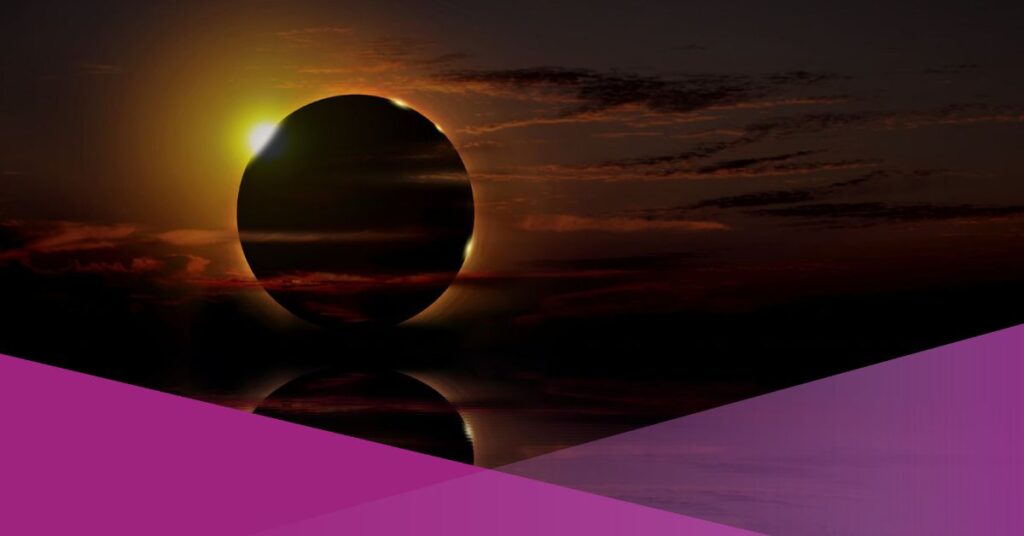
During a total lunar eclipse, the entire surface of the Moon enters the Earth’s inner shadow, known as the umbra. As a result, the Moon appears reddish in colour. The phenomenon is commonly referred to as a “Blood Moon”.
The red appearance occurs because the Earth’s atmosphere refracts sunlight. Light with longer red wavelengths passes through the atmosphere more easily and is then cast onto the Moon’s surface.
Unlike a solar eclipse, a lunar eclipse is safe to observe with the naked eye. BMKG stated that people only need a clear sky and an open viewing location to watch the event. Telescopes or binoculars may help provide a clearer view, but they are not required.
People who wish to follow the event online can access a live broadcast via BMKG’s official website at gerhana.bmkg.go.id.
@detikcom Ada info seputar fenomena langit pada 3 Maret 2026 nih detikers! Jadi besok, Selasa 3 Maret 2026, bakal ada Gerhana Bulan Total. Fenomena ini bisa dilihat langsung dari berbagai wilayah di Indonesia, lho. Nah, kalau kondisi langit lagi cerah, kamu bisa lihat Bulan berubah warna jadi merah saat puncak gerhana terjadi! Kata BMKG, Gerhana Bulan Total akan dimulai pukul 18.03 WIB dan mencapai puncak Gerhana Bulan akan terjadi pada pukul 18.33.39 WIB, 19.33.39 WIT. Cek jadwalnya di video ini! Creator: Arssy Firliani #gerhanabulan #gerhana #bmkg #detikcom ♬ original sound – detik.com
Complete Schedule for Jakarta and Bali
BMKG has released the detailed schedule for the eclipse phases in Western Indonesian Time (WIB) as follows:
- Penumbral eclipse begins (P1): 3.44 pm WIB
- Partial eclipse begins (U1): 4.50 pm WIB
- Total eclipse begins (U2): 6.04 pm WIB
- Peak of eclipse (MID): 6.34 pm WIB
- Total eclipse ends (U3): 7.02 pm WIB
- Partial eclipse ends (U4): 8.17 pm WIB
- Penumbral eclipse ends (P4): 9.22 pm WIB
In Bali, which follows Central Indonesian Time (WITA), the eclipse will occur one hour later than WIB.
Ein Nuzulul Laily, Head of the Geophysical Operations Management Team at BMKG Region III, said residents in Bali will be able to observe the eclipse from the partial phase until it concludes, provided weather conditions are favourable.
“For the Bali region, the eclipse will begin with the partial eclipse phase at 5.50 pm WITA and end with the partial eclipse phase at 9.17 pm WITA,” Laily said on Wednesday, 25 February 2026.
She explained that the penumbral phase in Bali will start at 4.44 pm WITA. The partial eclipse will begin at 5.50 pm WITA, followed by the total eclipse at 7.04 pm WITA. The peak will occur at 7.34 pm WITA.
“At the peak of the eclipse, the Moon has the potential to appear red or a blood moon if the sky is clear,” she said.
The total phase will end at 8.02 pm WITA, while the penumbral phase will conclude at 10.22 pm WITA.
BMKG confirmed that the event is safe to observe directly. The agency advised the public to note the schedule and monitor local weather forecasts to ensure optimal viewing conditions.