Understanding the Meaning and History of Eid al-Adha in More Depth for Expat
Eid al-Adha is the second major celebration in Islam after Eid al-Fitr. Observed annually on the 10th day of Dhul-Hijjah in the Islamic calendar, the occasion takes place approximately 70 days after Eid al-Fitr and carries deep religious and social significance for Muslims worldwide.
The Eid al-Adha holiday for 1447 AH falls on Wednesday, 27 May 2026, which has been designated as a public holiday, followed by a collective leave day on Thursday, 28 May 2026. You can make the most of this opportunity to enjoy a long weekend of up to six days, from Wednesday to Monday, by taking additional leave on Friday, 29 May 2026.
The celebration marks the culmination of the Hajj pilgrimage, during which millions of Muslims gather in Mecca to fulfil one of the five pillars of Islam. Alongside Hajj, Eid al-Adha is closely associated with qurbani, or animal sacrifice, which symbolises devotion, sincerity, and obedience to God.
Muslims commonly begin the day by performing Eid prayers in mosques or open prayer grounds before continuing with family gatherings and the distribution of sacrificial meat.
Behind these traditions lies a story that has shaped Islamic teachings for centuries: the account of Prophet Ibrahim (peace be upon him) and Prophet Ismail (peace be upon him), whose obedience remains central to the meaning of Eid al-Adha today.
The Meaning and History of Eid al-Adha
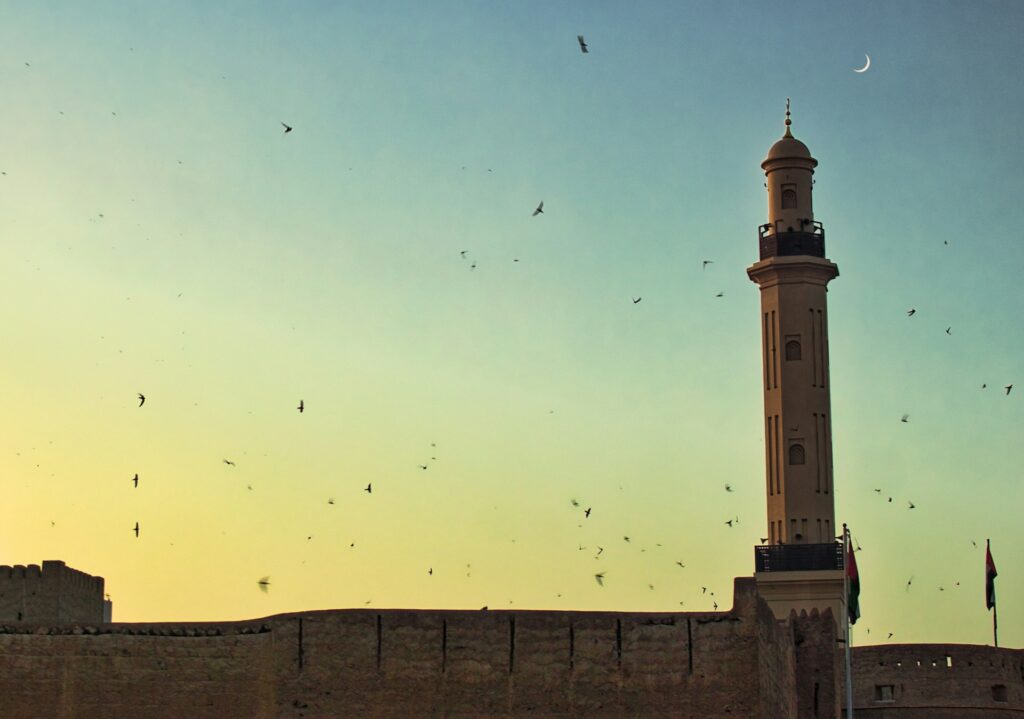
Although celebrated every year, Eid al-Adha continues to serve as a moment of reflection on faith, sacrifice, and social responsibility.
The history of the celebration originates from the account of Prophet Ibrahim (peace be upon him), who received a command from Allah SWT through a dream to sacrifice his son, Prophet Ismail (peace be upon him). According to Islamic tradition, the dream appeared repeatedly, confirming that it was a divine command rather than an ordinary vision.
Faced with a difficult test, Prophet Ibrahim consulted his son.
As recorded in Islamic teachings, Prophet Ismail responded:
“O my father, do as you are commanded. God willing, you will find me among the patient.”
This response reflects acceptance, trust, and obedience to God.
When Prophet Ibrahim prepared to fulfil the command, Allah replaced Prophet Ismail with a ram. The event became a lasting symbol of faith and later formed the basis of qurbani, the ritual sacrifice performed during Eid al-Adha.
Today, Muslims commemorate this event through the slaughter of sacrificial animals and the sharing of meat with family members, neighbours, and those in need. While Eid al-Adha is always on the same day of the Islamic calendar, the date on the Gregorian calendar varies from year to year as the Islamic calendar is a lunar calendar and the Gregorian calendar is a solar calendar.
The Meaning of Animal Sacrifice in Islam
The practice of animal sacrifice during Eid al-Adha is not merely ceremonial. It represents a wider message about personal sacrifice, humility, and prioritising faith above worldly attachment.
Qurbani encourages Muslims to reflect on values such as:
- Obedience to Allah
- Sincerity in worship
- Patience during hardship
- Generosity towards others
- Social solidarity and compassion
The distribution of meat also highlights community welfare. Traditionally, sacrificial meat is shared among family members and distributed to people in need.
Islamic teachings emphasise that the act of sacrifice itself is not solely about the physical offering, but about intention and devotion.
The Spiritual Meaning of Sharing
Beyond ritual practice, qurbani serves as a reminder that religious devotion should also strengthen social responsibility.
By sharing with others, Eid al-Adha becomes a moment for Muslims to reinforce community ties and ensure that celebration reaches all members of society.
The Connection Between Eid al-Adha and Hajj
The celebration of Eid al-Adha coincides with the final stages of the Hajj pilgrimage, making it one of the most significant periods in the Islamic calendar.
Hajj is the fifth pillar of Islam and is obligatory for Muslims who are physically and financially capable of undertaking the journey.
The origins of Hajj are also connected to Prophet Ibrahim (peace be upon him). Islamic tradition states that Allah commanded him to build the Kaaba in Mecca and later call humanity to perform pilgrimage.
The Quran references this obligation in Surah Ali Imran (3:97):
“…Whoever enters it shall be safe. And pilgrimage to the House is a duty owed to Allah by those who are able to undertake it…”
Every year, from 8–12 Dhul-Hijjah, pilgrims perform a series of rituals connected to the history of Prophet Ibrahim and his family.
H3: Hajj and Spiritual Renewal
For Muslims, Hajj represents more than physical travel.
The pilgrimage symbolises submission, discipline, and spiritual renewal. Completing Hajj is considered an act of worship that encourages believers to return with renewed commitment and reflection.
Although not all Muslims are able to perform Hajj, Eid al-Adha allows people around the world to participate spiritually through prayer, sacrifice, and acts of charity.
Eid Prayers During Eid al-Adha
The day of Eid al-Adha traditionally begins with Eid prayers, performed in congregation.
These prayers are considered highly recommended and are commonly held shortly after sunrise in mosques, prayer halls, or open fields.
The gathering reflects unity among Muslims and marks the beginning of the day’s religious observances.
Following the prayer and sermon, communities proceed with qurbani and charitable distribution.
Requirements for Sacrificial Animals for Eid al-Adha
Islamic teachings specify that only certain livestock animals may be used for qurbani:
- Goats
- Sheep
- Cows
- Buffalo
- Camels
Animals should meet both physical and age requirements.
Physical Requirements
A sacrificial animal should be healthy and free from significant defects.
Animals generally should not have:
- Blindness in one or both eyes
- Severely damaged ears
- Severe weakness or visible malnutrition
- Lameness affecting movement
- Conditions that significantly reduce health quality
The purpose is to ensure that the offering reflects care and sincerity.
Age Requirements
Different animals have different minimum age requirements:
AnimalMinimum Age
Camel Around five years
Cow or buffalo Around two years
Goat One year
Sheep Six months to one year (depending on development and local scholarly opinion)
Muslims are encouraged to consult local religious guidance to ensure compliance with accepted standards.
Eid al-Adha in 2026: Continuing the Tradition in a Modern Era
In 2026, Eid al-Adha continues to hold relevance beyond religious observance.
Technology has expanded access to qurbani through digital platforms and charitable institutions, allowing Muslims to participate in sacrificial programmes remotely while maintaining the core values of worship and community support.
Despite changing lifestyles, the principles remain unchanged: devotion, gratitude, and care for others.
Whether through attending Eid prayers, performing qurbani, supporting charitable initiatives, or reflecting on the story of Prophet Ibrahim and Prophet Ismail, Eid al-Adha continues to offer lessons that remain meaningful across generations.
People Also Ask (PAA)
1. Why is Eid al-Adha celebrated?
Eid al-Adha commemorates the obedience of Prophet Ibrahim (peace be upon him), who was willing to sacrifice his son in accordance with God’s command before the sacrifice was replaced with a ram.
2. What is the difference between Eid al-Fitr and Eid al-Adha?
Eid al-Fitr marks the end of Ramadan, while Eid al-Adha focuses on sacrifice, Hajj, and the tradition of qurbani.
3. What does qurbani mean in Islam?
Qurbani refers to the ritual slaughter of permitted livestock during Eid al-Adha as an act of worship and devotion.