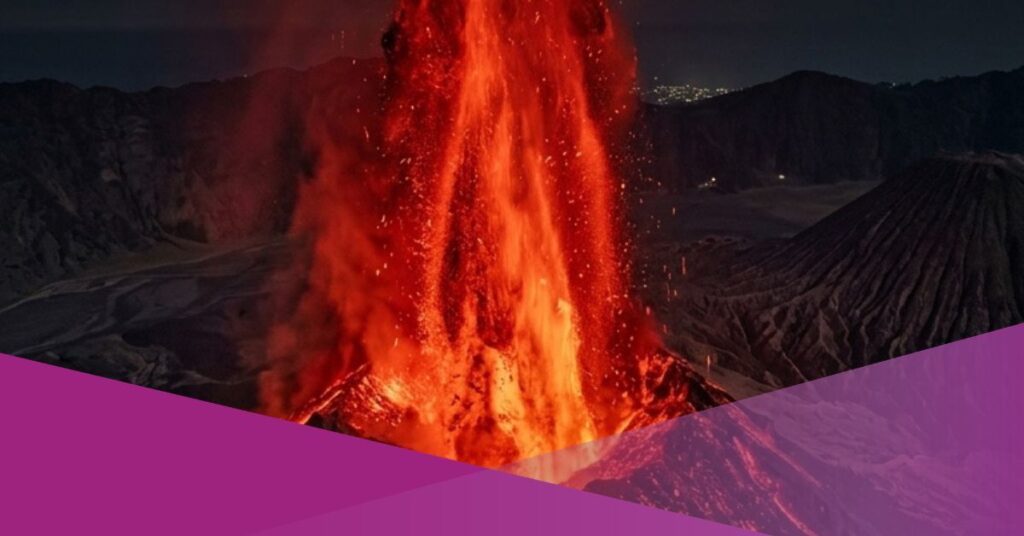
The eruption of Anak Krakatau in the Sunda Strait has disrupted air travel across several parts of Indonesia, with volcanic ash spreading beyond the immediate area of the volcano and reaching Jakarta and surrounding regions.
The eruption has prompted the temporary closure of several airports as authorities monitor the movement of volcanic ash in the atmosphere.
The disruption has affected flights and passengers, while residents in parts of Jakarta, Banten and West Java have reported ash and dust settling on outdoor surfaces.
Eight Airports Affected by Anak Krakatau Eruption
The Ministry of Transportation temporarily closed eight airports following the spread of volcanic ash associated with the Anak Krakatau eruption. The closures were introduced as a safety measure because volcanic ash can pose a risk to aircraft operations, particularly when ash particles enter aircraft engines.
According to reports by Kompas.com and CNN Indonesia, the affected airports were Soekarno-Hatta International Airport in Tangerang, Halim Perdanakusuma Airport in Jakarta, Radin Inten II Airport in Lampung, Husein Sastranegara Airport in Bandung, Budiarto Airport in Curug, Pondok Cabe Airport in South Tangerang, Taufik Kiemas Airport in Pesisir Barat, Lampung, and Atung Bungsu Airport in Pagar Alam, South Sumatra.
By Monday morning, 7 September, six airports were still closed, according to an update published by Detikcom. Authorities continued to assess weather conditions and the movement of volcanic ash before deciding whether affected airports could resume normal operations.
Transportation Minister Dudy Purwagandhi said the government was continuing to monitor the situation, stressing the importance of passenger and aviation safety.
“Safety is our top priority,” he said, as quoted by DetikNews.
The disruption has also resulted in significant flight delays and affected tens of thousands of passengers.
1,558 Flights Affected as 170,000 Passengers Remain Disrupted
The latest figures show that the impact on aviation has extended well beyond individual airport closures. According to the Ministry of Transportation, 1,558 flights were affected, while approximately 170,000 passengers remained disrupted by the situation.
The figure covers flights affected by the closure of the eight airports. Passengers have faced delays, cancellations and changes to their travel schedules as airlines respond to the disruption.
“As of now, out of the eight affected airports, there have been 1,558 delayed flights, with 170,000 passengers stranded,” Dudy said.
Soekarno-Hatta International Airport, one of Indonesia’s main aviation hubs, is among the airports affected. Disruptions there have the potential to affect both domestic and international travel.
Lihat postingan ini di Instagram
Sebuah kiriman dibagikan oleh Al Jazeera English (@aljazeeraenglish)
Volcanic Ash Reaches Jakarta and Surrounding Areas
The effects of the eruption have not been limited to aviation. Volcanic ash has been carried by the wind towards areas further from Anak Krakatau, with reports of ash reaching Jakarta, Banten and parts of West Java.
Detikcom reported a dusty morning in Jakarta and surrounding areas, with residents reporting volcanic material settling on vehicles, outdoor floors and other surfaces. Similar conditions were reported in areas including Depok and Bogor.
The presence of volcanic ash has also raised concerns over daily activities and air quality. Residents in affected areas have been advised to remain cautious, reduce unnecessary outdoor activity and wear masks when going outside.
In Banten, local authorities have also taken precautionary measures to limit public exposure. Face-to-face learning for senior high schools and vocational schools was temporarily moved online as authorities responded to the ashfall.
The government continues to monitor the movement of volcanic ash in coordination with the Meteorology, Climatology and Geophysical Agency (BMKG), AirNav Indonesia and airport operators. The direction and concentration of ash can change depending on weather and wind conditions.
For residents, the authorities have urged people to remain calm while staying alert to official updates. The latest disruption highlights how an eruption at Anak Krakatau can affect communities and transport operations well beyond the volcano itself, with consequences ranging from flight disruptions to changes in daily activities in Jakarta and surrounding areas.