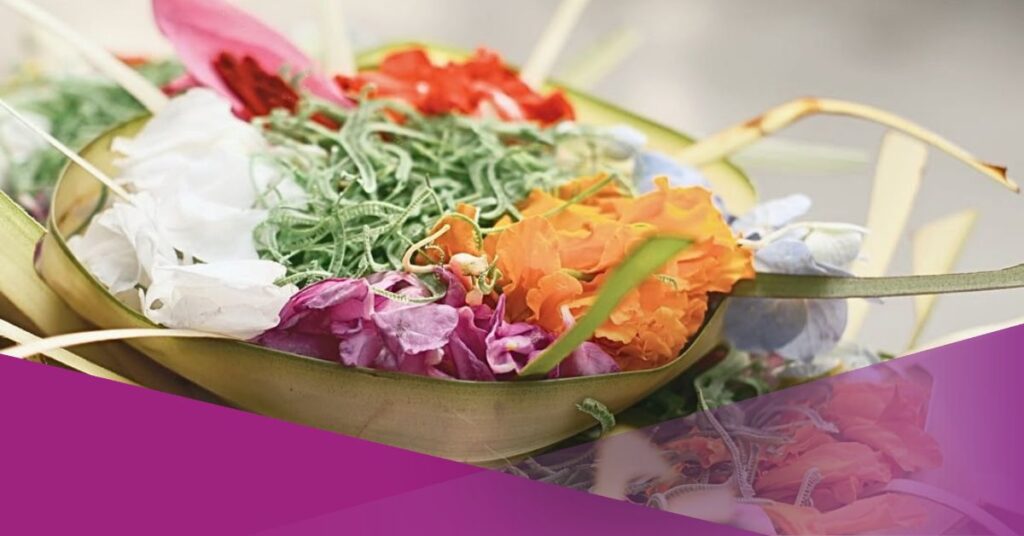
A video shared by Instagram user @laurathefoodexplorer offers a glimpse into everyday life in Bali, where tradition quietly shapes daily routines. The clip shows a local neighbour placing a canang sari—a small offering made of flowers and incense—on the seat of her motorcycle.
She captioned the moment, “My neighbour leaving a blessing on my bike. Hallelujah.”
In a longer caption, she described the gesture as a “neighbour’s sweet blessing on bike in Indonesia”, adding that waking up to such a thoughtful act felt deeply meaningful. She explained that the offering, known as canang sari, is a traditional Balinese Hindu practice used to express gratitude and respect.
“Waking up to a thoughtful gesture can be incredibly sweet,” she wrote. “This experience perfectly captures that sentiment.”
The video quickly drew attention on social media, with many users sharing their interpretations. One comment read, “They pray for your safety,” while another added, “Balinese say they pray in a physical form like that so that it will stay along with them.”
Though simple, the act reflects a broader cultural practice that remains central to life on the island.
@laurathefoodexplorer It’s the sweetest thing to wake up to 🥹🥰 #indonesia #blessing #canangsari #kindness ♬ EVERYTHING HALLELUJAH – Justin Bieber
What It Means to Place Canang Sari on a Vehicle
For many Balinese Hindus, placing canang sari on a motorcycle or car is part of a daily ritual. It is not unusual to see these small offerings on pavements, shrines, or even vehicles parked outside homes.
The purpose is straightforward. It is a quiet prayer for safety, protection, and balance.
Vehicles are seen as tools that carry risk. By placing an offering on them, people ask for a safe journey and protection from harm. This intention is often referred to as nunas keselamatan, or a request for safety.
The practice also expresses gratitude. It acknowledges the role of the vehicle in daily life, helping people move, work, and connect with others. In this sense, the offering is both practical and spiritual.
There is also a deeper belief at play. In Balinese Hinduism, every space is thought to have a spiritual presence or guardian. Leaving a canang sari is a way to show respect and maintain harmony with the surrounding environment.
This idea aligns with the philosophy of Tri Hita Karana, which emphasises balance between humans, nature, and the spiritual world.
Some also see it as a form of purification. Spiritually, the offering is believed to cleanse the vehicle of negative energy before it is used.
These rituals are usually carried out in the morning or before travelling long distances. They are quick, intentional, and part of a rhythm that blends spirituality with everyday life.
For visitors and expats, moments like the one captured in the video can feel unexpected. Yet for locals, it is simply routine—a small act that carries meaning without needing attention.
The viral clip serves as a reminder that in Bali, gestures of care often take subtle forms. A small offering on a motorcycle may not seem significant at first glance, but for those who practise it, it reflects a wish for safety, peace, and connection.