Inside a Traditional Balinese House: A Complete Guide for Bali Expat or Visitors in Bali
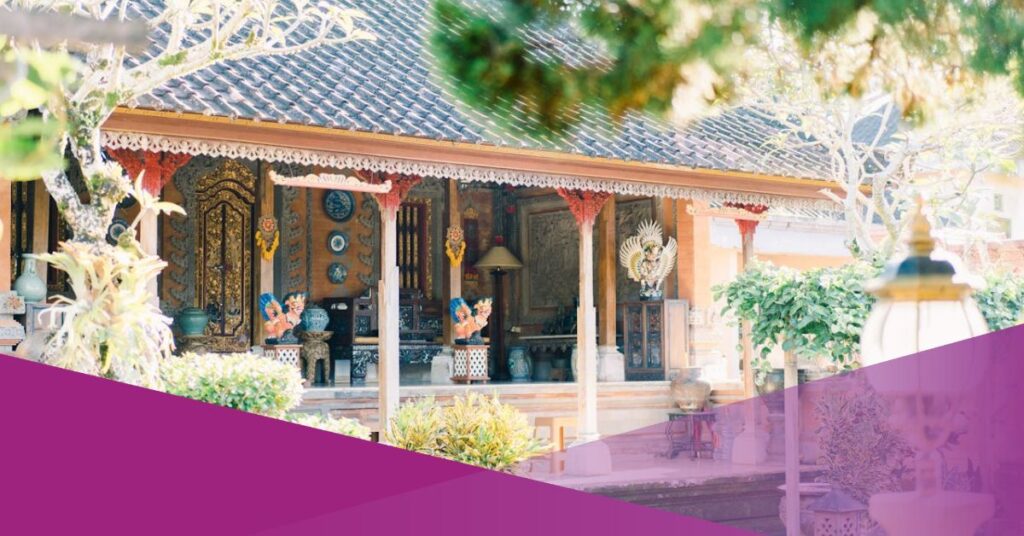
A traditional Balinese house is more than a residence. Balinese traditional house refers to the traditional house of Balinese people in Bali, Indonesia. The craftsmanship of Balinese artisans is evident in the rich ornaments and decorations adorning both the exterior and interior spaces.
It is a cultural and spiritual space designed according to philosophy, religion, and harmony with nature. For travellers and expats in Bali, stepping into one of these compounds offers insight into how architecture reflects daily life, beliefs, and social structure.
Unlike modern houses, a Balinese house consists of several separate buildings arranged around an open courtyard. Each structure has its own function and symbolic meaning.
This guide explains the layout, philosophy, and purpose of each pavilion and temple within a traditional Balinese home.
View this post on Instagram
The Philosophy Behind a Balinese Traditional House
Tri Hita Karana: Harmony Between Humans, Nature, and God
Balinese architecture follows the philosophy of Tri Hita Karana, which emphasises balance between three relationships:
- Parahyangan – harmony between humans and God
- Pawongan – harmony between humans and other people
- Palemahan – harmony between humans and nature
This philosophy influences the layout, orientation, and purpose of every structure within a Balinese house. The house is considered a microcosm of the universe. The compound is designed not only for living but also for worship, family interaction, and ceremonies.
Asta Kosala Kosali: The Traditional Architectural Guide
Another important principle is Asta Kosala Kosali, a traditional Hindu guideline that governs the layout and organisation of buildings within a Balinese house compound. This philosophy regulates the overall building layout, spatial orientation, and the division between sacred and non-sacred areas.
It also determines the placement of structures based on spiritual hierarchy, ensuring that each space aligns with religious values, cosmic balance, and harmony between humans, nature, and the divine.
For example:
- The family temple faces Mount Agung, the most sacred direction
- Kitchens and service areas face the sea or lower ground
- Sacred areas are placed in higher, more elevated positions
- Why Traditional Balinese Houses Have Separate Buildings
Why Traditional Balinese Houses Have Separate Buildings
One of the most distinctive features of a Balinese house is its compound layout, which consists of multiple separate pavilions instead of a single structure.
This design serves several purposes:
Cultural and Religious Functions: Each pavilion has a specific role, such as sleeping, cooking, worshipping, or hosting guests.
Space for Ceremonies: The central courtyard provides an open area for rituals, offerings, and family ceremonies.
Natural Climate Adaptation: Open layouts allow natural airflow, helping regulate temperature in Bali’s tropical climate.
Safety and Practical Reasons: Separate structures help reduce fire risk. If one building is damaged, others remain unaffected.
Main Parts of a Traditional Balinese House
1. Angkul-Angkul: The Entrance Gate
The angkul-angkul serves as the main entrance gate to a traditional Balinese compound and marks the boundary between the public and private realms. More than just a physical doorway, it symbolically welcomes visitors while also providing spiritual protection to the household.
Its design often resembles shrine architecture, featuring intricate carvings and traditional roofing, which reflect the family’s identity, social status, and cultural values. The Gapura gate, also known as Candi Bentar, consists of a covered Angkul-Angkul gate and an Aling-Aling protective wall. As the first structure encountered, the angkul-angkul represents both hospitality and spiritual safeguarding.
2. Aling-Aling: The Protective Wall
Located directly behind the entrance terrace, the aling-aling is a small wall that prevents a direct line of sight into the courtyard. Its primary function is to provide privacy for the family, ensuring that the interior space is not immediately exposed to outsiders.
In Balinese hinduism, the aling-aling also serves a spiritual purpose by blocking negative energy or harmful spirits from entering the home, as such forces are believed to travel in straight lines. Visitors must walk around this wall before entering the main courtyard, symbolising a gradual transition from the outside world into the protected family environment.
3. Sanggah: The Family Temple
The sanggah is the family temple and represents the most sacred area within the compound. This space is dedicated to daily prayers, ancestral worship, and various religious ceremonies performed by family members. It reflects the deep spiritual connection between Balinese families, their ancestors, and the divine.
Typically located in the northeast corner of the compound, the most sacred direction according to Balinese spatial hierarchy, the sanggah reinforces the importance of spirituality as the central foundation of Balinese domestic life.
4. Bale Manten: The Family Sleeping Pavilion
The bale manten is a private sleeping pavilion reserved for the head of the family and unmarried daughters. This structure symbolises family honour, dignity, and protection, reflecting the importance of maintaining purity and respect within the household.
Positioned in a more sacred area of the compound, the bale manten emphasises its role as an intimate and protected space. Its architectural design prioritises both comfort and symbolism, highlighting the balance between daily life and cultural values.
5. Bale Dauh: The Guest and Social Pavilion
The bale dauh functions as a welcoming space for guests and serves as an area for social interaction and relaxation. Families use this pavilion to receive visitors, hold conversations, and strengthen social relationships within the community.
Usually located on the western side of the courtyard, the bale dauh reflects the Balinese value of hospitality while maintaining a clear distinction between public and private areas within the compound. Its open design encourages airflow and creates a comfortable environment for gatherings.
6. Bale Gede: The Ceremony Pavilion
The bale gede is one of the largest and most important communal structures in the compound. It is primarily used for religious ceremonies, family rituals, and the preparation of ceremonial offerings. This pavilion also serves as a gathering space during important life events, such as weddings and religious celebrations.
Its size and central role reflect its importance in supporting both spiritual and social functions, reinforcing the communal and ceremonial aspects of Balinese family life.
7. The Kitchen (Pawaregen): The Heart of Daily Life
The traditional kitchen, known as the pawaregen, plays a vital role in the everyday life of a Balinese household. It is typically located in the southern or western part of the compound, in accordance with traditional spatial principles.
Built using local materials such as brick, wood, and bamboo, the kitchen is designed with natural ventilation to support traditional wood-burning stoves. Beyond its practical function, the pawaregen represents warmth, sustenance, and the rhythm of daily family life, making it an essential part of the household structure.
Materials Used in Traditional Balinese Architecture
Bali traditional house use locally sourced materials, including:
- Brick
- Natural stone
- Bamboo
- Teak wood
- Coconut wood
- Thatch roofing
These materials help maintain natural temperature and reflect the connection between humans and nature.
Why Visitors Should Understand the Balinese House Layout
Understanding the structure of a Balinese house allows visitors to gain deeper insight into Balinese life and its harmonious relationship with spirituality, nature, and the cosmos.
Each area within the compound reflects a sacred hierarchy divided into Utama, Madya, and Nista zones, which symbolise levels of purity and function.
The Utama area, considered the most sacred, is where the family temple stands to honour the deity and conduct important yadnya ceremonies. Meanwhile, the Madya zone serves as the centre of daily activities, featuring the natah (central courtyard), bale daja for rest and family gatherings, bale dangin for rituals and ceremonial preparations, and the paon, or traditional kitchen.
The Nista zone, the outermost and least sacred area, typically includes service areas and the entrance marked by a split gate, which symbolically separates the outside world from the family’s spiritual space. By understanding this layout, visitors can respect sacred areas, appreciate Balinese architecture, and experience the authentic rhythm and philosophy of life within a traditional Balinese compound.
People Also Ask (PAA)
What is a traditional Balinese house called?
A traditional Balinese house is called a Balinese compound, consisting of several pavilions and a family temple arranged around a central courtyard.
Why do Balinese houses have separate buildings?
Separate buildings serve different functions, improve airflow, provide ceremony space, and reduce fire risk.
What is the temple inside a Balinese house?
The family temple, called sanggah, is used for daily prayer and religious rituals.
Can tourists visit a traditional Balinese house?
Yes, visitors can see traditional houses in villages, homestays, and cultural tours, but they should always respect sacred areas.
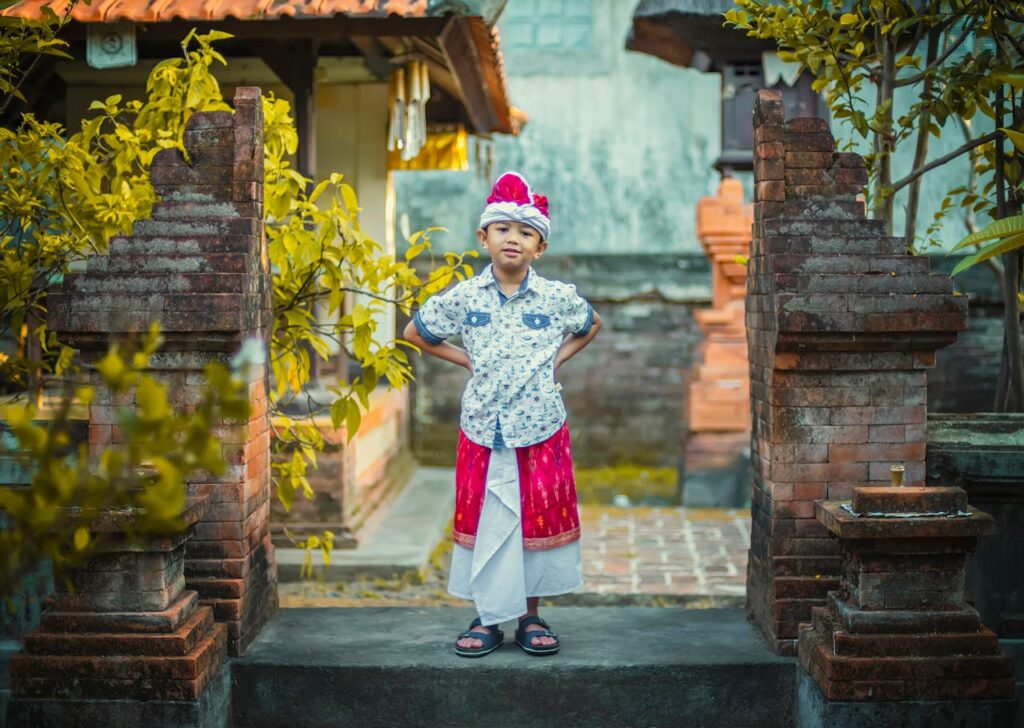
Cover: Photo by Agung Pandit Wiguna_Pexels