Bali Flood Forces Tourist Evacuations in Denpasar Amid Extreme Weather and Landslide Risk
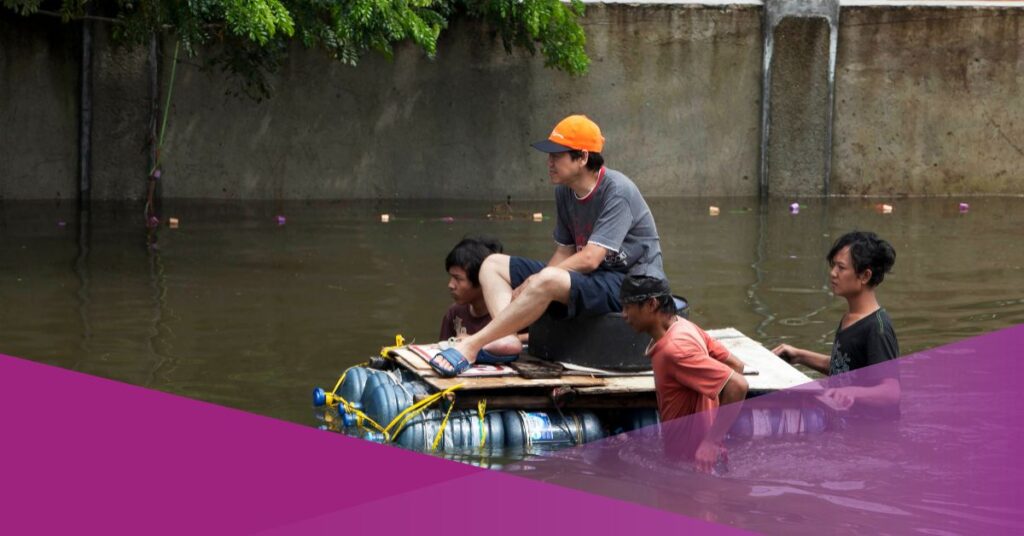
Flooding triggered by extreme weather conditions has inundated tourist areas in Sanur Village, Denpasar City, Bali Province, with water levels reaching approximately 1.5 metres. The Bali flood affected Jalan Bumi Ayu and Jalan Kesari on Tuesday morning (24 February 2026), following continuous heavy rain that began on Sunday (22 February 2026) and persisted until Tuesday afternoon.
Field observations showed that the affected areas are densely populated with tourist accommodation, including villas, guesthouses, and hotels. Several foreign tourists were temporarily evacuated after floodwaters entered their lodgings.
The Bali Police Search and Rescue (SAR) Coordinator, Aiptu Gede Sutrawan, said rescue teams deployed specialised equipment to evacuate those affected.
“25 tourists were evacuated from the Regional Police Search and Rescue (SAR) unit. Some were asked to be evacuated to the next location, while others were moved to another hotel,” he said at the scene on Tuesday.
He explained that the evacuation was requested after water levels inside the accommodation reached dangerous levels.
“So, some of the guests responded (tourists already understood the weather),” Sutrawan said.
Rescue teams used four canoes and one rubber boat to transport tourists safely out of flooded villas. The operation prioritised areas where water levels posed a risk to personal safety and property.
Sanur, located southeast of Denpasar, is one of Bali’s major tourist hubs, popular for its beachfront resorts and proximity to other destinations such as Legian and Kuta. Flooding in this area can significantly disrupt tourism activity and local infrastructure.
Extreme Weather Triggers Floods and Landslides Across Bali
Extreme weather driven by sustained heavy rainfall has caused widespread disruption across Bali, including flooding, landslides, and infrastructure damage.
The Bali Disaster Mitigation Agency (BPBD) reported hydrometeorological disasters at 76 locations as of 3:30 p.m. Central Indonesian Time (WITA) on Tuesday (24 February 2026).
The incidents included:
- 42 floods
- 5 landslides
- 1 embankment breach
- 1 tornado
- 23 fallen trees
- 4 collapsed retaining walls
The Head of BPBD Bali I Gede Agung Teja Bhusana, said disasters were recorded across multiple regions, with Denpasar reporting the highest number of incidents.
“The distribution of hydrometeorological disasters was dominated by Denpasar City (36 locations), Badung Regency (12 locations), Karangasem Regency (12 locations), Gianyar Regency (5 locations), Tabanan Regency (5 locations), Buleleng Regency (4 locations), Klungkung Regency (1 location), and Jembrana Regency (1 location),” Teja said in an official statement.
He added that emergency responses had been carried out in line with community requests and operational priorities.
“Of the 76 locations, field response has been carried out at several locations in accordance with community requests and needs, as recorded in the operational report,” he said.
The disasters were caused by extreme weather patterns characterised by intense rainfall and unstable atmospheric conditions. Meteorology authorities have issued weather warnings advising residents and tourists to remain alert, particularly in low-lying and landslide-prone areas.
Tourist zones such as Denpasar, Kuta, Legian, and surrounding areas remain vulnerable to flooding due to drainage limitations, urban density, and proximity to coastal and river systems.
Impact on Tourists and Travel Safety in Bali
Flooding in tourist areas raises safety concerns for visitors unfamiliar with local conditions, particularly during extreme weather events.
Tourists staying in villas and hotels in Denpasar and the surrounding areas experienced temporary displacement due to rising water levels. While no fatalities were reported in the Sanur evacuation, the incident highlights the risks posed by sudden flooding during the rainy season.
Flooding can disrupt transportation, accommodation, and access to essential services. In addition, landslides triggered by saturated soil pose risks in elevated and mountainous regions across Bali.
Tourists are advised to monitor weather warnings issued by meteorology agencies and follow instructions from local authorities and accommodation providers.
Most hotels and resorts in Bali have emergency protocols in place, including evacuation procedures and coordination with local authorities.
Flood Safety Guide for Tourists in Bali
Lihat postingan ini di Instagram
Sebuah kiriman dibagikan oleh Social Expat (@socialexpat.indonesia)
What to Do Before a Flood
Preparation is essential, particularly during periods of extreme weather.
Tourists should familiarise themselves with evacuation routes and emergency exits at their accommodation. Important documents such as passports and travel insurance papers should be stored in waterproof containers and placed in elevated locations.
Electrical devices should be kept away from low areas where water may accumulate. Visitors should also prepare essential supplies, including drinking water, medication, communication devices, and spare clothing.
Monitoring weather forecasts and meteorology alerts is critical, particularly when travelling during the rainy season.
What to Do During a Flood
If floodwaters begin to rise, immediate evacuation to higher ground is recommended.
Tourists should avoid contact with electrical equipment submerged in water due to the risk of electric shock. It is important to follow instructions issued by emergency services, hotel management, or disaster authorities.
Avoid walking or driving through floodwaters unless necessary, as water depth and current strength may be difficult to assess. Fast-moving water can be hazardous even at shallow levels.
If evacuation assistance is required, tourists should contact emergency services or accommodation staff immediately.
Remaining calm is essential to ensure clear decision-making and personal safety.
What to Do After a Flood
After floodwaters recede, tourists should not immediately return to flooded areas until authorities confirm that conditions are safe.
Flood-affected buildings may be structurally unstable. Electrical systems should be inspected before use to prevent short circuits or fires.
Tourists should avoid consuming food or drinking water that has been exposed to floodwater, as contamination may pose health risks.
Accommodation providers typically conduct safety inspections before allowing guests to return.
What Tourists Should Do If Caught in a Bali Flood During Their Holiday
Stay Calm and Prioritise Safety
Remaining calm allows individuals to assess risks and respond appropriately. Panic can increase the likelihood of injury or poor decision-making.
Tourists should prioritise personal safety and avoid attempting to cross fast-moving water.
Move to Higher Ground Immediately
Seeking shelter in elevated areas or upper floors of buildings reduces exposure to rising floodwaters.
Avoid low-lying areas, riverbanks, and locations prone to landslides.
Contact Authorities and Accommodation Providers
Tourists should inform local authorities, hotel staff, or emergency services of their location.
Emergency teams are equipped to provide evacuation assistance when required.
Prepare Emergency Supplies
Visitors should ensure access to essential supplies, including drinking water, food, clothing, and communication devices.
Maintaining communication with authorities and travel companions is essential.
Follow Official Instructions and Weather Warnings
Tourists should remain in safe locations until authorities confirm that conditions are safe.
Following meteorology advisories and evacuation instructions significantly reduces safety risks.
Weather Warning and Meteorology Outlook for Bali
Bali experiences a tropical climate with a rainy season typically lasting from November to March. During this period, extreme weather events, including heavy rainfall, flooding, and landslides, are more likely.
Meteorology, Climatology and Geophysics Agency (BMKG) agencies regularly issue weather warnings during periods of intense rainfall. Tourists visiting Bali during this time are advised to monitor forecasts and remain alert to potential hazards.
Urban areas such as Denpasar, Legian, and Kuta may experience flash flooding due to limited drainage capacity and high population density.
Local authorities continue to monitor conditions and conduct emergency response operations as needed.
Authorities Urge Vigilance as Bali Flood Risk Continues
The recent Bali flood highlights the vulnerability of tourist areas to extreme weather and hydrometeorological disasters.
Emergency response teams have successfully evacuated affected tourists and continue to monitor flood-prone areas.
Authorities emphasise the importance of preparedness, awareness, and compliance with safety instructions, particularly for visitors unfamiliar with local disaster risks.
With proper precautions and adherence to official guidance, tourists can minimise risks and remain safe during extreme weather conditions in Bali, Indonesia.
People Also Ask (PAA)
1. Why is Bali flooding now?
Bali is experiencing flooding due to sustained heavy rainfall caused by extreme weather patterns during the rainy season, overwhelming drainage systems and causing rivers to overflow.
2. Which tourist areas are affected by the Bali flood?
Parts of Bali tourist areas affected include Denpasar, Sanur, Kuta, Legian, and parts of Badung Regency, where many hotels, villas, and tourist facilities are located.
3. Are tourists safe during floods in Bali?
Yes, authorities prioritise tourist safety. Emergency evacuation procedures are in place, and rescue teams respond quickly to assist affected visitors.
4. Is it safe to travel to Bali during extreme weather?
Travel remains possible, but tourists should monitor weather warnings, follow official guidance, and stay in accommodations with proper safety measures.
5. What should tourists do if a flood happens in Bali?
Tourists should move to higher ground, contact authorities or hotel staff, prepare emergency supplies, and follow evacuation instructions if necessary.