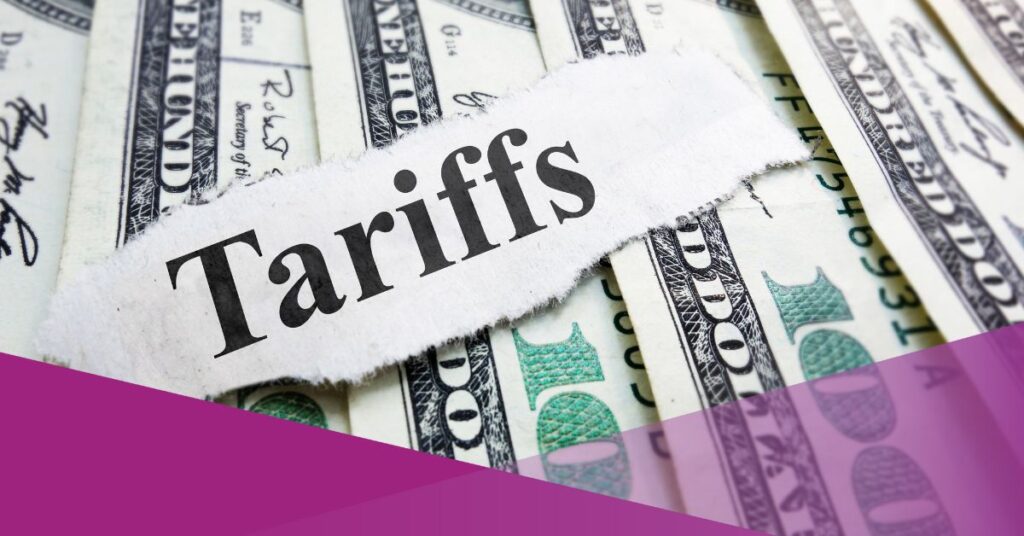
United States President Donald Trump has agreed to remove tariffs on selected goods from Malaysia, Cambodia, and Thailand, setting import duties for several products to 0% tariffs.
The agreement was signed during the Association of Southeast Asian Nations (ASEAN) Summit in Kuala Lumpur.
According to Reuters (27 October 2025), the three countries previously faced reciprocal tariffs of 19%. The new arrangement eliminates those duties for specific products, improving trade access between the US and Southeast Asia.
Malaysian Trade Minister Tengku Zafrul Aziz confirmed that Malaysia secured tariff exemptions for aerospace equipment, pharmaceutical products, and commodities such as palm oil, cocoa, and rubber.
Meanwhile, Indonesia is seeking to secure a similar trade benefit. Coordinating Minister for Economic Affairs Airlangga Hartarto said that Indonesia had resumed tariff negotiations with Washington after discussions were suspended during the US government shutdown.
“Yes, of course, we will continue more intensively this month, and we hope to complete them within the next two to three weeks,” Airlangga told reporters at the Jakarta International Convention Centre (JCC) Senayan on 9 October 2025, as quoted by Detiknews.
He added that Indonesia had been in communication with the United States Trade Representative (USTR), Jamieson Greer, and expressed optimism that certain commodities could receive similar tariff reductions.
“In principle, commodities that can be grown in Indonesia but not in the US, and vice versa, such as palm oil, cocoa, and chocolate, are subject to 0% tariffs,” Airlangga explained.
Trade and Rare Earths at the Centre of New US–ASEAN Agreements
On 26 October 2025, Trump signed several economic and mineral cooperation agreements with four Southeast Asian countries, part of Washington’s effort to rebalance trade relations and diversify supply chains amid China’s restrictions on rare earth exports.
Reuters reported that Trump, during his visit to Kuala Lumpur, signed reciprocal trade deals with Malaysia and Cambodia, and a trade framework with Thailand aimed at addressing both tariff and non-tariff barriers.
A joint statement from the White House said the US would maintain a 19% tariff on exports from the three countries but would eliminate tariffs on selected goods. Washington also announced a similar trade framework with Vietnam, which currently faces a 20% tariff rate on exports to the US.
Vietnam, which posted a US$123 billion trade surplus with the US last year, pledged to increase imports of American products to help narrow the gap.
Malaysia also reached a separate understanding with the US on rare earths, agreeing not to impose export bans or quotas on critical minerals. The statement did not clarify whether this commitment applied to raw or processed materials.
Malaysia, which holds an estimated 16.1 million tonnes of rare earth deposits, currently bans the export of raw minerals to encourage domestic downstream processing.
Thailand has pledged to remove tariffs on 99% of goods and to ease restrictions on foreign ownership in its telecommunications sector.
The country also announced new commercial deals with US firms, including the annual purchase of US$2.6 billion in agricultural goods and US$18.8 billion in aircraft, as well as energy imports valued at US$5.4 billion.
The agreements also include provisions to promote digital trade, services, and investment, alongside commitments to protect workers’ rights and strengthen environmental standards across the region.
As the US deepens trade ties with its Southeast Asian partners, Indonesia now stands at a crucial point in its own negotiations. Can we secure the same 0% tariffs privileges as its neighbours?