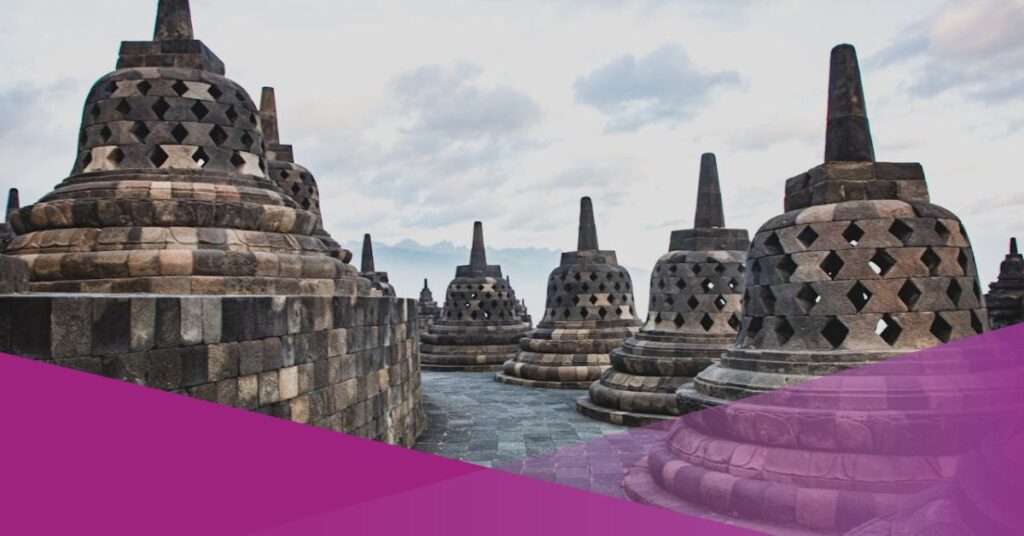
French President Emmanuel Macron praised the beauty of Borobudur Temple during his visit to Central Java, Indonesia, on 29 May 2025.
Accompanied by First Lady Brigitte Macron and President Prabowo Subianto, the French president described Borobudur as a “masterpiece of Indonesian civilisation” and expressed admiration for its historical and cultural significance.
Lihat postingan ini di Instagram
What to Do in Borobudur? A Guide to Explore The Largest Buddhist Temple
Located in Borobudur Village, Magelang Regency, Central Java, the temple is not only one of Indonesia’s major tourist attractions but also serves as a religious site, a centre of archaeological study, and a place of pilgrimage for Buddhists.
This UNESCO World Heritage Site draws local and international visitors to experience its ancient architecture, spirituality, and heritage.
Entry tickets are available from IDR 35,000 to IDR 75,000 for local visitors, and from IDR 250,000 to IDR 400,000 for foreign tourists. Visiting hours for the temple grounds are from 10:00 to 17:00 WIB.
History and Structure of Borobudur Temple
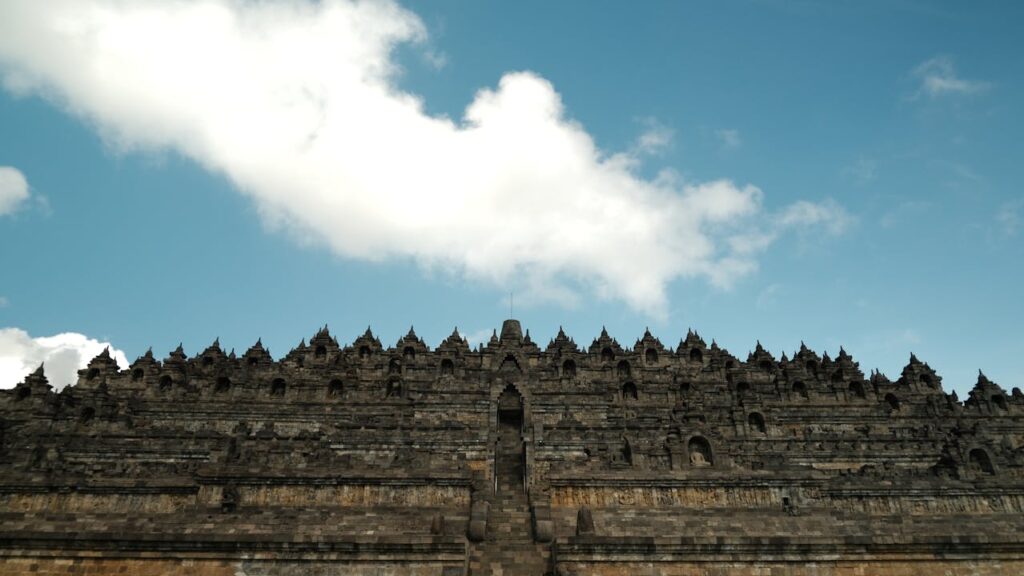
Built in the 8th century during the Syailendra Dynasty, the Borobudur Temple is designed as a spiritual journey reflecting the Buddhist path to enlightenment. Pilgrims begin at the temple’s base and proceed clockwise through three symbolic realms: Kamadhatu (realm of desire), Rupadhatu (realm of form), and Arupadhatu (formless realm).
Along this path, visitors encounter over 1,460 stone-carved relief panels and more than 500 Buddha statues.
The temple was abandoned in the 14th century, likely due to the decline of Hindu-Buddhist kingdoms and the spread of Islam in Java. It was rediscovered in 1814 by Sir Thomas Stamford Raffles, the then British Governor-General of Java.
Restoration efforts, particularly between 1975 and 1982, led to its inclusion in UNESCO’s list of World Heritage Sites.
Although the original name of the temple is unknown, the name “Borobudur” first appeared in Raffles’ book The History of Java. Ancient texts such as Nagarakretagama, written in 1365, hint at its historical role in Buddhist tradition.
Activities and Things to Do Around Borobudur, Yogyakarta
1. Explore the Borobudur Temple Complex
One of the most essential things to do in Borobudur is to visit the main temple itself. The site offers a panoramic view, especially during the Borobudur sunrise, when the first light of day rises over Mount Merapi and Mount Merbabu. Many hotels offer sunrise tours to take in this experience.
2. Visit Museums Around Borobudur
Several museums enhance the educational experience. The Borobudur Museum showcases archaeological findings, including relics and statues. Nearby, the Samudraraksa Ship Museum features a reconstructed ship believed to have sailed from Africa to Java. The MURI Museum displays national records and artistic interpretations of Borobudur.
3. Try Local Cuisine: Mangut Beong
Lihat postingan ini di Instagram
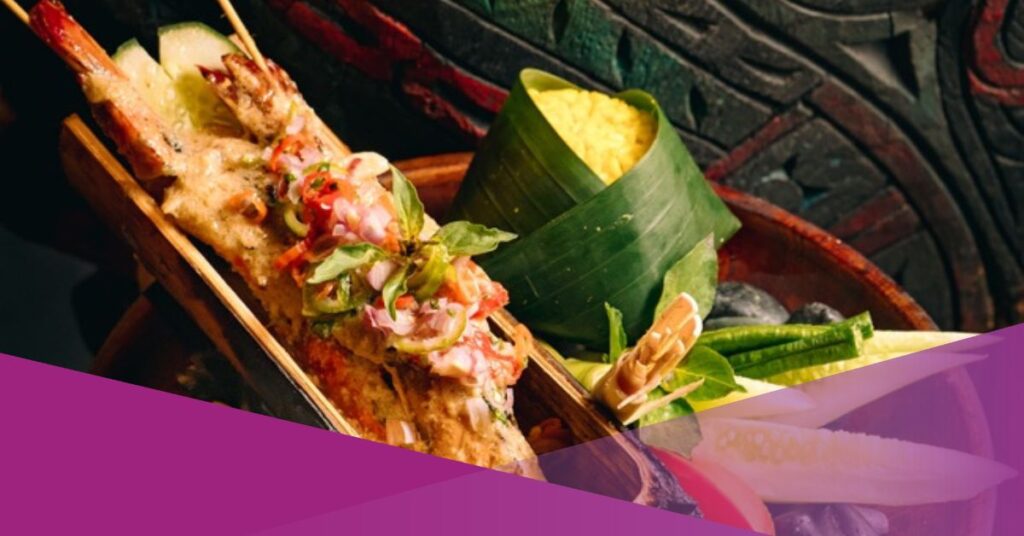
Culinary exploration is part of the experience when you go to Borobudur. A must-try local dish is Mangut Beong, a spicy catfish dish native to the Progo River area. The fish is larger and softer than typical catfish and is cooked in a rich coconut milk-based broth with turmeric and chillies.
4. Explore Temples Around Borobudur
Other temples such as Mendut, Pawon, and Ngawen are part of the broader Borobudur cultural landscape. Built during the same period, these smaller temples offer additional insight into the region’s Buddhist heritage. Ngawen Temple is believed to have once housed King Indra’s weapon, Vajranala.
5. Discover Villages Around Borobudur
Several traditional villages, such as Wanurejo Village, offer accommodation and immersive experiences in nine hamlets. Here, visitors can explore villages around Borobudur by ontel bike, electric scooter, andong (horse carriage), or colourful VW cars.
Other villages like Candirejo, Majaksingi, and Giritengah present opportunities to watch traditional gamelan and dance performances, showcasing Javanese art and culture.
6. Souvenir Shopping in Borobudur
A visit isn’t complete without exploring local markets for souvenirs. Popular items include miniature Borobudur Temple replicas made of bamboo, wood, fibreglass, or even silver from Kotagede, Yogyakarta’s silver craft centre. Other options include batik, pottery, keychains, and wood carvings.
7. Visit Popular Sites Around Borobudur
Other notable attractions around Borobudur include Puthuk Setumbu Hill, a hilltop with views of the Borobudur sunrise and surrounding landscapes. The Chicken Church (Gereja Ayam), a dove-shaped building with a prayer space and café, also attracts visitors. Svargabumi, a photo-friendly destination set among rice paddies, is another trending location.
While visiting Borobudur Temple, a trip to Prambanan Temple is highly recommended, as both are iconic UNESCO World Heritage Sites located within easy reach of Yogyakarta. Prambanan, the largest Hindu temple complex in Indonesia, is renowned for its towering spires and intricate stone carvings dedicated to the Trimurti gods: Brahma, Vishnu, and Shiva.
The contrast between Borobudur’s serene Buddhist design and Prambanan’s dramatic Hindu architecture offers a unique glimpse into Java’s rich religious and cultural history. Many travellers choose to visit both temples in a single day or as part of a multi-day cultural itinerary around Central Java.
What to Do in Borobudur? Ethics and Rules When You Visit Borobudur
To help preserve this ancient monument and respect its spiritual significance, visitors should adhere to the following guidelines:
- Wear modest, closed clothing: Cover shoulders and knees. Sarongs are available free of charge for visitors who require them.
- Respect Buddhist worship: Do not interrupt, photograph, or make noise near monks or visitors meditating at the temple.
- Maintain respectful behaviour: Avoid loud conversations, inappropriate language, and disruptive behaviour.
- Do not touch or climb stupas: Stupas and statues are sacred and fragile. Refrain from climbing or sitting on them.
- Avoid vandalism: Writing, scratching, or marking the temple stones is strictly prohibited.
- Take appropriate photographs: Pose respectfully and avoid jumping or running within the temple grounds.
- Follow all official instructions: Comply with site signage, and guides’ directions, and make use of the provided bins to maintain cleanliness.
By observing these principles, travellers contribute to the preservation of one of the world’s most important cultural landmarks.
Cover: Photo by Charl Durand/Pexels