In the holy Hindu of Balinese Hinduism, death is not a somber end, but a transformative passage. The Pelebon Agung or cremation ceremony called, Ngaben in the island of Bali, embodies this belief. This elaborate cremation ceremony transcends the Western notion of mourning, instead celebrating the deceased’s journey towards spiritual liberation.
The passing of Tjokorda Bagus Santaka was marked by a grand and elaborate Pelebon cremation ceremony was held in April 2024. The ceremony, steeped in Balinese tradition and symbolism, drew thousands of mourners who paid their respects to the revered spiritual leader.
The towering bade, a ceremonial structure representing Tjokorda Bagus Santaka’s spirit, was paraded through the streets of Ubud, accompanied by traditional music and dance performances. The pelebon served as a poignant farewell to a man who had profoundly enriched the lives of those around him.The are more of funeral traditions and the cremation ground that is full of reincarnate and become more valuable through all the masculine that become than any other creation.
The Philosophy Behind The Balinese Cremation
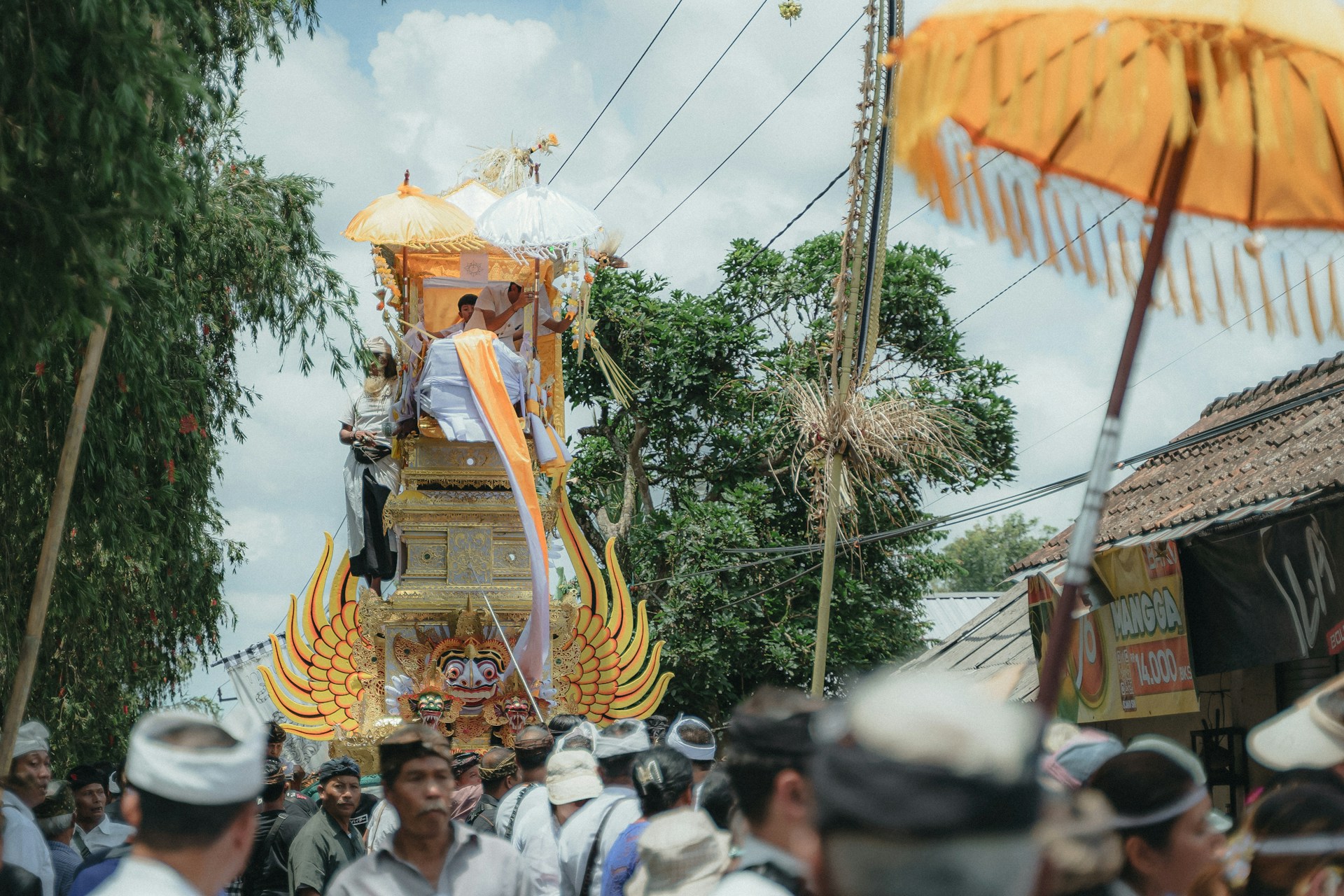
The Balinese believe in the concept of “atman” – the immortal soul – residing within a temporary physical body. Death signifies the shedding of this earthly vessel, allowing the atman to reunite with the divine source, “Ida Sang Hyang Widhi.” The Pelebon Agung serves as a grand farewell, a final act of love and respect from the family and community, ensuring the deceased’s smooth transition into the afterlife.
The Towering Creation of the Bade
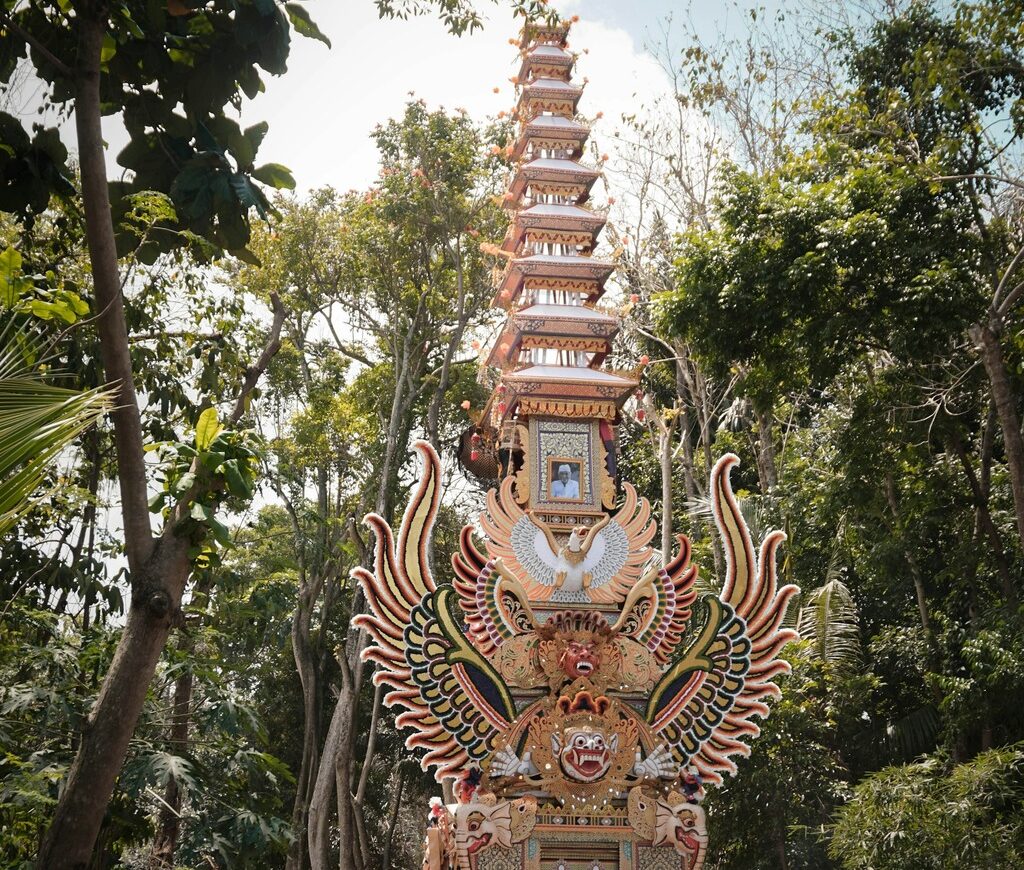
Weeks before the ceremony, the village buzzes with fervent activity. Skilled artisans, guided by generations-old traditions, embark on the creation of the bade – the centerpiece of the Pelebon Agung. This elaborate cremation tower, reaching heights of up to 20 meters, symbolizes Mount Meru, the sacred mountain believed to be the center of the universe. Constructed from bamboo and intricately adorned with colorful fabrics, mythical figures, and offerings, the bade is a masterpiece of Balinese craftsmanship.
The Spirit of Collaboration: Roles and Ngaben Preparations
The Pelebon Agung is a community affair, demanding the collective effort of the cremate from entire village. Men take charge of building the bade, while women prepare an abundance of offerings, ranging from intricate food sculptures to woven baskets filled with flowers and daily necessities. The deceased’s family plays a crucial role, ensuring all rituals are performed with meticulous care. Priests, or “sulinggih,” are invited to chant sacred mantras and guide the spiritual aspects of the ceremony.
A Procession Steeped in Symbolism: The Journey to the Afterlife
On the designated day of the cremation ceremony in Bali, a festive Balinese hindu atmosphere engulfs the village. The culmination of weeks of preparation unfolds as the bade is paraded through the streets. Villagers dressed in their finest attire, carrying colorful umbrellas (payung) and bearing offerings, join the procession. A giant, ornately crafted bull statue, the “lembu,” often precedes the bade, symbolizing a powerful beast to ward off evil spirits and guide the deceased on their journey. The air is filled with the sounds of gamelan music, a traditional Balinese ensemble, and chants that resonate with the rhythm of the procession.
Reaching the Climax: The Cremation Ritual
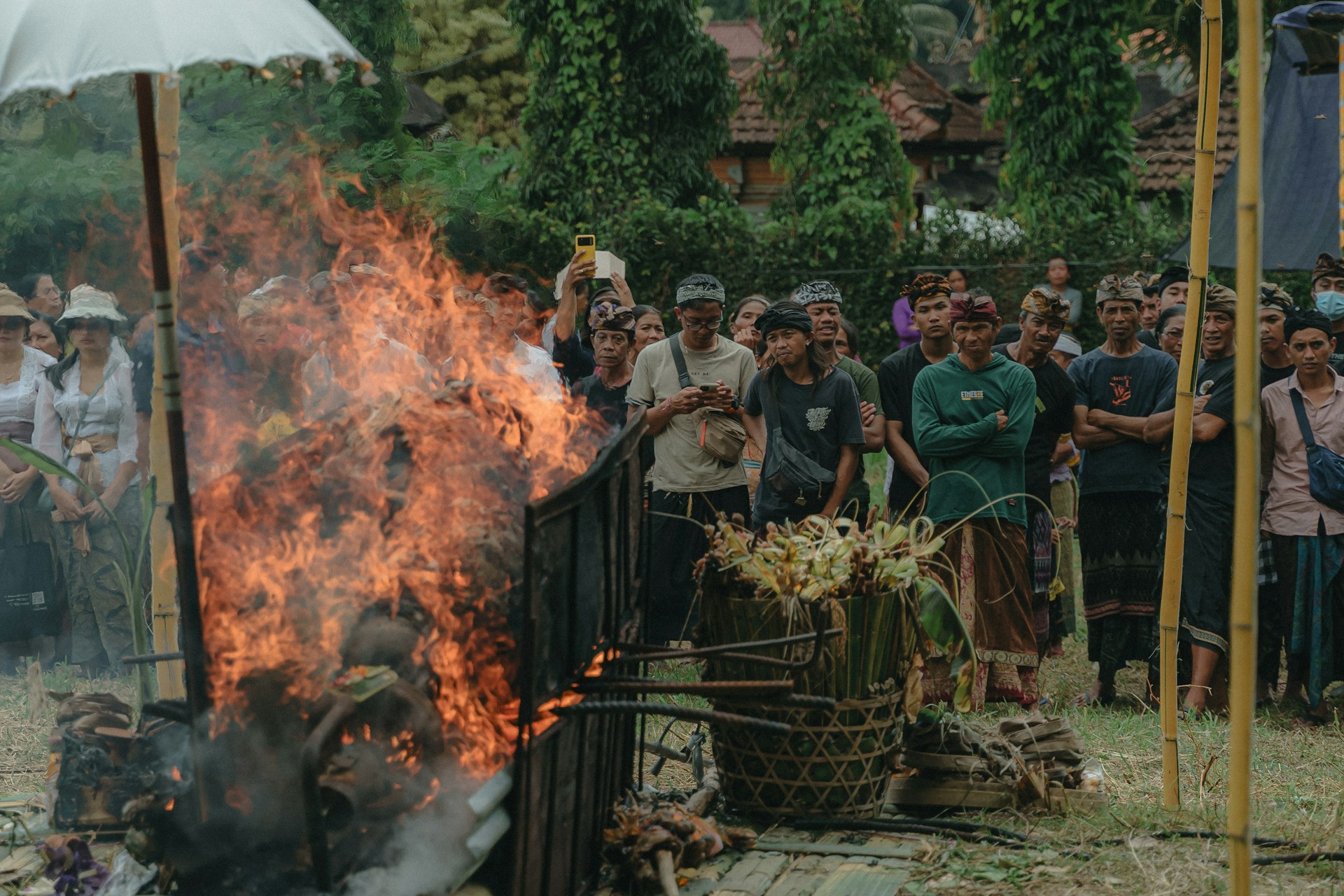
The procession culminates at the designated cremation site, often a designated public cemetery. The bade is positioned facing Mount Batur or Mount Agung, revered Balinese volcanoes considered gateways to the spiritual realm. Prayers are offered, and offerings are placed within the bade. The culmination arrives with the symbolic act of cremation. Fire, considered a purifying element, is used to release the atman from its earthly bonds.
Beyond the Flames: Releasing the Spirit
The fire may consume the physical body, but the ceremony isn’t over. In the days following the cremation, further rituals are performed to ensure the smooth transition of the atman. Symbolic offerings are made, and prayers are chanted to guide the spirit towards liberation. Eventually, the ashes are collected and scattered into the sea, signifying the complete release of the deceased from the earthly realm.
A Celebration of Life’s Journey
The Pelebon Agung may appear unconventional to Western observers. Yet, it exemplifies the Balinese philosophy of life and death. By embracing death as a natural transition, the ceremony allows for a joyous farewell, filled with vibrant colors, music, and a sense of community. It’s a celebration of the life lived, a final act of love, and a testament to the enduring belief in the soul’s eternal journey.
Witnessing the Pelebon Agung
Due to its significance and elaborate nature of Indonesia Culture, the Pelebon Agung is not a frequent occurrence funeral. It is usually held for prominent figures or when multiple deaths have occurred within a family or community. However, for those fortunate enough to witness this remarkable ceremony, it’s a profound experience that offers a window into the heart and soul of Balinese culture.