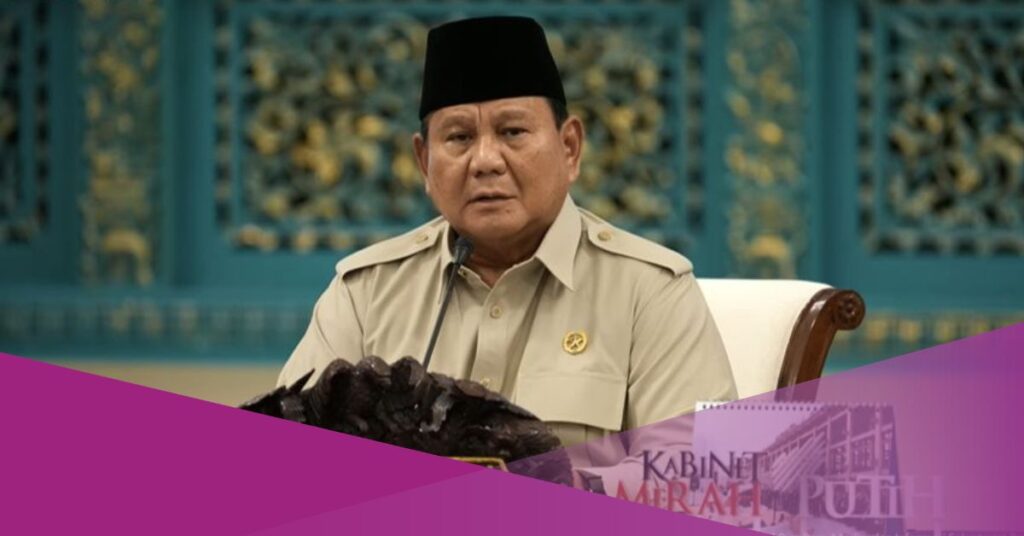
President Prabowo Subianto has suggested that Indonesia consider implementing work-from-home arrangements as part of a broader strategy to conserve fuel consumption amid global economic uncertainty.
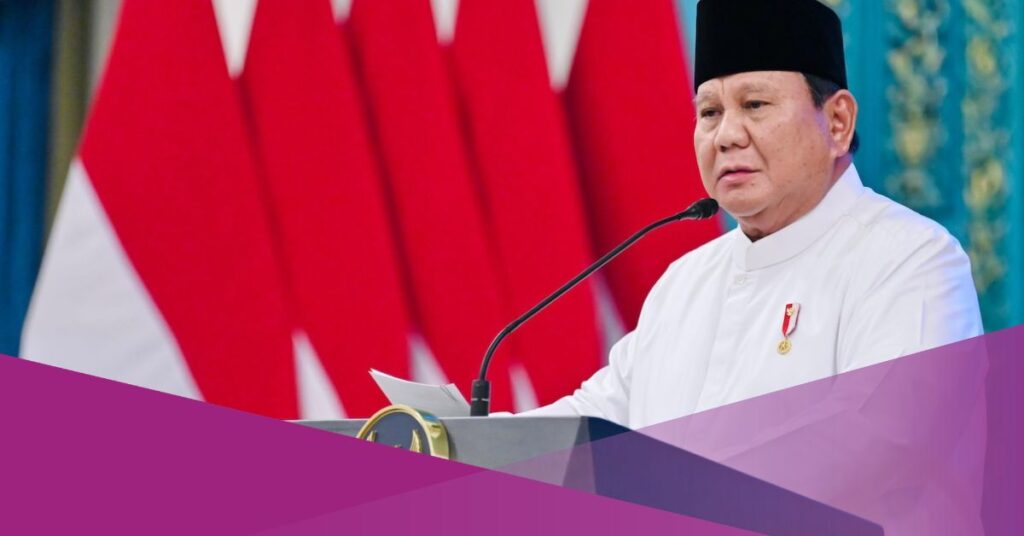
Speaking during a Plenary Cabinet Meeting at the State Palace in Jakarta on Friday (13 March 2026), the president emphasised the need for proactive measures to mitigate the potential impact of geopolitical developments, particularly conflicts in Europe and the Middle East.
“Of course, we must now take proactive measures, meaning we must conserve fuel consumption. We cannot assume that whatever happens, we are safe. Yes, we are grateful that we are safe, but we have not made any efforts to reduce our fuel consumption,” Prabowo said, as quoted by AntaraNews.
He noted that rising global tensions could influence international energy prices, which in turn may affect domestic economic stability, including the cost of food and other essential goods.
Government Prepares for Possible Energy and Food Price Pressures
According to the president, the government has already taken steps to secure several essential food supplies and is accelerating plans in the energy sector. However, he stressed that reducing fuel consumption remains necessary to address ongoing global uncertainty.
Prabowo warned that fluctuations in global energy prices could have wider economic consequences.
He said that increases in energy prices often lead to higher food prices, creating additional pressure on households and national supply chains. For this reason, the government is exploring measures aimed at reducing fuel use while maintaining economic stability.
“Of course, we must now take proactive steps, meaning we must conserve fuel consumption,” he reiterated during the meeting.
The president added that Indonesia should not assume that it will remain unaffected by global developments and therefore needs to prepare preventive policies before the impact becomes more significant.
Despite the potential risks, Prabowo stated that Indonesia remains in a relatively strong position, particularly in terms of food supply.
“I believe we will be very strong in the next two or three years, but we still have to be frugal in consumption,” he said.
Remote Working and Efficiency Measures Under Review
As part of the discussion on fuel conservation, Prabowo highlighted Indonesia’s experience during the COVID-19 pandemic, when many government employees worked remotely.
He said the shift to remote working during that period demonstrated that operational efficiency could be maintained while reducing fuel consumption and traffic congestion.
“I ask that this be discussed later, perhaps with the Coordinating Ministers. We’ll see in a few days. Let’s think about it. We overcame COVID in the past, and we succeeded. And we were able to, many working from home, efficiency, which means we saved a significant amount of fuel,” Prabowo said.
He added that fewer commuters travelling to offices would reduce traffic congestion and government spending related to transportation.
“For example, how many civil servants and officials wouldn’t have to go to the office, reducing traffic jams and implementing massive cost savings. We should also consider reducing the working day, along with other cost-saving measures,” he said.
The president also pointed to austerity policies implemented by other countries as examples that Indonesia could study.
Pakistan, he noted, has introduced several measures aimed at reducing energy consumption, including allowing up to 50 per cent of government and private sector employees to work from home and shortening the workweek to four days.
In addition, the country has implemented spending reductions such as salary cuts for cabinet members and legislators, restrictions on official vehicle use, and limits on government-funded foreign travel.
“These are just examples, yes, these are examples. I mean, I think we can study this issue for a few days, right? I think we must also strive to make savings,” Prabowo said.
He added that the government will review the feasibility of similar measures in Indonesia in the coming days.