As the capital of Indonesia, Jakarta remains a key destination for expatriates and international visitors. With heavy traffic across the city, understanding Jakarta public transportation is essential for efficient daily travel.
For expats in Indonesia, selecting the right mode of public transport can significantly improve mobility, cost efficiency, and overall experience. The city offers a range of options, various public transportation from modern rail systems to traditional transport, allowing residents and visitors to explore Jakarta with relative ease.
Commuter Line (KRL)
The commuter rail system, widely known as the KRL, is one of the most reliable ways to travel across Greater Jakarta area. It is particularly suitable for expats commuting between central Jakarta and surrounding areas such as Depok, Bekasi, Bogor, and Tangerang.
Key routes include the Gambir – Bogor line, connecting Gambir Station in central Jakarta with Bogor Station, and the Bekasi – Jakarta Kota line, linking Bekasi with downtown Jakarta.
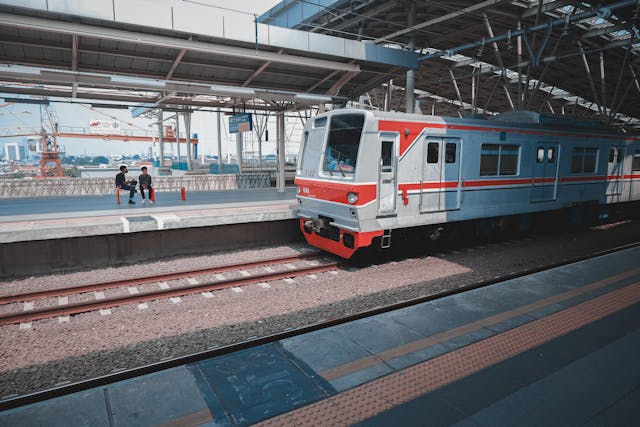
KRL Commuter Line operates daily from early morning until midnight. Carriages are air-conditioned and designed to accommodate both seated and standing passengers. Fares start at Rp3,000 for the first 25 kilometres, with incremental charges for longer distances. KRL is one of best way to reduce traffic congestion.
For expats seeking a faster alternative to road travel, the KRL provides consistent travel times, especially during peak hours.
Mass Rapid Transit (MRT)
Jakarta’s MRT is a relatively new addition to the city’s transport network but has quickly become a preferred option for many commuters. The system combines underground and elevated tracks, connecting key business and commercial districts.
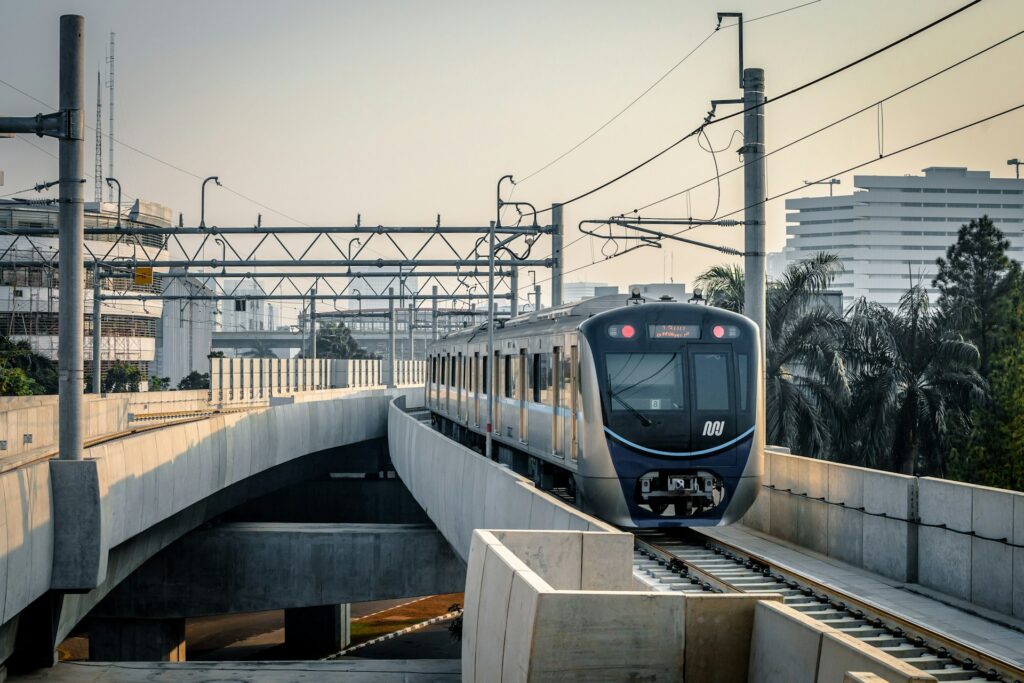
MRT Jakarta is known for its punctuality and shorter travel times compared to road-based transport. Ticket prices range from Rp3,000 to Rp14,000, depending on distance. The route is from Lebak Bulus Station – Bundaran HI Station and the other way around.
For expats working in central business areas, the MRT offers a straightforward and efficient daily commute.
TransJakarta Bus (Bus Rapid Transit)
Operating since 2004, TransJakarta is one of the largest bus rapid transit (BRT) systems globally. It runs on dedicated lanes across multiple corridors, helping to reduce delays caused by traffic congestion. Some people also like to called this transport as busway.
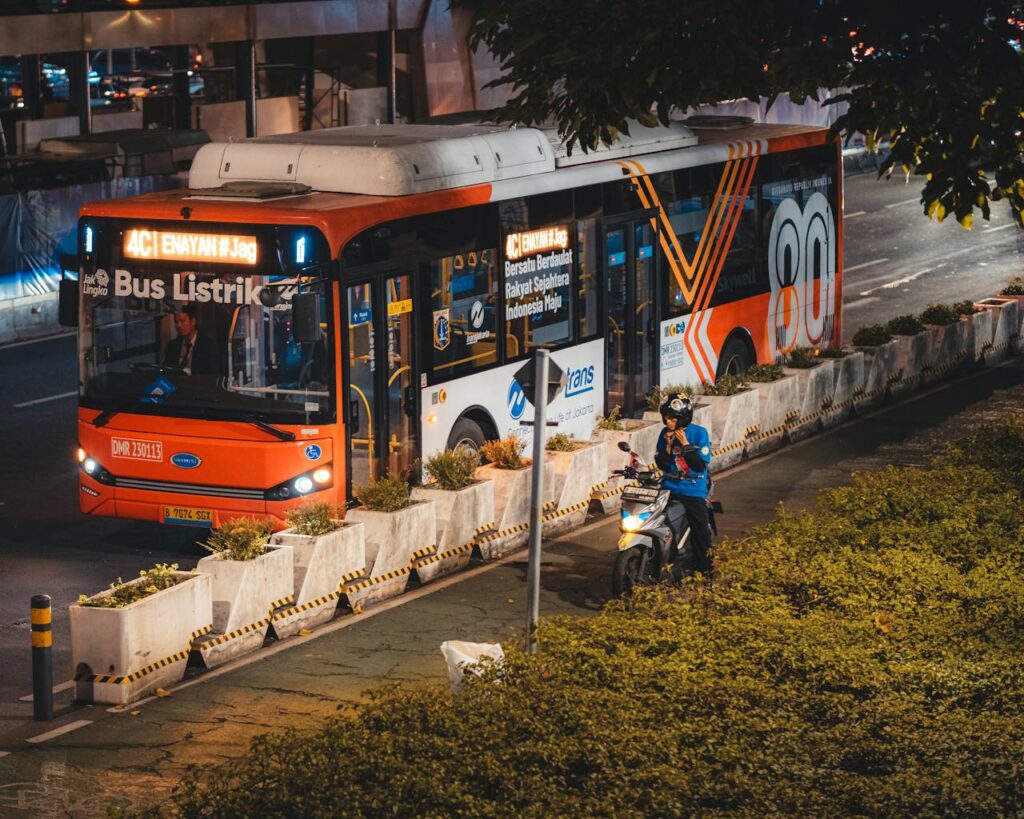
The network covers a wide area of Jakarta, making it a practical choice for expats travelling between districts. Fares are relatively low, ranging from Rp2,000 to Rp3,500 depending on the time of travel.
With frequent services and designated bus stops, TransJakarta remains one of the most accessible forms of public transport in the city. No wonder it’s the best way for expat in Indonesia to explore different parts of the city.
Mikrotrans: Free Transportation for Jakarta Residents
Mikrotrans operates as part of the integrated JakLingko system, providing first-mile and last-mile connectivity. These minibuses link residential areas to major transport hubs such as bus corridors and train stations.
Lihat postingan ini di Instagram
Vehicles are equipped with air conditioning and CCTV systems. Payment is made using the JakLingko card, allowing seamless transfers between different modes of transport. Other than that, you can also tap your card (bank card) to enjoy the ride.
For expats living in residential neighbourhoods, Mikrotrans can be a practical complement to larger transport systems.
Bajaj
Bajaj, a three-wheeled motorised vehicle, remains a distinctive feature of Jakarta’s streets. Operating since the 1970s, it offers short-distance transport within local areas.
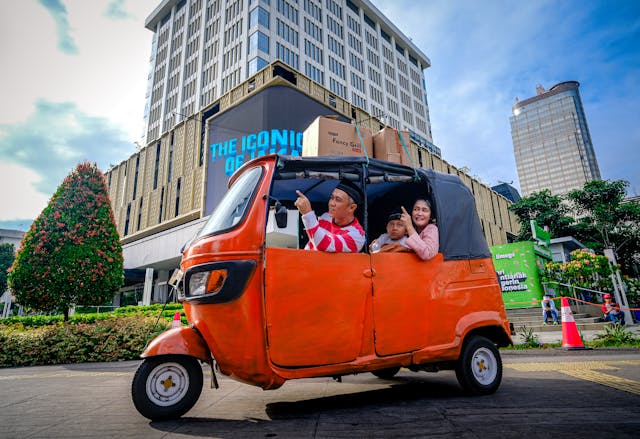
Fares are not fixed and typically depend on distance and negotiation. While not the most efficient option for long journeys, Bajaj provides a cultural experience that differs from modern transport systems.
Jakarta LRT
The Jakarta LRT is a light rail system designed to serve as an efficient urban transport option across the Jakarta metropolitan area. As one of the transport solutions that Jakarta offers, it provides a reliable alternative for commuters travelling between different parts of the city, especially Jabodebek (Jakarta, Bogor, Depok, Bekasi) area.
Operating on dedicated tracks separate from main roads, the LRT ensures a smoother and faster journey, free from traffic congestion. Equipped with modern technology, the system offers a comfortable and convenient travel experience for daily passengers.
Currently, the Jakarta LRT connects 18 stations across Jakarta, Depok, and Bekasi. The network operates on two main routes: the Cibubur/Depok line and the Bekasi line, making it easier to travel across key areas within the region.
Lihat postingan ini di Instagram
How to Ride the Jakarta LRT
For those planning to use the Jakarta LRT, the process is simple and user-friendly. Follow this step-by-step guide to make your journey seamless:
1. Prepare Your Payment Method
Before heading to the station, ensure you have a valid payment method. You can use e-money cards issued by various banks such as Bank Mandiri, BCA, BNI, BTN, or Bank DKI Jakarta.
Alternatively, passengers can pay using a multi-trip card, LinkAja, QRIS, or the KAI Pay application. Having your payment method ready will help you enter the system quickly and avoid delays.
2. Go to the Nearest LRT Station
Next, make your way to the nearest LRT station. Stations are strategically located across various parts of the city, making them easily accessible. You can reach the station using other forms of public transport or by private vehicle.
3. Enter the Station
Upon arrival, enter the station by tapping your card at the gate or scanning your QR code, depending on your chosen payment method. This process is similar to other public transport systems in Jakarta, such as commuter trains or bus services.
4. Check the Fare System
As of 1 June 2024, the Jakarta LRT applies a distance-based fare system. The base fare is Rp5,000 for the first kilometre, with an additional Rp700 charged for each subsequent kilometre travelled.
Tips for Using Public Transport in Jakarta
For expats in Indonesia, each mode of transport serves a different purpose. Rail systems such as the MRT and KRL are suitable for longer and time-sensitive journeys, while TransJakarta and Mikrotrans provide broader coverage across the city. Bajaj, meanwhile, is more suitable for short, local trips.
Understanding these options allows expats to navigate Jakarta more effectively, balancing cost, convenience, and travel time.
People Also Ask (PAA)
1. What is the best Jakarta public transportation for expats?
The MRT and KRL are generally the most efficient options due to their reliability and fixed schedules.
2. Is public transport in Jakarta safe for foreigners?
Yes, most systems such as MRT, KRL, and TransJakarta are considered safe, with security personnel and surveillance in place.
3. How do expats pay for public transport in Jakarta?
Payments can be made using electronic cards such as JakLingko or other prepaid transport cards.
4. Is Jakarta public transportation affordable?
Public transport in Jakarta is relatively inexpensive, with most fares ranging between Rp3,000 and Rp14,000.
5. Can you travel around Jakarta without a car?
Yes, with integrated systems like MRT, KRL, and TransJakarta, it is possible to navigate the city without private transport.
Cover: Photo by Nasirun Khan/Pexels