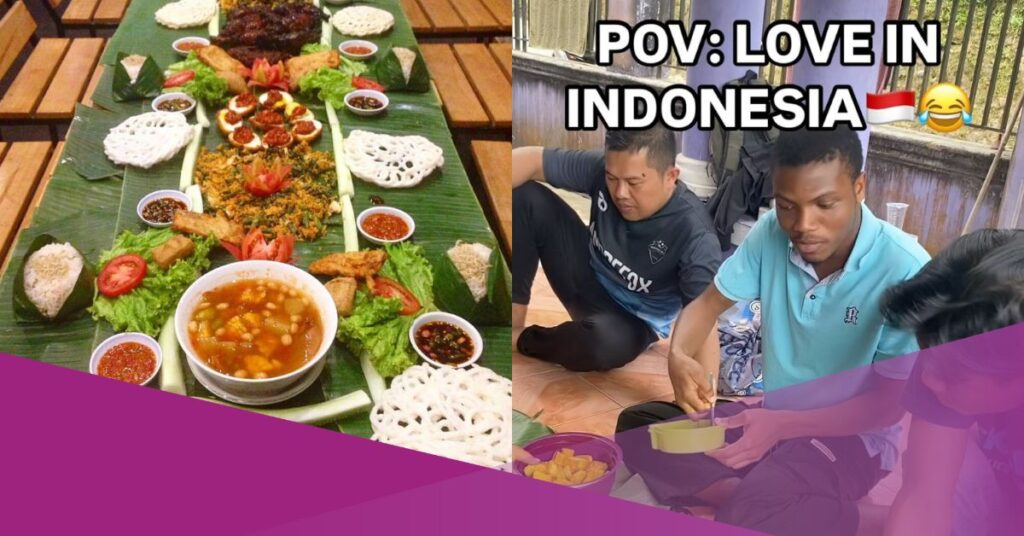
Indonesian food culture is unique but also remarkably inclusive and warm. Indonesians have a beautiful tradition of inviting neighbours, relatives, and even new acquaintances to join them in a shared meal, creating a sense of belonging and acceptance.
A foreigner named Soulaymane Abdul Qudus Oriyomi feels the warmth of this tradition of eating together. Through his Instagram account @bayorvibes, he uploaded a video that has been liked by hundreds of thousands of netizens.
Lihat postingan ini di Instagram
The video entitled “POV: Love In Indonesia” depicts him enjoying the tradition of eating Indonesian dishes together with Indonesians by eating on banana fronds.
The video was filled with positive comments such as:
“your parents must be happy to see you; feel at home in Indonesia, ❤️” wrote a netizen.
“I hope you are always surrounded by good people,” wrote another netizen.
The tradition of eating together is not unfamiliar in Indonesia. Looking at the banana leaf container used, this foreigner seemed to enjoy the ngeliwet tradition.
What is Ngeliwet, an Indonesian food culture?
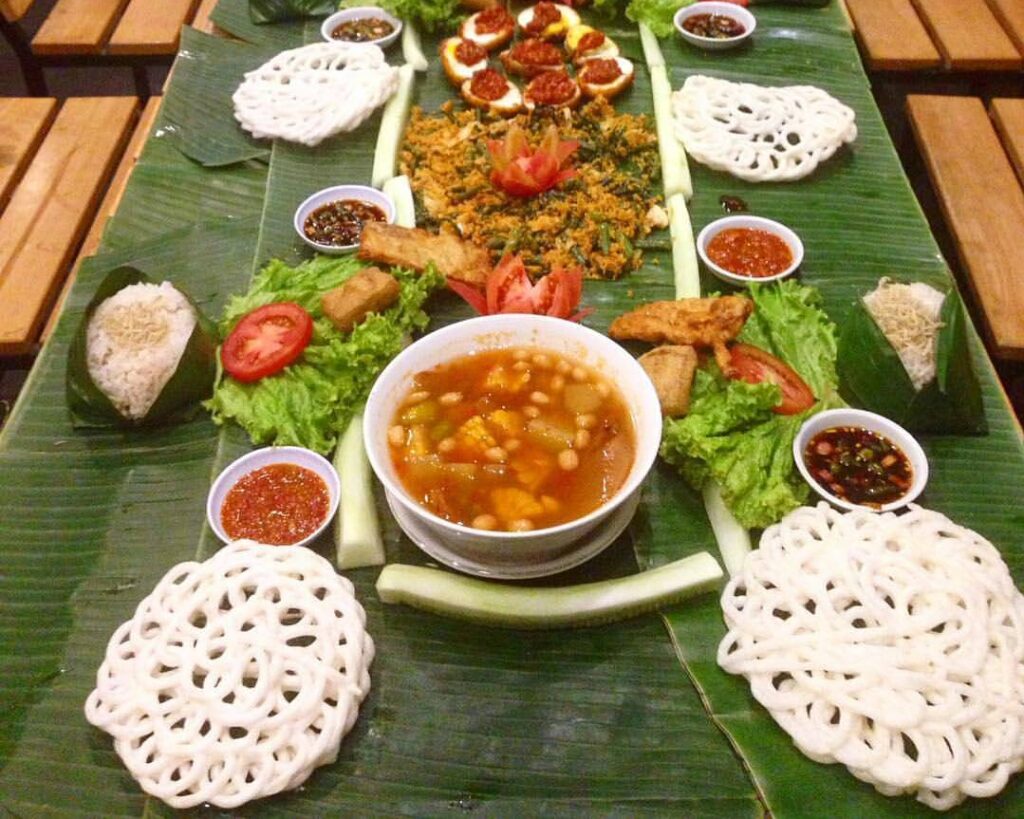
Ngeliwet is a traditional Indonesian celebration of togetherness that is unique to Javanese society, especially in Central and East Java.
The word “ngeliwet” comes from the Javanese language, which means “eating together in one container”.
The tradition involves preparing and eating together typical cuisine, such as liwet rice and various side dishes, at one table with the aim of strengthening family ties.
The “Ngeliwet” procession usually begins with family members preparing javanese cuisine that are then eaten together.
More than just a meal, Ngeliwet is a joyous occasion filled with stories, laughter, and happiness. This shared experience strengthens the bond between family members, creating a warm and joyful atmosphere.
Although modern lifestyles have changed many aspects of life, the Ngeliwet tradition is still maintained and preserved as part of Indonesia’s cultural heritage.
The various traditions of eating together in Indonesia
Indonesians are famous for their hospitality and familiarity with the people around them. One proof of this is seen in the culture of eating together which is carried out in almost all regions in Indonesia.
Usually eating together enjoying Indonesian cuisine will be done in celebration of certain events, ceremonies, to simply strengthen friendship. The Indonesian culture of eating together is widely practised in Sumatra, Sulawesi, Java, and Kalimantan.
Here are some of the traditions of eating together in Indonesia:
1. Megibung
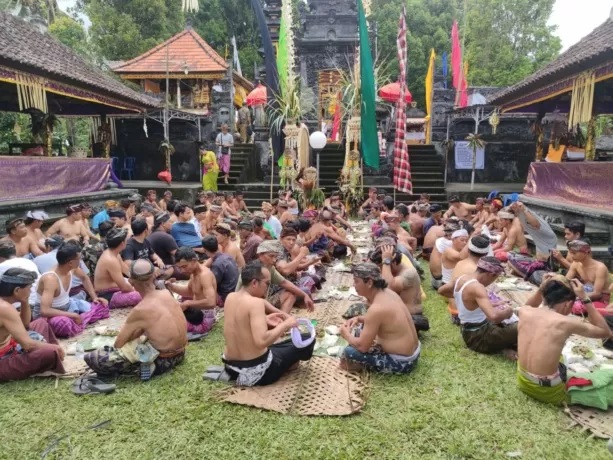
Balinese people also recognize the tradition of eating together. Bali also acknowledge the tradition of eating together, referred to as megibung, which means sharing between one person and another.
The megibung tradition is intended to strengthen the bond between one community and its social group.
The rules in megibung dictate that each eating group consists of 8 people with prepared balinese cuisine. All megibung participants must sit cross-legged and in a circle according to the cardinal directions.
2. Ngeliwet
As explained earlier, Ngeliwet is a part of culinary tradition of eating together that serves liwet rice on banana leaves.
The menu served in the ngeliwet tradition includes rice, side dishes and vegetables arranged around banana leaves that have been cleaned and arranged in such a way. Some restaurants in big cities have made this Ngeliwet menu, which is very popular Indonesian dishes for breaking the fast during the fasting month.
3. Bajamba
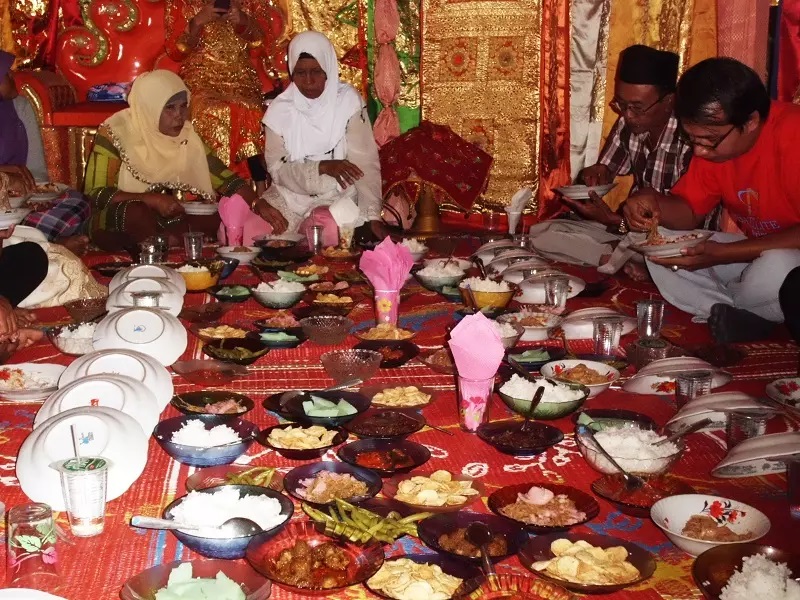
In West Sumatra, people are very familiar with the bajamba tradition. Bajamba refers to the process of eating together with both men and women, with all levels of society prevailing.
Eating Bajamba literally means eating in one container together. But there are rules that must be observed for those who follow bajamba, whether male or female.
For example, when the right hand bribes the rice, the left hand is already underneath it to avoid scattering the rice. If any rice is scattered in the left hand, it should be transferred to the right hand and then put into the mouth in the same way.
The purpose of eating in this way is so that the rice that is about to enter the mouth if it is scattered, does not fall onto the plate so that others do not feel disgusted to eat the rice on the plate together.