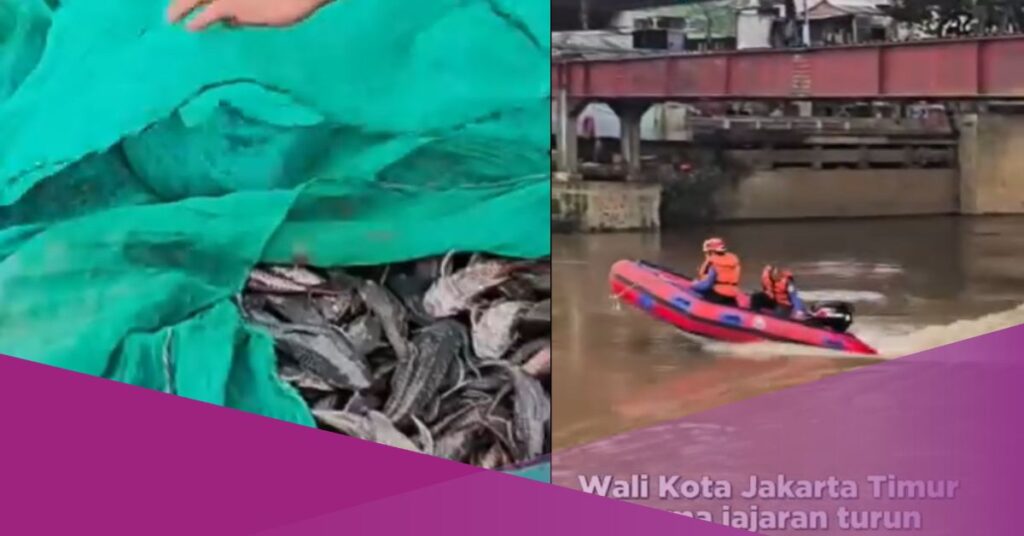
The Jakarta Provincial Government has intensified efforts to remove invasive janitor fish from several rivers across the capital. The species, scientifically known as Hypostomus plecostomus, was originally introduced to Indonesia as an ornamental aquarium fish. Its release into public waters has led to a sharp increase in population.
Governor Pramono Anung ordered the eradication programme after the species was found to dominate local aquatic ecosystems. Authorities reported that plecos now account for around 80 to 90 per cent of aquatic biota in some waterways.
“This measure was taken because the presence of plecos in several waters in Jakarta has become very dominant, reaching around 80% to 90% of the aquatic biota population, thus disrupting the condition of the aquatic ecosystem,” Pramono said, as quoted by KompasTV.
The government has increased fishing operations as part of a wider programme to dredge rivers, clean canals, and restore aquatic ecosystems. Officials recorded the removal of nearly seven tonnes of plecos in a single day.
Environmental Impact and Control Measures
Authorities state that plecos contribute to environmental degradation. The fish burrow into riverbanks, which can accelerate erosion and damage existing structures.
Their presence is also linked to declining water quality, as they are able to survive in heavily polluted conditions.
Plecos have no natural predators in Jakarta’s rivers. This allows their population to grow quickly and outcompete native species. Their adaptability to low oxygen environments gives them a further advantage over local fish.
All captured fish are handled according to official procedures. Authorities kill the fish and bury them in designated locations under hygienic conditions. This process aims to prevent the fish from returning to the water, being sold in markets, or entering the food chain. The remains may be used as natural compost.
Officials describe the current eradication effort as a population control measure rather than a permanent solution. They emphasise that public awareness is needed to prevent aquarium species from being released into natural waterways.
Health Risks and Religious Concerns
Experts have warned against consuming pleco fish caught from polluted rivers. The species feeds on sediment, algae, and organic waste at the bottom of waterways. These conditions increase the risk of contamination.
A 2019 study published in the Al-Azhar Indonesia Journal of Science and Technology reported the presence of heavy metals in plecos from the Ciliwung River. Researchers detected arsenic, cadmium, mercury, and lead at levels exceeding safety limits set by the Food and Drug Monitoring Agency.
Governor Pramono also referred to findings from the Ministry of Marine Affairs and Fisheries. “Yesterday, in a meeting, I received a report from the Head of the Ministry of Marine Affairs and Fisheries that the average residue level in these fish was above 0.3%. And that is very dangerous,” he said on Friday, 17 April 2026.
The burial method has drawn attention from the Indonesian Ulema Council. Secretary of the Fatwa Commission, Miftahul Huda, said the practice of burying the fish while still alive raises ethical concerns.
He stated that the method conflicts with the principles of rahmatan lil ‘alamin and animal welfare. However, he acknowledged that controlling the invasive species is necessary as part of environmental protection efforts, or hifẓ al-bī’ah, due to its impact on river ecosystems and native fish populations.