An ATR 42-500 aircraft operated by Indonesia Air Transport (IAT) lost contact while approaching Sultan Hasanuddin Airport, Makassar, on Saturday afternoon, January 17, 2026. The aircraft, registered PK-THT, was flying from Adisutjipto Airport in Yogyakarta to Makassar.
The aircraft was manufactured in 2000 and carried serial number 611. It was operated under Air Operator’s Certificate (AOC) 034. The pilot in command was Captain Andy Dahananto.
The Ministry of Transportation, through the Directorate General of Civil Aviation, released the official chronology of the incident following the loss of contact. According to authorities, the aircraft was attempting to land at Sultan Hasanuddin Airport when communication with air traffic control ceased.
“Based on the latest chronological information, at 04:23 UTC, the aircraft was directed by Air Traffic Control Makassar Area Terminal Service Center (MATSC) to approach runway RWY 21 at Sultan Hasanuddin Airport in Makassar,” said Endah Purnama Sari, Head of Public Relations and General Affairs at the Directorate General of Civil Aviation, in a statement issued on Saturday.
During the approach phase, air traffic controllers observed that the aircraft was not aligned with the designated approach path. Controllers then instructed the flight crew to adjust its position.
“ATC then issued several further instructions to bring the aircraft back to the landing path in accordance with procedures,” Endah said.
After contact was lost, authorities initiated emergency response measures. AirNav Indonesia prepared to issue a Notice to Airmen (NOTAM) to support search and rescue operations in the affected airspace.
“A follow-up search is planned using Indonesian Air Force helicopter flights, along with Basarnas, scheduled for 4:25 PM WITA,” Endah added.
The ATR 42-500 was reported to be carrying 11 people, consisting of eight crew members and three passengers. The aircraft was reportedly chartered by the Ministry of Maritime Affairs and Fisheries.
Search Operations Continue in South Sulawesi Highlands
The possibility of an aircraft crash emerged following reports from residents in mountainous areas of Maros Regency, South Sulawesi. The Commander of the XIV/Hasanuddin Military Command, Major General Bangun Nawoko, said the reports were being verified by authorities.
“This is what is being confirmed. But our suspicions are based on the dense forest there, but there are quite large hotspots. It’s highly likely that it crashed,” Bangun said at the Basarnas Makassar office on Saturday.
He added that residents had reported hearing a loud sound and observed fire in the mountains from a distance. However, officials stressed that confirmation would depend on findings from search teams.
“It seems like that, but we will confirm this first until the ground team and the Caracal helicopter can confirm whether that is the exact location or not,” Bangun said.
The Indonesian National Armed Forces deployed ground personnel to support aerial surveillance using an Indonesian Air Force Caracal helicopter. The joint effort was coordinated with Basarnas.
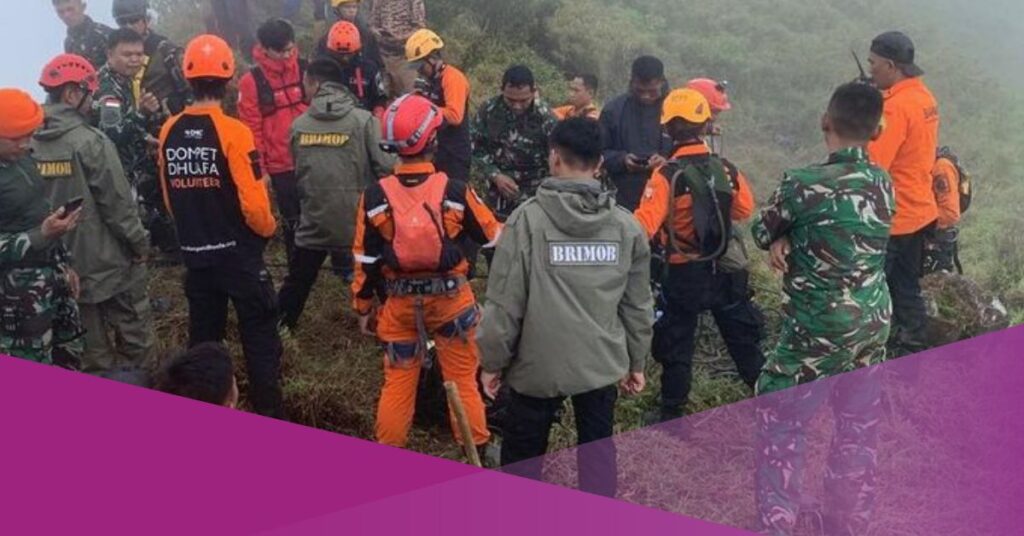
On Monday, January 19, the joint search and rescue team reported findings on Mount Bulusaraung, Pangkep Regency. The Head of the Makassar Class A Search and Rescue Office, Muhammad Arif Anwar, said the discoveries were made during intensive ground searches between the summit area and Post 9 of the climbing route.
“The SAR team found various items suspected to belong to the victims, ranging from personal documents, wallets, notebooks, to electronic devices,” Arif said. “Several aircraft parts, such as life jackets and fire signals, were also found near the aircraft’s fuselage.”
All items and aircraft components have been secured and documented, with coordinates recorded in line with standard procedures. Arif said the findings would assist in narrowing the search area and determining the next phase of evacuation.
Basarnas head Air Marshal Mohammad Syafii said the operation was entering a critical stage.
“The discovery of the victims’ belongings and aircraft parts shows that the joint SAR team is very close to crucial points,” Syafii said. “This is the result of hard work, discipline, and collaboration from all elements in the field.”
Syafii noted that weather conditions and terrain continued to challenge the operation. Thick fog, steep slopes, and rapidly changing weather have affected both aerial and ground movements.
“Despite the significant challenges, the joint SAR team continues to work optimally, prioritising personnel safety,” he said. “The operation will continue professionally and meticulously until the entire process is complete.”
cover: Basarnas Makassar