The Law and Human Rights Ministry and the Bali Immigration Office will begin issuing a Do’s and Dont’s cards with lists of guidelines and banned behaviours for tourists to stop foreign tourists from acting rowdy while visiting Bali. Tourists will receive the card at the I Gusti Ngurah Rai International Airport.
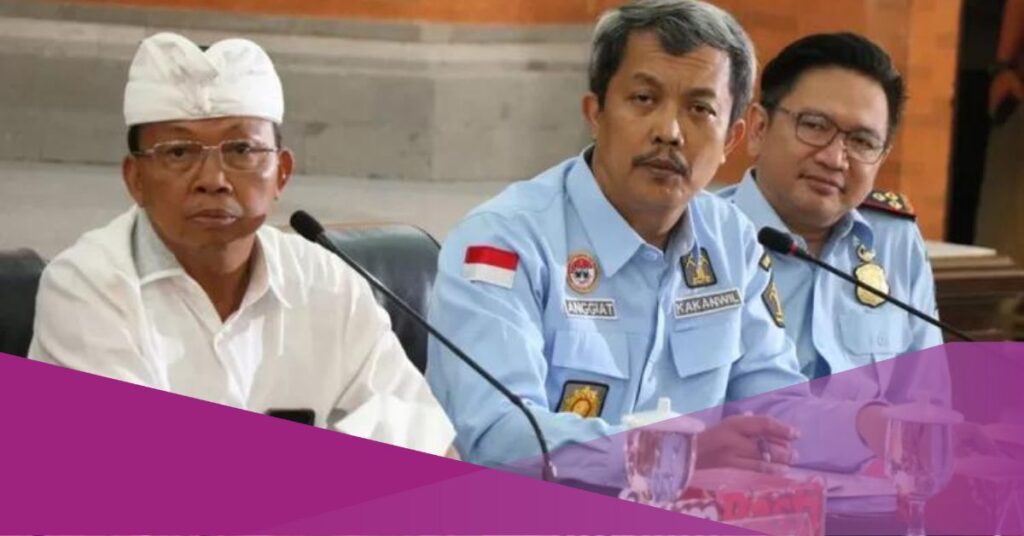
Anggiat Napitupulu, the director of the Bali Province’s Law and Human Rights Ministry, urged locals to report foreigners who engage in undesirable behaviour.
The immigration office would first distribute 1,000 Do’s and Dont’s cards with 12 guidelines for foreigners and eight strictly prohibited actions in Bali.
After recent incidents involving disrespectful foreigners that made national news headlines, Anggiat claimed that this was necessary to properly inform tourists from other countries about local laws and customs which is why the Bali government has came up with the Do’s and Dont’s cards.

Do’s and Don’ts Card
After passing the identification check and receiving an immigration stamp, the Do’s and Dont’s cards will be added to travellers’ international passenger passports. The first phase’s wording on the Do’s and Dont’s cards is in English, and it has a more straightforward, shorter message to make sure that it will be easy to understand by any foreigners.
Anggiat explained that the Do’s and Dont’s cards would eventually also be made in four languages: Japanese, Mandarin, Indian, and Russian. The decision is based on the number of visitors from the nations mentioned above, who make up the majority of tourists that travel to Bali.
The restrictions and requirements align with Bali Governor Circular (SE) No. 4/2023 about the New Order for foreign visitors in Bali.
The Do’s and Dont’s cards has the following information:
Obligation (the Do’s)
- Honouring the sanctity of temples and sacred religious symbols.
- Respecting customs, traditions, arts, and culture, as well as the local wisdom of the Balinese community.
- Wear gracious, reasonable, and appropriate clothing when visiting holy places, tourist attractions, and public places and during activities in Bali.
- Act cordially in sacred areas, tourist areas, restaurants, shopping areas, highways, and other public places.
- Accompanied by a licensed tour guide when visiting tourist attractions as they hone the understanding of natural conditions, customs, traditions, and local wisdom of the Balinese people.
- Performing foreign currency exchange at authorised money changer (KUPVA) providers, both banks and non-banks, marked with a license number and a QR code logo from Bank Indonesia.
- Make payments using the Indonesian Standard QR Code.
- Making transactions using the Rupiah currency.
- Drive in compliance with the laws and regulations in Indonesia and have a valid international or national driving license, follow traffic laws, dress modestly, wear a helmet, and not operate vehicles under the influence of alcoholic beverages and/or illegal drugs.
- Use official four-wheeled or two-wheeled transportation under the auspices of a business entity or motor vehicle leasing association.
- Staying in legal accommodation business places that have permits under the provisions of the laws and regulations.
- Comply with all special provisions/rules for each tourist attraction and activity.
What’s Prohibited (the Don’ts)
- Entering the central and middle courtyards of holy places or sacred places such as temples and pelinggih, except to pray by wearing traditional Balinese clothing.
- Climbing any sacred tree.
- Behaviour that desecrates holy places and sanctified places, temples, pratima (sacred temple objects), and religious symbols, such as climbing sacred buildings and taking pictures in immodest clothes or, worse, without clothes.
- Littering and polluting lakes, springs, rivers, seas, and public places.
- Use single-use plastics such as plastic bags, polystyrene (styrofoam), and straws.
- Expressing harsh words, impolite behaviour, being rowdy, and acting aggressively towards state officials, government, local communities, and fellow tourists directly or indirectly through social media, such as spreading hate speech and hoaxes.
- Working and or conducting business activities without having official documents issued by state officials.
- Engaging in illegal activities that exploit the local Bali flora and fauna, cultural artefacts, sacred objects, and trading illegal goods, including illegal drugs.
Interested in this topic? Check out our other articles from Social Expat:
- Bali Regional Police Apprehended Seven Russian-Uzbek Drug Network Members
- Indonesian Family Involved in an Altercation with Russian Tourist in Bali