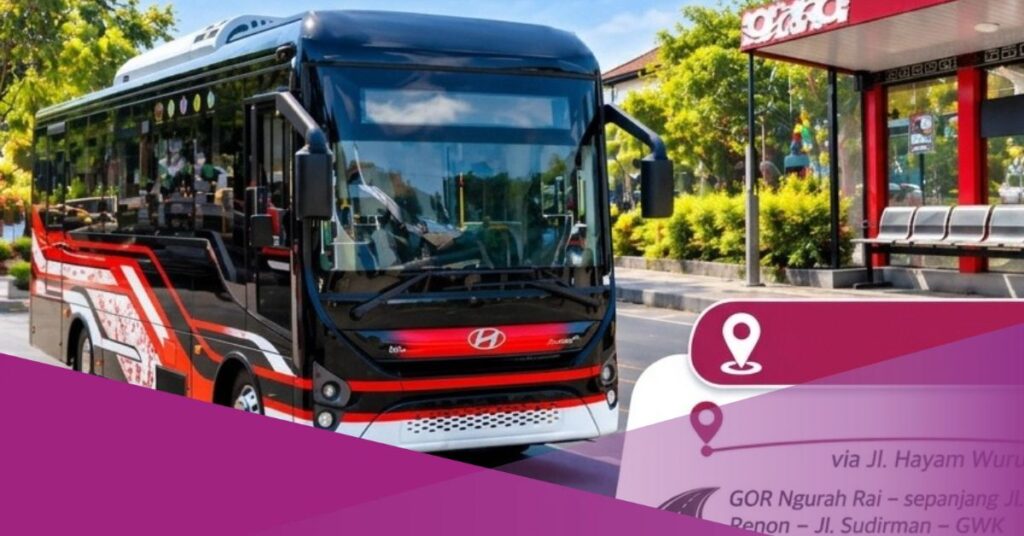
The Bali Provincial Government is offering free rides on Trans Sarbagita electric buses for one year as part of its efforts to encourage residents to use public transport and reduce reliance on private vehicles.
Bali Governor Wayan Koster announced the initiative during a trial operation of the electric buses on Monday, 9 November 2026. The service connects GOR Ngurah Rai in Denpasar with the Garuda Wisnu Kencana (GWK) area in Badung.
The operational costs during the free-service period will be fully covered by the Bali Provincial Regional Budget (APBD), meaning passengers will not have to pay fares for the first year.
Koster introduced the slogan “Zero Emissions, Zero Noise, Zero Rupiah” to describe the main benefits of the new service.
“Zero Emissions—no air pollution. Zero Noise—no sound or disturbance. Zero Rupiah—no fare; it is free for passengers for one year, starting today,” Koster said after testing the electric bus, as reported by Bisnis.com.
According to the governor, introducing electric buses is part of the provincial government’s efforts to provide more environmentally friendly public transport while reducing air and noise pollution caused by conventional motor vehicles.
“You don’t need to reach for your wallet to board or alight. The environment becomes cleaner, and the public becomes healthier. This is also part of an educational effort to encourage people to switch from private vehicles to public transport,” he said.
Trans Sarbagita Electric Bus Routes: GOR Ngurah Rai to GWK
The initial fleet consists of 11 electric buses operating along the route between GOR Ngurah Rai in Denpasar and GWK in Badung. Ten buses will operate daily, while the remaining vehicle will serve as a backup.
The service follows the existing Trans Sarbagita Corridor 1, with several adjustments around Renon and central Denpasar.
Passengers travelling from GOR Ngurah Rai towards GWK will pass through Jalan Melati, Jalan Hayam Wuruk, the Renon Roundabout, Jalan Raya Puputan and Jalan Sudirman before continuing towards the GWK area.
For the return journey from GWK to GOR Ngurah Rai, the buses will travel along Jalan Cok Agung Tresna, Jalan Moh. Yamin, Jalan Raya Puputan, Jalan Hayam Wuruk, Jalan Kamboja, Jalan Angsoka, Jalan Melati and Jalan Pattimura.
The route provides a public transport connection between central Denpasar and the GWK area, which is located in the southern part of Bali.
Although the service is free, passengers are still required to tap an electronic payment card when boarding.
The system will not charge passengers during the free-service period but will record passenger numbers and help the government monitor usage during the trial.
How to Ride the Free Bali Electric Buses
Passengers can board the electric buses along the designated route between GOR Ngurah Rai and GWK. They must still tap an electronic payment card when boarding, even though no fare will be deducted during the one-year free-service period.
The Bali Provincial Government will fund the buses’ operational costs through the APBD. The initiative is intended to make public transport more accessible while encouraging residents to incorporate it into their daily routines.
Koster said that changing public transport habits had become increasingly important as Bali faced limited road capacity and growing private vehicle use.
“We are moving towards becoming a modern society. In Japan and South Korea, many people rely on public transportation. Hopefully, the people of Bali will become increasingly interested. Like it or not, we must shift to public transport because road space is limited,” he said.