Bali has long been one of Southeast Asia’s most popular destinations for expatriates seeking a different pace of life. Known for its tropical climate, coastal scenery, and strong spiritual identity, the island attracts thousands of foreign residents each year.
For many people considering relocation, life in Bali offers a combination of affordability, outdoor living, and a close connection to community traditions. Compared with many Western countries, the cost of living on the island remains relatively accessible, particularly for housing, food, and transportation.
The island’s warm climate is another major attraction. Bali experiences two primary seasons: the dry season, which usually runs from April to October, and the rainy season from November to March. This year-round tropical weather appeals to beachgoers, surfers, remote workers, and retirees alike.
However, adjusting to life in Bali involves more than adapting to a new environment. Expats who choose to settle on the island are also expected to understand and respect the customs that shape everyday Balinese society.
Balinese culture is deeply influenced by Hindu spirituality, community traditions, and social etiquette. Daily life on the island is closely connected to religious ceremonies, local customs, and collective responsibilities within villages and neighbourhood communities.
For many Bali expats, learning these cultural expectations becomes an important part of building respectful relationships with local residents.
Understanding Bali Traditions and Sacred Customs
Respect for Temples and Sacred Spaces
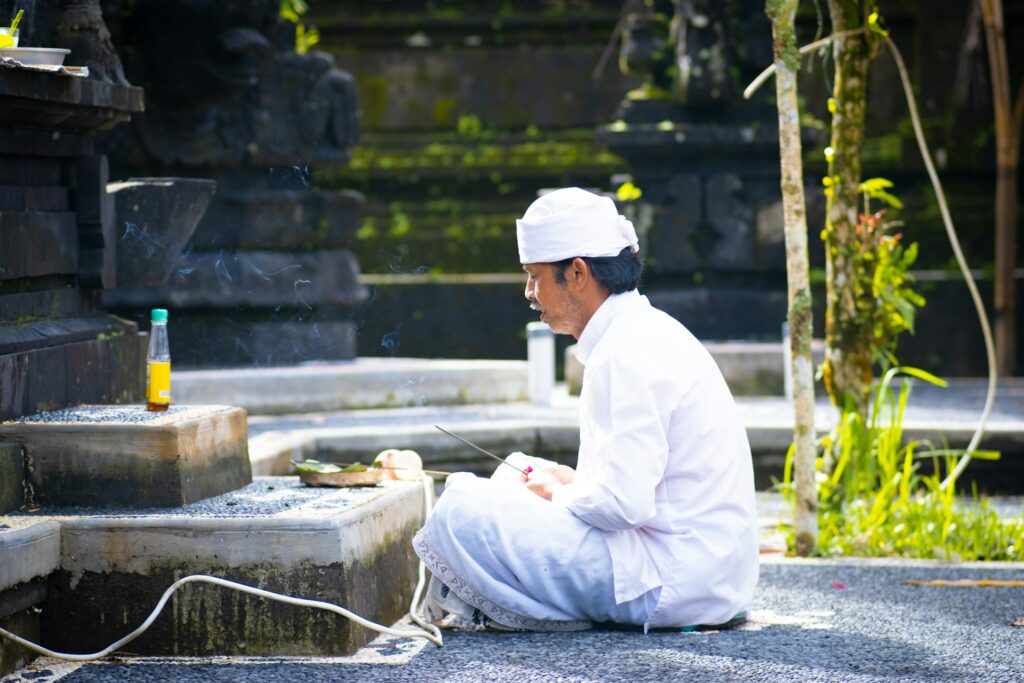
Temples hold a central role in Balinese Hindu life. Across Bali, visitors will find temples in villages, homes, beaches, mountains, and public spaces. One of the most important Balinese traditions is the Tri Hita Karana, which is a philosophy that emphasizes the importance of harmony between humans, nature, and the gods.
Foreign residents and tourists are expected to follow local customs when entering temple areas. Wearing a sarong and sash is generally required, while modest clothing that covers the shoulders and knees is considered essential.
Balinese people also observe spiritual rules regarding temple access. Women who are menstruating are traditionally asked not to enter sacred temple grounds as part of local religious beliefs.
Respectful behaviour inside temples is equally important. Visitors are expected to remain calm, avoid loud behaviour, and refrain from climbing or sitting on sacred structures.
Photography is usually permitted in many areas, but visitors are encouraged to ask permission before taking photographs during ceremonies or religious rituals.
Nyepi and the Importance of Silence
One of the most significant Bali traditions is Nyepi, often referred to as the Balinese Day of Silence.
Unlike New Year celebrations in many parts of the world, Nyepi is observed through silence, reflection, and meditation. For 24 hours, most activity across Bali stops completely.
Airports close, roads become empty, businesses shut down, and residents remain indoors. Foreign visitors and expats are also expected to follow these rules by staying at home or inside their accommodation.
Lights are kept low during the evening, noise is minimised, and outdoor travel is restricted.
Nyepi reflects the spiritual foundation of Balinese culture and highlights the island’s emphasis on balance, harmony, and reflection.
For many expats, participating respectfully in Nyepi becomes one of the most memorable cultural experiences during their time in Bali.
Ceremonies and Community Life
Religious ceremonies remain an important parts of balinese culture. Celebrations such as Galungan, Kuningan, and Ngaben regularly take place across Bali’s villages and temples.
Ngaben, the Balinese cremation ceremony, is considered a sacred event that symbolises the release of the soul. These ceremonies often involve colourful processions, prayers, and community gatherings.
Expats and tourists are generally welcome to observe ceremonies respectfully, but local residents encourage visitors not to interrupt processions or behave disruptively.
Using flash photography during ceremonies is often discouraged, particularly during moments of prayer or ritual.
Traditional Balinese villages, known locally as banjar, also play a major role in Balinese society. Community decisions, local events, and cultural responsibilities are often organised collectively through these neighbourhood groups.
For long-term Bali expats, understanding the role of the banjar can help create stronger relationships within local communities.
Balinese Culture and Everyday Etiquette
Respecting Canang Sari Offerings
One of the most recognisable symbols of Balinese culture is the canang sari, a daily offering made from flowers, leaves, and incense.
These offerings are placed outside homes, shops, temples, and streets as expressions of gratitude and prayer.
Visitors unfamiliar with Bali traditions may accidentally step on them, particularly in busy tourist areas. Local residents generally appreciate when foreigners remain aware of these offerings and avoid disturbing them.
Although small in size, canang sari represents an important spiritual practice in daily Balinese life.
Dress and Behaviour in Public Spaces
While Bali is known internationally for tourism and beach culture, modesty remains important in many parts of the island.
Swimwear is considered acceptable at beaches and resort areas, but wearing revealing clothing in villages, markets, or religious locations may be viewed as disrespectful.
Balinese society also values politeness and calm social interaction. Smiling, greeting others politely, and speaking respectfully are important aspects of everyday communication.
Public displays of affection are generally approached conservatively, especially in traditional communities and sacred spaces.
Another commonly observed custom involves the use of hands during social interaction. In Bali, the right hand is traditionally used when giving or receiving items, while the left hand is considered impolite in formal exchanges.
These small cultural details often shape first impressions between visitors and local communities.
Challenges Faced by Bali Expats
Adjusting to Cultural Differences
For many foreign residents, adapting to Balinese customs can initially feel unfamiliar. Daily routines, ceremonial schedules, and spiritual practices may differ significantly from life in Western countries.
Traffic disruptions caused by religious processions, regular temple ceremonies, and village events are common parts of life on the island.
Expats who approach these differences with patience and openness often find it easier to integrate into local communities.
Learning basic Indonesian phrases and understanding local etiquette can also improve communication and daily interactions.
Balancing Tourism and Local Culture
As Bali continues to develop internationally, discussions surrounding tourism, local identity, and cultural preservation have become increasingly important.
Many Balinese residents continue to emphasise the importance of respecting local traditions amid rising visitor numbers and foreign investment.
Authorities and community leaders have repeatedly encouraged tourists and expats to follow cultural guidelines designed to preserve the island’s spiritual and social balance.
For long-term residents, respecting local customs is not only about avoiding offence but also about contributing positively to community life.
Why Understanding Balinese Culture Matters
Life in Bali, Indonesia, offers more than beaches and tropical scenery. The island’s identity is closely tied to spirituality, tradition, and community relationships.
For expats, understanding these customs can create a more meaningful experience while helping build mutual respect with local residents.
Balinese culture continues to shape daily life across the island, from temple ceremonies and community gatherings to simple acts of politeness and respect.
Those who take time to understand Bali traditions often gain a deeper appreciation for the island beyond its tourism image.
People Also Ask About
What should Bali expats know about Balinese culture?
Expats should understand local customs, temple etiquette, ceremonies, dress standards, and community traditions to live respectfully in Bali.
Why is Nyepi important in Bali?
Nyepi is the Balinese Day of Silence and represents reflection, spiritual cleansing, and balance within Balinese Hinduism culture.
Can foreigners enter temples in Bali?
Yes, but visitors must wear appropriate clothing, follow temple rules, and behave respectfully in sacred areas.
What are canang sari offerings in Bali?
Canang sari are daily flower offerings used in Balinese Hindu practices as expressions of gratitude and prayer.
What challenges do expats face in Bali?
Expats may experience cultural adjustment, language barriers, ceremonial schedules, and differences in local customs and social expectations.