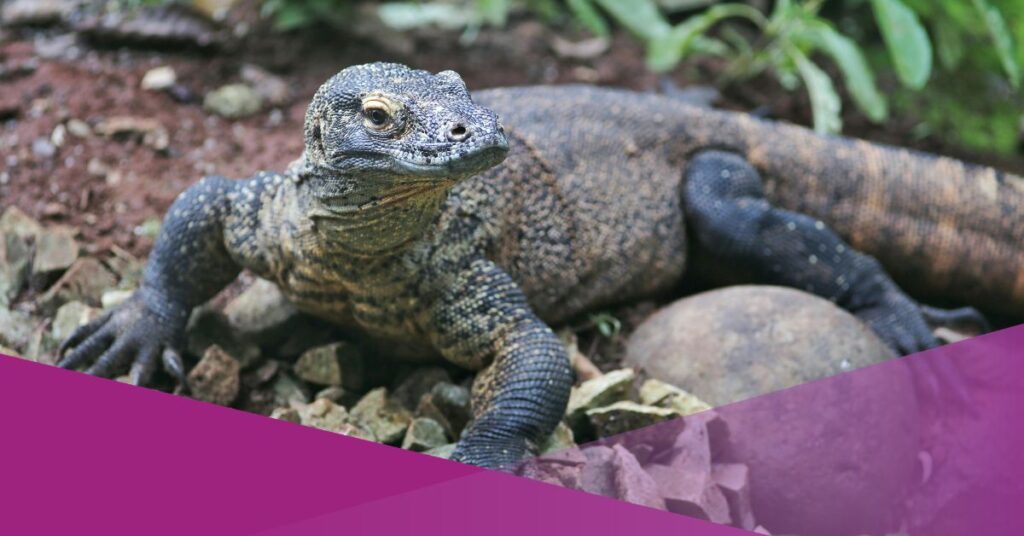
Police have uncovered an international smuggling network involving Komodo dragons from East Manggarai, East Nusa Tenggara, to Thailand.
The case emerged after officers arrested two suspects on Flores Island.
Head of the Criminal Investigation Unit of East Manggarai Police, First Inspector Ahmad Zacky Shodri, said the operation was carried out in coordination with the East Java Regional Police.
“This case is a development of the Komodo dragon theft case that occurred in 2025,” Ahmad said when contacted from Kupang on Thursday, 9 April 2026.
Authorities identified the suspects as Ruslan and Junaidin Yusuf. Both are believed to be part of a wider wildlife trafficking network.
“The two suspects are suspected of being part of the distribution chain in an illegal wildlife trade network spanning regions and even internationally,” Ahmad said.
Police found that one suspect had purchased a Komodo dragon from the Pota area in East Manggarai. Officers later arrested one suspect and transported him to Surabaya. The second suspect surrendered after three days.
“He surrendered because he was afraid,” Ahmad said.
Investigators said the animal was sold for Rp5 million before being sent to Surabaya through a broker who remains at large.
Smuggling route leads to Thailand through Surabaya transit
Police confirmed that the Komodo dragon was intended for shipment to Thailand. Authorities believe the group planned to capture more animals.
“The first one captured was a male Komodo dragon, and it is possible they wanted to capture another to pair them up,” Ahmad said.
Officers also revealed that the suspects damaged surveillance equipment during the capture.
“When capturing the Komodo dragon, they even destroyed the CCTV cameras belonging to the BKSDA officers so their actions would not be detected and they could set traps,” he said.
Further investigation by the East Java Regional Police showed that Surabaya was used as a transit point. The animals were moved through several locations before being prepared for international shipment.
“The Komodo dragons are sent to the Sukoharjo area of Jakarta, then on to Medan so they can be immediately shipped to buyers in Thailand,” said Senior Commissioner Roy Hutton Marulamrata Sihombing.
Police stated that Surabaya was not used as a permanent holding location but as part of a wider distribution route. Authorities are now working with the Ministry of Forestry to trace the network, including possible links to the wildlife market in Thailand.
Syndicate methods, profits, and conservation concerns
The investigation revealed that the syndicate had been operating since 2025. Police recorded at least 20 Komodo dragons captured and sold between 2025 and March 2026. Seventeen animals were reportedly sent to Thailand, while three were seized before shipment.
The network used juvenile Komodo dragons measuring about 43 centimetres. The animals were transported using modified PVC pipes.
“When smuggling the Komodo dragons to Surabaya, they used PVC pipes because the Komodo dragons they smuggled were still young,” said AKBP Hanif Fatih Wicaksono.
The pipes were fitted with air holes to allow the animals to breathe during transport.
Authorities said the price of a Komodo dragon increased significantly along the supply chain. At the capture stage, one animal was valued at around Rp5.5 million. In Thailand, the price reached approximately Rp500 million.
“This price is based on the agreement between the two parties. If fuel prices rise, the price of Komodo dragons will likely also rise,” Hanif said.
Police have named 11 suspects linked to the case. Some are also involved in trafficking other protected species. Total profits from the network are estimated at Rp10 billion.
Officials warned of the ecological risks linked to the trade.
“Komodo dragons are top predators that regulate the balance of the ecosystem. If they become extinct, the ecosystem will be disrupted,” said Ahmad Munawir from the Ministry of Forestry.
Authorities confirmed that the species is listed as endangered and protected under international conservation agreements. Investigations into the wider network are ongoing.