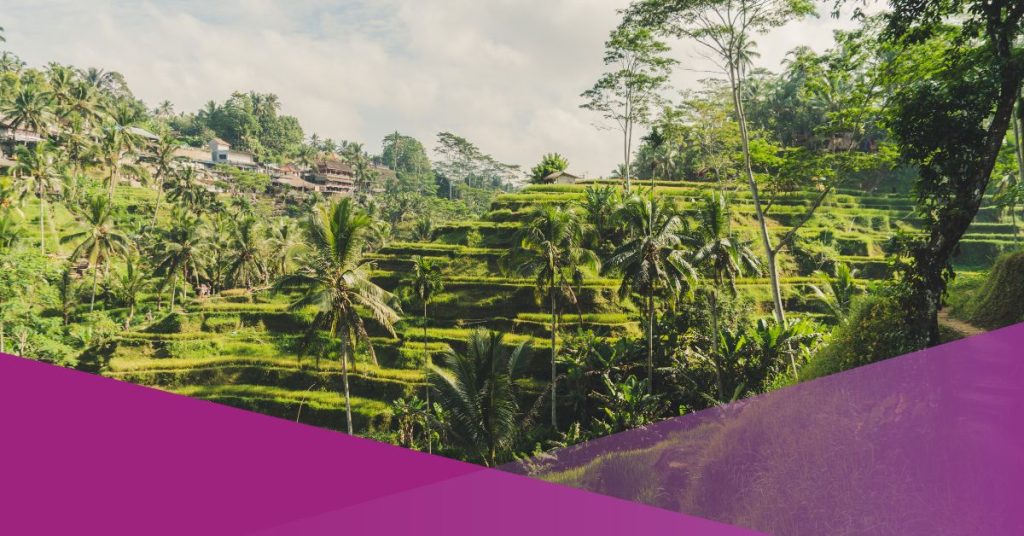
Other than beaches, Bali is also famous for its vast expanse of rice fields. The most popular tourist spot is Tegallalang Rice Terrace, located 15km from Ubud. Have you ever wondered how is it even possible? Apart from Bali having 150 rivers that flow across the island that flourish the crops, Bali has one irrigation system called Subak. However, it’s not just a regular irrigation system, there’s a deep-rooted culture that works hand-in-hand with it. Here’s everything you need to know about Bali’s Subak Culture.
Historical Tradition from the Year 994
Yup! You are reading that right. The historical inscription records that in 994 AD there was a complex irrigation tunnel excavation and was equipped with a network of canals that were able to directly distribute water to the rice fields. This means Subak tradition and culture have lasted for more than 1000 years.
From the People For the People
As unique as it sounds, Bali’s Subak complex irrigation system is not the order of the king, but the fruit of the hard work and cooperation among the villagers. Because the farmers depend on a good irrigation system, they form a joint irrigation system or what is known as Subak. This unique system has been passed down from generation to generation for more than a thousand years, the results of which we can still enjoy through the beautiful views of the terraces and rice fields in Bali today.
How Does It Actually Work?
Through the Subak system, each farmer’s rice field is irrigated from the same dam. Each farmer is a member of the Subak, and the head of the Subak called Klian Subak is elected by the members. Subak is connected to the Masceti Temple or the mountain temple which is under two lake temples. The temples are Batu Kau Temple which regulates irrigation in the west and Ulun Danu Temple which regulates irrigation in the north, east and south.
Pura Air holds a festival every 105 days, corresponding to the 105-day rice growing season in Bali. This cycle also marks the opening and closing times of canal floodgates where planting has been established and water has been allocated efficiently and fairly. Every decision related to rice planting will be discussed in the Subak deliberation. In this forum, members will also decide when to start planting. Farmers will then start planting sequentially every 10 days. Each Subak is connected to the rice fields it flows through. Meanwhile, other land or known as moor uses rainwater as its water source.
Based on Tri Hita Karana
Subak is a unique culture as well as a manifestation of the Balinese Tri Hita Karana cosmological doctrine which combines sacred traditional values with a highly organized system. Subak is a small example of the original Balinese belief that humans must always maintain a harmonious relationship with God, fellow human beings, and the universe in their daily lives.
All in all, Subak is a humble ancient tradition yet still works very well with modern civilisation. Share it with your friends if you find this article fruitful!