Indonesia has a rich cultural heritage, as it is home to many well-preserved customs that come from hundreds of regional ethnic groups. The term “cultural heritage,” according to UNESCO, refers to customs or living expressions that have been passed down from one generation to the next. Here we listed 12 UNESCO’s Intangible Cultural Heritages from Indonesia.
Keris, 2008
Keris is a traditional blade-type weapon from Java that serves a number of cultural purposes. Due to its non-symmetrical base and twisting edges, the shape is identical and can be clearly identified from other pointy objects. It is recognized and included on UNESCO’s list of masterpieces of intangible cultural heritage.
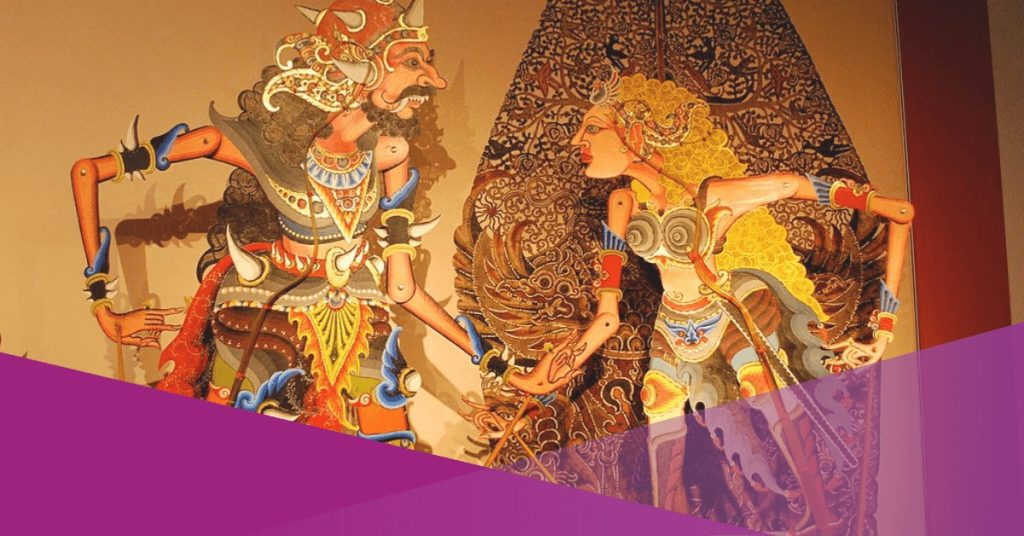
Wayang Puppet Theatre, 2008
People who have travelled across Java Island may be familiar with the Wayang Puppet Theatre. It is a traditional storytelling technique that makes use of the shadows that puppets cast against a transparent screen that is lit from behind. The puppet master conducts the show while playing the narrator and voice for the puppet characters, with gamelan music playing in the background.
Batik, 2009
Batik is a high-valued, exquisite traditional clothing product made from fabric painted with a night candle liquid using a canting. The term “batik” itself is probably derived from the Javanese word “ambatik,” which means “a cloth with small dots.” Since batik was named one of UNESCO’s Masterpieces of Intangible Cultural Heritage in 2009, it has gained more recognition as the best illustration of traditional Indonesian attire abroad. We already made an article about batik here.
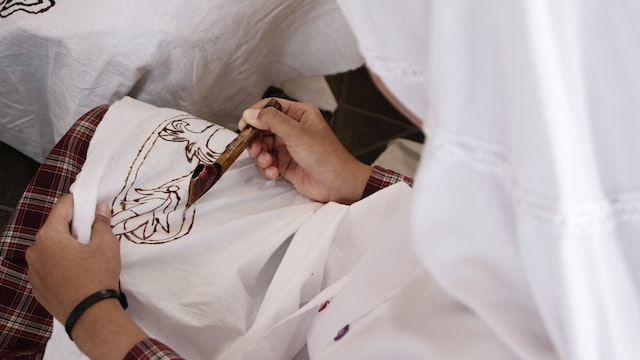
Education & Training in Batik, 2009
In addition to the batik itself, UNESCO has recognized Pekalongan’s Batik education and training as an intangible cultural asset. It was chosen in 2009 on the Register of Good Safeguarding Practices. The initiative was started in 2005 by the Batik Museum in partnership with the city’s educational authority with the main goal of raising youth knowledge of and appreciation for Indonesian batik’s cultural legacy, including its history, cultural values, and traditional skills.
Angklung, 2010
West Java is the place where the angklung, a traditional musical instrument, was created. You need to shake the bamboo instrument to create a tone and that is how it is traditionally played. Therefore, angklung should be played as an ensemble in order to produce a melodic harmony.
Saman Dance, 2011
Saman dance, which originated on the Gayo and was created by Sheikh Mohammad As-Samman in the 17th century, is one of the traditional dances from Aceh. Because no musical instrument is used to lead the rhythm, it is regarded as a rather distinctive traditional dance. Instead, the beat is created by hand and shoulder clapping as the dancers sit and only move their heads, torsos, and arms.
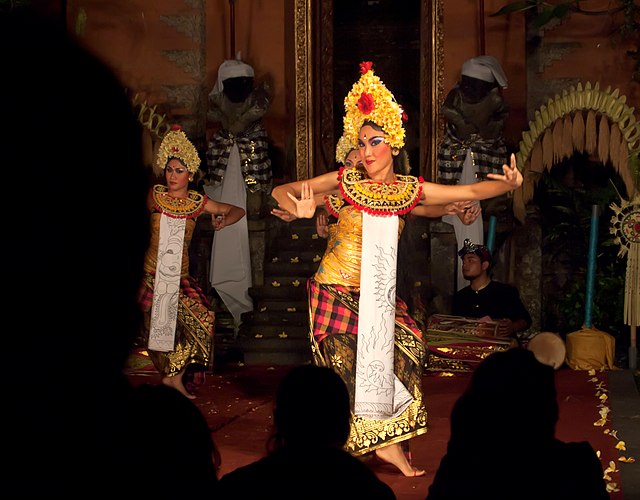
Three Genres of Balinese Traditional Dances, 2015
There are three types of Balinese traditional dances that have been acknowledged by UNESCO as being a component of Indonesia’s Intangible Cultural Heritage. These three types of music are semi-religious (bebali), sacred (wali), and intended for communal delight (bebalih-balihan).
Noken, 2012
Another UNESCO’s Intangible Cultural Heritages from Indonesia is Noken. It is a traditional Papuan bag that is carried on the head and fashioned of fiberized bark. This bag is used to carry daily supplies, just like other bags. Papuans typically use it to transport goods to the market as well as agricultural produce like veggies. For the inhabitants of Papua, traditional Noken bags represent a prosperous life, serenity, and fertility.
Pinisi, 2017
The Phinisi, which is also occasionally spelt pinisi, is a traditional sailing boat that derives from the South Sulawesi-based Bugis ethnic group’s maritime heritage. A pinisi ship has seven to eight screens on two poles, is 50 to 70 feet (15.24 to 21.34 meters) long, and has water lines that are between 34 and 43 feet (10.36 to 13.1 meters) long with a light load.
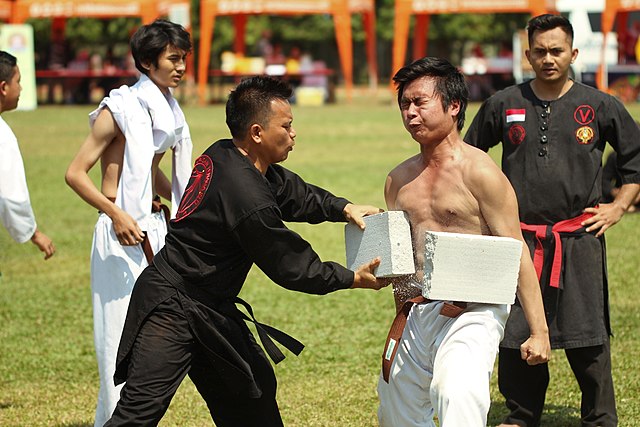
Pencak Silat, 2019
Pencak Silat is a type of traditional martial art that was developed in Indonesia’s Malay area (Sumatra and Java), and it later expanded throughout the archipelago. Traditions of Pencak Silat include mental, spiritual, and aesthetic components in addition to being a self-defense sport. Many aspects of art that promote synchronized body motions have a strong influence on Pencak Silat movements. The name “pencak,” is most well-known in Java, whereas “silat” is well-known in West Sumatra.
Pantun, 2020
Pantun typically has four lines, and the lettering is represented by the letters A-B-A-B. The initial two lines are referred to as sampiran, while the closing two lines are referred to as isi dan tujuan (content and purpose). Pantun is frequently used to express complex concepts and feelings, as well as occasionally to simply have fun interacting with others. In maritime Southeast Asia, it is regarded as the most widely used oral form and has been practiced in many areas for at least 500 years.
Gamelan, 2021
Gamelan is a type of traditional ensemble music that uses a lot of percussions and beautiful, hand-forged metal instruments from Javanese to Sundanese to Balinese. Xylophones, gongs, gong-chimes, drums, cymbals, string instruments, and bamboo flutes are essential components of gamelan ensembles.
There are a lot of things in Indonesia that you can discover, take in as cultural enjoyment, and even adopt as a way of life. Hopefully, this article will be useful to you finding out UNESCO’s Intangible Cultural Heritages in Indonesia! Don’t forget to check our other articles for more information about Indonesia!