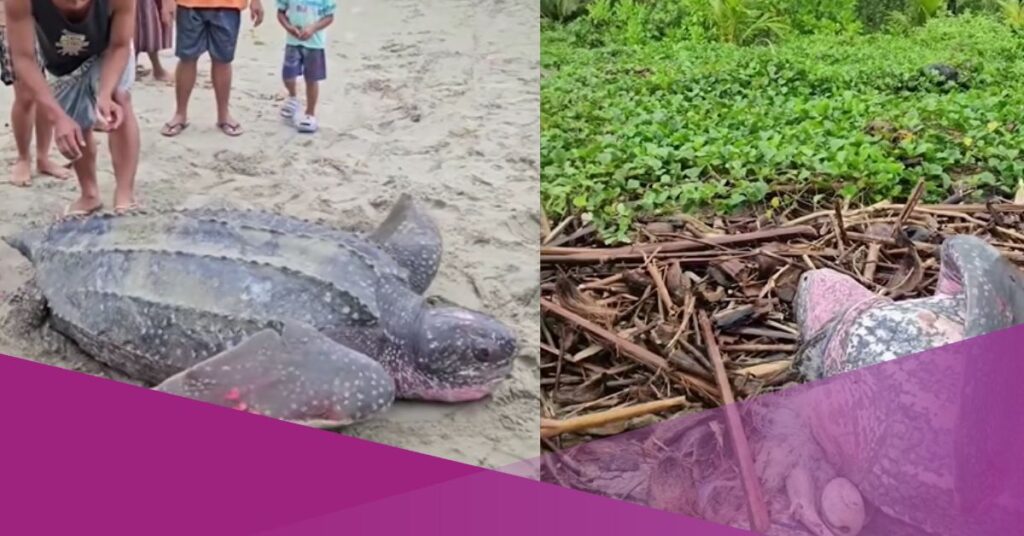
A rescue operation involving a protected sea turtle on the Mentawai coast has drawn attention to the dangers of marine pollution and the public health risks associated with consuming turtle meat.
The incident was documented in an Instagram post by Ivo Jefry Elika Putra, showing a turtle stranded on the shoreline in critical condition. The animal was found entangled in plastic waste and fishing nets, restricting its movement and threatening its survival.
Ivo and several colleagues acted quickly to remove the plastic rope wrapped tightly around the turtle’s body. The rescue focused on carefully freeing the animal without causing further injury. Once untangled, the turtle showed signs of recovery and was prepared for release back into the sea.
Beyond the rescue itself, the incident was used as an opportunity to educate local residents about the risks of consuming turtle meat. During the process, Ivo and his team urged residents not to take the animal for food, citing serious health concerns linked to heavy metal contamination.
The warning was based on previous incidents in the Mentawai Islands. In February 2018, a mass poisoning occurred in Taileleu Village, Southwest Siberut District, after residents consumed turtle meat during a traditional feast known as punen.
Dozens of people experienced symptoms including dizziness, vomiting, shortness of breath, and irritation in the throat. The incident resulted in three fatalities: two toddlers aged 2.5 and 4.5 years, and a 66-year-old elderly resident.
Health Warnings and Tensions During the Release Process
Ivo explained to residents that turtles are no longer considered safe for consumption. Medical information shared during the rescue highlighted that turtles can accumulate high levels of heavy metals, particularly Lead (Pb), through their diet and long lifespan.
“Finally, they accepted it well and abandoned their intention to take the meat, and we released the turtle back into the sea,” Ivo wrote in his statement.
However, the release did not proceed without difficulty. After returning to the water, the turtle swam upstream, drawing the attention of residents from a neighbouring hamlet.
Several individuals reportedly attempted to pursue the animal, despite repeated warnings about the risk of poisoning.
The situation de-escalated when the turtle changed direction and swam towards the estuary, moving out of reach. No further attempts to capture the animal were reported.
The incident underscores ongoing challenges in marine conservation in Indonesia, where environmental protection efforts often intersect with public health concerns and traditional practices.