A 10-year-old elementary school student, identified by the initials YBS, was found dead in Ngada Regency, East Nusa Tenggara, on Thursday afternoon (January 29, 2026). Police suspect the child died by hanging.
YBS was a fourth-grade student at a local elementary school.
He was found hanging from a rope tied to a clove tree near a hut where he lived with his grandmother. The hut is located in a garden area belonging to the child’s family.
A handwritten letter addressed to his mother was found near the scene. Local residents later reported the incident to authorities, who arrived to evacuate the body.
Letter and Discovery by Local Residents
The letter was written in the Ngada language, spoken by local communities in the regency. According to translations provided by authorities, the message conveyed a farewell to the victim’s mother.
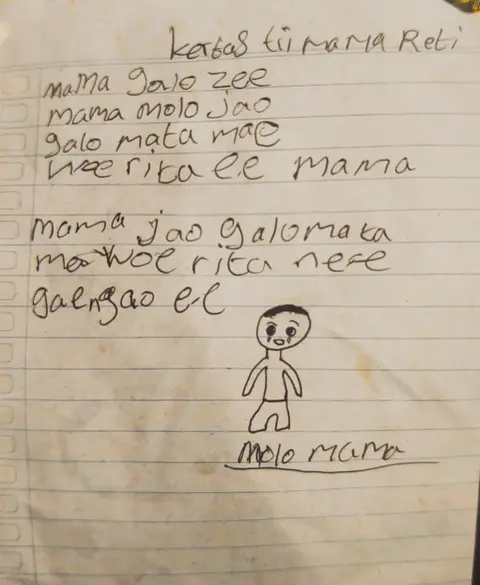
The letter read:
MAMA RETI’S PAPER
MAMA GALO ZEE
MAMA MOLO JA’O
GALO MATA MAE RITA EE MAMA
MAMA JAO GALO MATA
MAE WOE RITA NE’E GAE NGAO EE
MOLO MAMA
The meaning was interpreted as:
LETTER FOR MAMA RETI
MAMA, I’M GOING TO GO
MAMA IS LETTING ME GO (DIE)
DON’T CRY, MAMA
MAMA, I’M GOING (DIE)
MOTHER, YOU DON’T NEED TO CRY, LOOK FOR, OR MISS ME
GOODBYE, MAMA
The boy was found hanging from a clove tree approximately three metres from the hut.
Residents discovered the body while tending to livestock in the garden. After tying their animals, they approached the hut to inform the victim’s grandmother to monitor the livestock and then saw the child hanging from the tree.
Official Statement and Living Conditions
Jerebuu Sub-district Head Bernardus H. Tage said the clove tree was about 15 metres tall, and the rope used was approximately five metres long.
“The clove tree is about 15 metres tall. The rope is about five metres long,” Bernardus said on Friday (January 31, 2026).
He said the victim lived with his grandmother, identified as YS, who is around 80 years old. At the time of the incident, she was staying overnight at a neighbour’s house while helping crack candlenuts, a common informal livelihood activity in rural areas.
“His grandmother helped crack candlenuts at the neighbour’s house. She stayed overnight at the neighbour’s house. The victim slept at his parents’ house that night,” Bernardus said.
Police confirmed that the child had died before officers arrived at the scene.
Education Costs and National Context
The case has prompted renewed discussion about education access in Indonesia, particularly in rural and eastern regions where poverty rates remain higher than the national average.
Ubaid Matraji, National Coordinator of the Indonesian Education Monitoring Network (JPPI), said the incident reflects broader structural issues affecting low-income families.
“We are facing a situation where poverty is combined with the suffocating commercialisation of education,” Ubaid told Kompas.com on Tuesday (February 4, 2026).
Indonesia’s constitution mandates free basic education, and the Constitutional Court has ruled that public elementary schools should not charge fees. However, education observers say families often still face indirect costs, including learning materials and school-related contributions.
“This is a clear indication that our education system has not yet humanised people; instead, it burdens children with burdens they are not yet ready to bear,” Ubaid said.
East Nusa Tenggara is among Indonesia’s least developed provinces, with many families relying on subsistence farming and informal labour. Access to education, healthcare, and social assistance remains uneven across the region.