Indonesia has formally banned elephant riding tourism across the country, a move that conservation groups describe as a significant step towards improving animal welfare and reshaping wildlife tourism practices. The policy will be enforced more strictly from early 2026 and applies to all conservation institutions and wildlife-based tourist facilities nationwide.
The ban ends the long-standing practice of using elephants, including the Sumatran elephant, for riding and performances in zoos, safari parks, and wildlife tourism centres. The government has instructed operators to replace such activities with educational and conservation-focused programmes.
New Regulation on Indonesia Elephant Tourism
The prohibition is set out in Circular Letter No. 6 of 2025, issued by the Directorate General of Natural Resources and Ecosystem Conservation (KSDAE) under Indonesia’s Ministry of Forestry. The circular was signed on December 18, 2025, and took effect immediately, with stricter enforcement planned from 2026.
Under the regulation, elephant riding performances and tourism activities are no longer permitted at any conservation institution or tourist destination in Indonesia. Managers of wildlife facilities are required to cease riding operations and adjust their tourism models accordingly.
Indonesia is among the first countries in Asia to impose a nationwide ban on elephant riding tourism. The government has stated that the policy aims to strengthen animal welfare standards and reduce practices that place physical and psychological stress on elephants.
The ban has already affected several tourism operators. In Bali, Mason Elephant Park and Lodge announced the suspension of elephant riding activities following guidance from the authorities. Bali Zoo has also halted elephant riding performances since January 1, 2026.
@sociolifemedia Bor Sis harus tahu! Indonesia kini resmi melarang atraksi gajah tunggang di seluruh lembaga konservasi dan wisata satwa nasional 🐘🌿 Kebijakan ini diambil demi kesejahteraan satwa dan mendorong pariwisata yang lebih etis, edukatif, dan berkelanjutan. Bor Sis setuju gak nih dengan peraturan baru ini? Komen pendapat Bor Sis dibawah ya!✨ #PariwisataBeretika #PerlindunganSatwa #StopEksploitasiSatwa #KonservasiGajah #wisataberkelanjutan ♬ suara asli – Socio Commerce
Conservation Support and International Response
The policy has received backing from international animal protection organisations. More than 10,000 people from Indonesia, Australia, and New Zealand previously signed a petition calling for an end to elephant riding tourism in the country.
Suzanne Milthorpe, Head of Campaigns at World Animal Protection ANZ, said Indonesia’s decision sends a broader message to the region.
“Indonesia’s decision is a strong signal for a change in the direction of wildlife tourism in the Asian region,” Milthorpe said.
According to conservation groups, thousands of elephants across Asia remain involved in tourism activities. Elephants are highly intelligent and social animals with complex family structures. Animal welfare organisations argue that training methods, performances, and riding activities can lead to prolonged stress and behavioural changes.
Sumatran Elephant, Habitat Loss, and Oversight
The ban comes amid wider concerns over the future of the wild elephant population in Indonesia, particularly the critically endangered Sumatran elephant. Habitat loss caused by deforestation, agricultural expansion, and infrastructure development has significantly reduced natural living spaces for wild elephants in Sumatra.
The government has emphasised that wildlife tourism should not worsen pressures already faced by elephants in the wild. Through the circular, tourism operators are encouraged to focus on activities such as guided observation, conservation education, supervised feeding, and the study of natural elephant behaviour.
Oversight has been assigned to regional Natural Resources Conservation Agencies (BKSDA). In Bali, the BKSDA recorded 13 conservation institutions, five of which manage a combined total of 83 elephants.
Bali BKSDA Head Ratna Hendratmoko said institutions that fail to comply with the regulation could face administrative sanctions, including the revocation of operating permits.
Scientific studies have shown that elephants’ backs are not anatomically designed to support the repeated weight of humans. Continuous riding can result in spinal injuries, joint damage, and long-term health issues. Welfare groups also highlight the psychological impact of captivity and training practices that rely on restraint.
The Story of Elephants in Indonesia: From Sumatran Elephant to Borneo Elephant
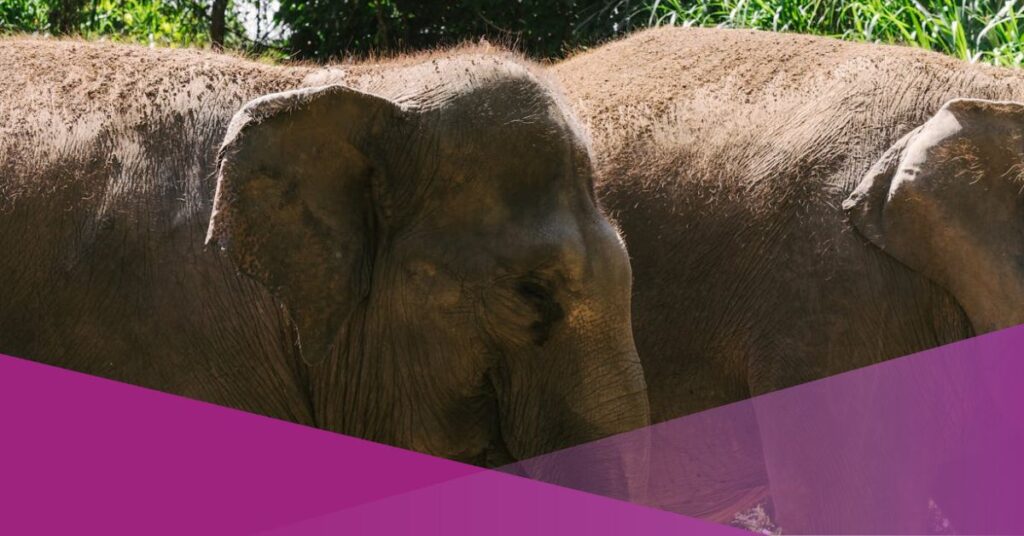
Indonesia is home to two subspecies of the Asian elephant (Elephas maximus): the Sumatran elephant and the Borneo elephant. Both subspecies face serious conservation challenges as a result of habitat loss, deforestation, and land-use change linked to plantations.
Elephants are the largest land mammal in Asia and play a critical role in maintaining forest ecosystems. In Indonesia, however, their populations have declined sharply over recent decades, placing them among the country’s most threatened wildlife species.
Asian Elephant Subspecies in Indonesia
The Asian elephant (Elephas maximus) has three recognised subspecies: Elephas maximus indicus, Elephas maximus maximus, and Elephas maximus sumatranus. Indonesia is home to two of these subspecies: the Sumatran elephant (Elephas maximus sumatranus) and the Borneo elephant, which inhabits parts of Kalimantan on the island of Borneo.
According to the International Union for Conservation of Nature (IUCN), the Sumatran elephant has been listed as Critically Endangered (CR) since October 2011. This status indicates that the subspecies faces an extremely high risk of extinction in the wild.
One of the most significant threats is habitat loss. Studies show that approximately 69.11 per cent of forest area considered potential habitat for Sumatran elephants has disappeared within a single elephant generation, estimated at between 50 and 75 years.
Sumatra, Deforestation, and Palm Oil Expansion
The Sumatran elephant population is found in several province across the island of Sumatra, including Aceh, North Sumatra, West Sumatra, Riau, Jambi, South Sumatra, Bengkulu, and Lampung. One of the most important remaining conservation areas is Way Kambas National Park in Lampung, which serves as a key refuge for the species.
Large-scale deforestation driven by agricultural expansion, particularly palm oil plantations, has fragmented elephant habitat across Sumatra. Forest conversion has reduced migration routes and increased contact between elephants and human settlements, often resulting in conflict.
As elephants lose access to food and water sources, they are more likely to enter plantation areas, where they face risks ranging from injury to retaliatory killing. Conservationists warn that without stronger protection of remaining forests, wild elephant populations in Sumatra will continue to decline.
Cover: Photo by Mikhail Nilov/Pexels