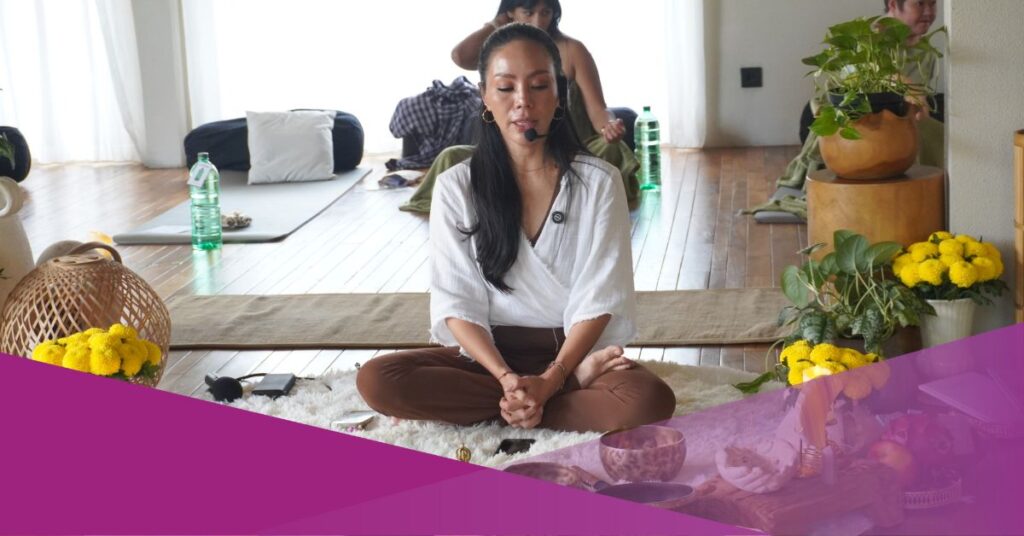
“Through years of discipline, reflection, and quiet recalibration, Mira Madjid learned that balance is not something to achieve, but something to return to—again and again.”
In this Social Expat exclusive, we sit down with Drg. Mira Madjid, MPH, Sp.Perio: a dentist, public health professional, and mindfulness practitioner whose inward journey reshaped how she lives and guides others.
Our conversation with Mira reveals how a woman trained in precision learned to honour pause, and how her experience made a path for many others in pursuing mindfulness.
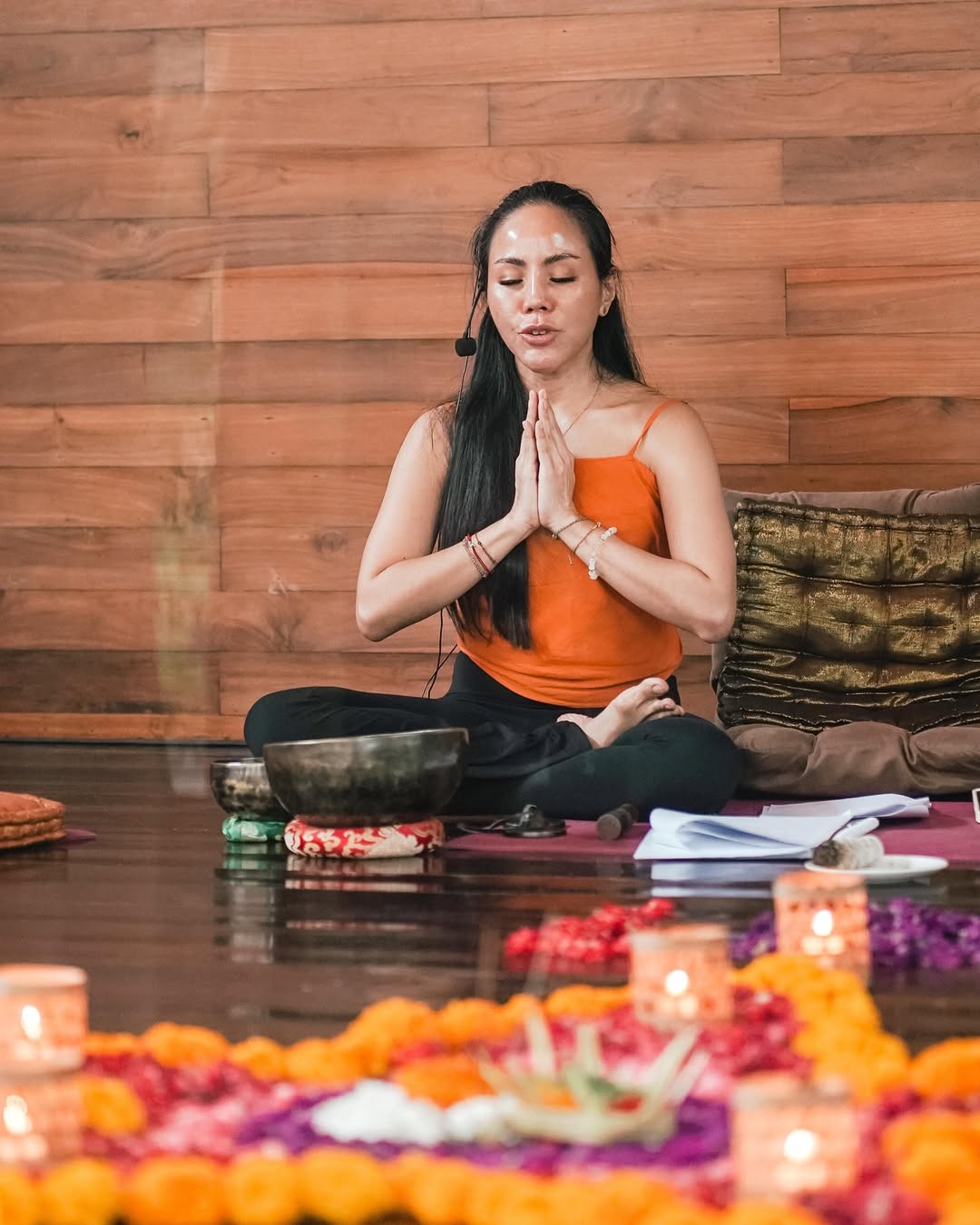
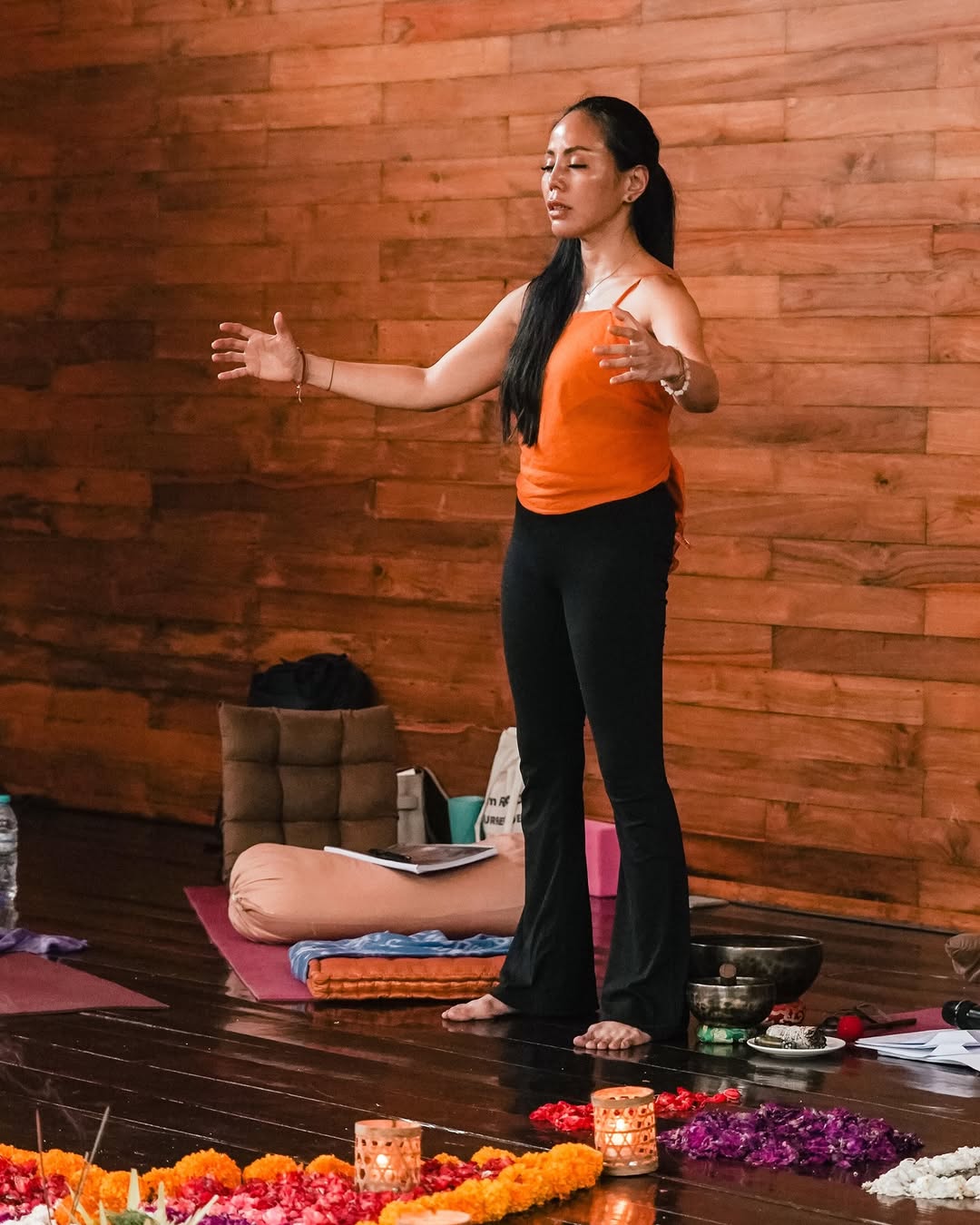
Hi Mira, can you take us back to the moment when yoga, meditation, and a slower, more mindful path first entered your life?
I have been practicing Ashtanga yoga for over fifteen years, and meditation for more than ten. For a long time, my yoga and meditation mirrored how I lived and worked: structured, committed, and achievement-oriented. About 5 years ago, however, I began to notice something subtle but important.
Despite being productive, outwardly sociable, and a high achiever, I felt increasingly numb. That realization marked a turning point.
How did you begin integrating nervous-system science, meditation, and trauma-informed practices into your work, particularly for high-performing professionals living under sustained pressure?
My personal experience of disconnection—despite long-term practice and professional achievement—made it clear that traditional approaches were incomplete for many people like me. I began studying nervous-system regulation, trauma-informed practices, and somatic approaches to understand why awareness and discipline alone often fail
to create lasting change.
High-performing professionals are not lacking motivation or intelligence. Many are living in a constant state of sympathetic activation—functioning, achieving, and coping, but rarely settling. By integrating nervous-system education, breathwork, meditation, gentle somatic practices, and reflective journaling through structured questions, I help people restore a felt sense of safety first. From that place, reflection, insight, and transformation become sustainable—not forced.
How do you personally see the alignment between medical science and spiritual mindfulness?
For me, medical science and mindfulness meet at the level of the nervous system. Medicine explains what happens in the body under chronic stress, pressure,
and survival mode. Mindfulness, when practiced skillfully, allows us to experience and regulate those processes directly.
What was the personal or professional turning point that motivated you to found Bodhicitta Meditation Circle?
The turning point came with a simple but profound realization: many people living in big cities are not broken, but deeply disconnected. This disconnection often shows up as health challenges, emotional distress, and difficulties in relationships. What we are facing is not a lack of capacity, but a lack of connection—to ourselves, to others, and to our shared humanity.
In my own journey of nearly ten years of meditation practice, I encountered the concept of bodhicitta—a Sanskrit term originating from the Tantrayana Buddhist tradition. Bodhicitta refers to an awakened heart-mind: the aspiration to live with awareness and compassion, not only for personal growth, but for the relief of suffering in others.
This philosophy touched me deeply. For the past three years, bodhicitta has become my daily intention and prayer—to become better, to awaken, and to walk this path with humility and devotion, not only for myself, but for the benefit of others.
Although Bodhicitta Meditation Circle is not a religious space, this aspiration forms its heart. The community was created as an intimate and intentional environment where mindfulness is not treated as a performance or a productivity tool, but as a way to reconnect with our shared humanity. Here, the focus is on self-regulation, presence with awareness, and compassion toward all beings—without exception.
In 2025, Bodhicitta Circle was born with the intention of educating and gently reminding people—through social media, books, and community programs—of the importance of living with awareness in daily life.
That same year, we launched Lotus Sisterhood, a cross-subsidized program supported by Bodhicitta’s premium offerings. Through Lotus Sisterhood, we began monthly visits to Lapas Perempuan Bandung, serving women with life and death sentences. In these sessions, we guide participants in pranayama, breathing meditation (Anapanasati), and loving-kindness (Metta) meditation—supporting them to cultivate compassion within themselves and, when possible, to extend it even toward those who have caused them harm.
Through this model, personal healing directly supports collective healing. I believe this is how awareness truly grows—when no one is left to walk alone.
What gap did you see in the current mindfulness landscape that made you feel this kind of community needed to exist, and who does it truly mean for?
I noticed that much of the mindfulness space tends to speak in two extremes: either to beginners in very general terms, or to advanced practitioners in ways that feel disconnected from real, modern life.
Many high-performing professionals today are thoughtful, capable, and emotionally aware—yet deeply tired. They are not seeking more motivation or self-improvement strategies, but rather permission to slow down and reconnect with themselves.
Bodhicitta Meditation Circle was created for people who are functioning well on the outside, yet quietly disconnected within. It offers a space where mindfulness is not a performance or achievement, but a gentle return to presence and humanity.
Within this work, I place particular attention on women’s health. Many mindfulness spaces do not fully consider the uniqueness of women’s lives and their cyclical nature. Women move through natural rhythms—monthly and across different life phases—that influence energy, mood, and stress capacity. Our practices support women in listening to and regulating these rhythms with compassion, rather than pushing through them.
Mindfulness, in this sense, becomes a form of support—not another demand.
From your experience, what are the most essential reasons people should consider beginning a mindfulness journey, and what small, realistic shifts can help create meaningful change?

Most people come to mindfulness not because life is falling apart, but because something feels subtly off—despite external success.
The most essential reason to begin is not to become calmer or more productive, but to rebuild a relationship with one’s inner signals: breath, sensation, emotion, the body, and presence.
Meaningful change does not start with long retreats or perfect discipline. It begins with small, realistic shifts, such as:
- Learning to pause before reacting
- Noticing the body before trying to “fix” the mind
- Practising regulation before reflection
- Staying with emotions as they are, without running from, repressing, or judging them
These small acts of awareness, practised consistently, gradually restore a sense of safety, connection, and aliveness in everyday life.
In practical terms, how does Bodhicitta Meditation Circle support people in making real, lasting changes—not just during sessions, but in everyday life?
As stated, Bodhicitta Meditation Circle focuses on integration, not escape.
Our practices are designed to be carried into daily life—into work, relationships, parenting, and moments of pressure. We combine meditation, breathwork, nervous-system education, gentle somatic awareness, and reflective journaling so participants understand why they feel the way they do, not just what to do about it.
Beyond community programmes, I also teach mindfulness in school settings, introducing children and adolescents to emotional awareness, breathing, and self-regulation early in life. In clinical contexts, I offer meditation-based support to help regulate anxiety and sleep disturbances in chemotherapy patients—where gentleness, safety, and nervous-system care are essential.
Across all these spaces, the intention remains the same: to help people build a steady, compassionate relationship with themselves—one that holds in real life, not only during formal practice.
You recently launched your first meditation books. What inspired you to write them, and what do you hope readers will experience or take away?
Writing felt like a natural extension of my teaching and personal practice.
Last year, I released two Bodhicitta books as part of my intention to make mindfulness more accessible and grounded in daily life. The first, Breathe, Believe, Transform: A Beginner’s Guide to Mindful Living, is available in both English and Indonesian. It was written for those who are curious about mindfulness but may feel overwhelmed—offering simple, practical entry points that can be integrated into everyday routines.
The second is an Indonesian children’s book that gently introduces meditation through storytelling and simple guided practices. It reflects my belief that emotional awareness and self-regulation can be nurtured from an early age, in ways that feel safe and natural.
My hope is not that readers become “better meditators,” but that they feel supported to begin with small steps—less alone, more trusting of their inner wisdom, and at their own pace.
How do you hope mindfulness and compassion will shape the way professionals live, lead, and relate to themselves in the future?
For professionals, mindfulness offers a way to lead without burnout, to make decisions with clarity, and to act with compassion—while relating to themselves with greater honesty and care.
Self-compassion is not a weakness. It is what allows clarity, ethical leadership, and long-term sustainability to emerge over time. When individuals understand themselves and meet their inner experience with compassion, leadership becomes more than a role or responsibility—it becomes a contribution to humanity, grounded in genuine human connection.
Many of our readers would love to learn more about you and the Bodhicitta Meditation Circle. How can they connect with you and engage further with your work?
Readers can connect with me through Bodhicitta Meditation Circle on Instagram at @bodhicitta.circle, or via my personal account @mzmmadjid, where I share reflections, educational content, and information on upcoming programmes.
Engagement pathways include meditation circles, workshops, retreats, school-based mindfulness programmes, women’s wellbeing initiatives, clinical nervous-system regulation support, and professional or corporate offerings.
All of these initiatives are part of one ecosystem—where personal healing supports collective healing. This includes Lotus Sisterhood, which offers mindfulness and emotional support for women in prisons through cross-subsidised programmes.
At the heart of all this work is one intention: to cultivate awareness that is embodied, compassionate, and shared—so no one has to walk alone.