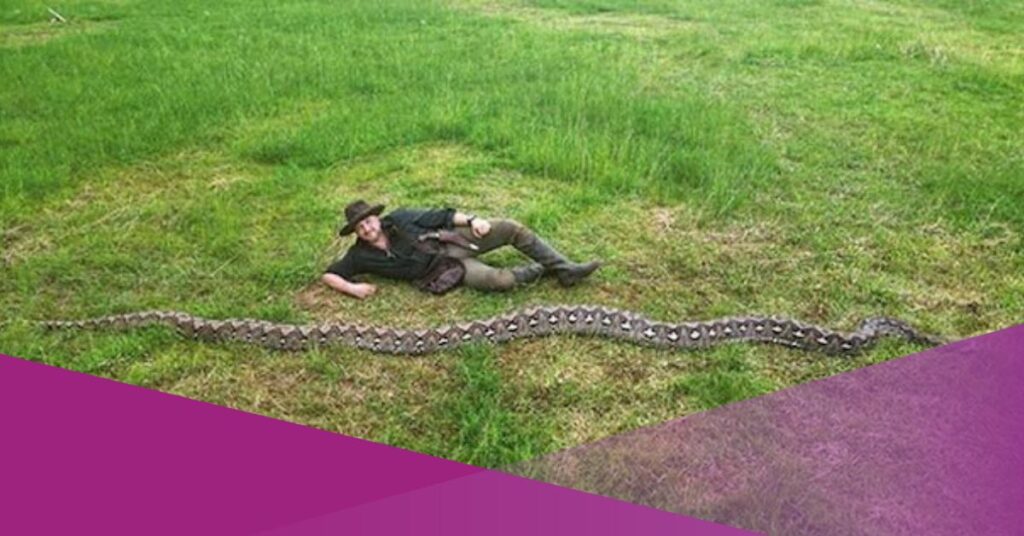
A giant female python found in Maros, South Sulawesi, has been officially confirmed by Guinness World Records (GWR) as the longest wild snake ever measured.
The snake, now known as Ibu Baron, measured 7.22 metres from head to tail when examined on 18 January 2026. The measurement was witnessed and verified by Guinness officials, making it the longest scientifically documented wild snake to date.
Ibu Baron is a reticulated python (Malayopython reticulatus), the longest snake species in the world. If stretched across a standard FIFA football goal, her body would almost reach from one post to the other.
Guinness noted that if the snake were fully relaxed under anaesthesia, she could be at least 10 per cent longer. That would place her length closer to 7.9 metres. However, Guinness does not support anaesthetising animals unless required for safety or medical reasons, and therefore the official measurement remains 7.22 metres.
The snake is currently under the care of local conservationist Budi Purwanto in Maros. She was examined by licensed wildlife guide and animal rescuer Diaz Nugraha from Kalimantan, alongside Bali-based explorer and natural history photographer Radu Frentiu.
From Rumour to Record Holder
Nugraha and Frentiu travelled to Sulawesi after hearing local reports of an unusually large python. They wanted to see the animal themselves and ensure it was properly documented.
In addition to being measured with a survey tape, Ibu Baron was also weighed. She tipped the scales at 96.5 kilograms. According to the team, she had not recently consumed large prey. Had she done so, her weight would likely have exceeded 100 kilograms.
Ibu Baron was discovered in December 2025. Purwanto acted quickly after learning of her existence and removed her from the original finder to prevent harm. He has since rescued several other large snakes and placed them in spacious enclosures on his land.
In Maros, encounters between humans and large snakes are common. Big pythons are often viewed as a threat to livestock, pets, and people. Several fatal incidents involving pythons have been reported in Indonesia in recent years.
Although reticulated pythons are not venomous, they kill by constriction. This often leads residents to kill them on sight. They are also hunted for meat.
Nugraha said the human-snake conflict is becoming more frequent.
“The occurrence of these snakes is increasing because their habitat is shrinking and the availability of their natural food is decreasing, possibly due to poaching,” he said, as quoted by the Guinness World Records website.
“This means pythons are coming into more contact with humans than in the past.”
Lihat postingan ini di Instagram
Sebuah kiriman dibagikan oleh Guinness World Records (@guinnessworldrecords)
Reticulated pythons are also highly sought after in the illegal exotic pet trade. While most individuals grow to between three and six metres, the largest specimens are usually females.
In terms of weight, however, other snakes are heavier. Female green anacondas from South and Central America can weigh between 30 and 70 kilograms on average. After feeding or during pregnancy, some have reportedly reached 300 kilograms. Guinness recognises green anacondas as the heaviest snake species.
Before Ibu Baron, the longest scientifically measured wild reticulated python was a 6.95-metre female recorded in East Kalimantan in August 1999. Claims of longer snakes have surfaced over the years, but most lacked reliable documentation.