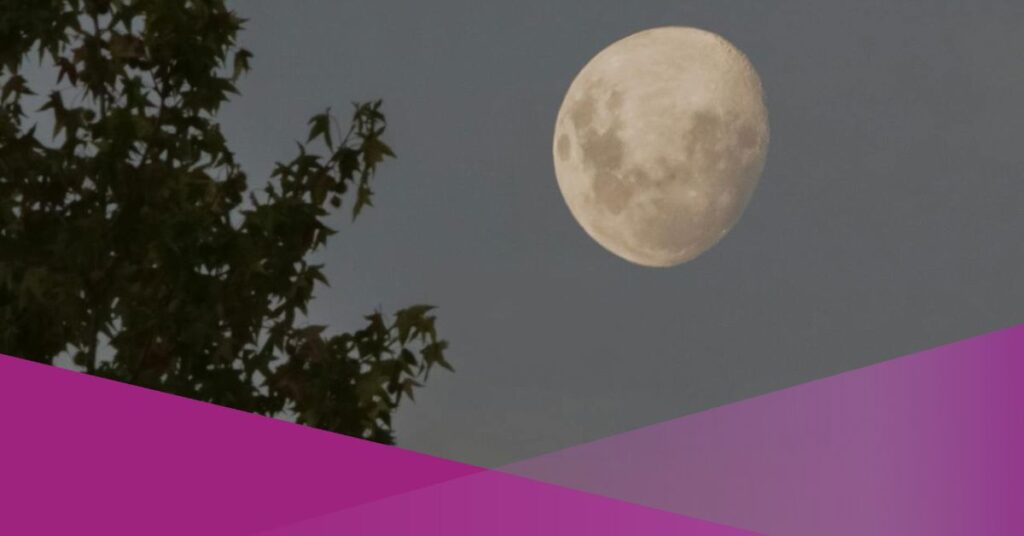
Just days after New Year fireworks faded from the sky, another celestial event is set to take centre stage. On 3 January 2026, people will be able to see the Wolf Moon, the first full moon of the year.
The Wolf Moon occurs when the Moon sits opposite the Sun, allowing its full face to reflect sunlight towards Earth. As a result, the Moon will appear bright and clearly defined throughout the night.
This year’s Wolf Moon will also coincide with a supermoon. During the event, the Moon will be closer to Earth than usual, reaching perigee.
This makes it appear slightly larger and brighter than an average full moon.
Thomas Djamaluddin, Principal Researcher at the Space Research Centre of the National Research and Innovation Agency (BRIN), confirmed the phenomenon.
“The Wolf Moon can be observed from dusk on 3 January until just before sunrise on 4 January,” he told Kompas.com on Thursday, 1 January 2026.
He added that the event would be visible across Indonesia. “The supermoon phenomenon on 3 January 2026 can be observed by Indonesians,” he said.
The Wolf Moon does not require special equipment. Like any full moon, it can be seen with the naked eye. However, viewing conditions will depend on the weather.
Cloud cover and rain may affect visibility, but Thomas said there remains a chance of clear skies during the night.
Lihat postingan ini di Instagram
Sebuah kiriman dibagikan oleh National Geographic Travel (@natgeotravel)
Why It’s Called the Wolf Moon and When to Watch
The name Wolf Moon comes from seasonal traditions rather than astronomy. According to Space, the term reflects the image of wolves howling during winter, when food was scarce and nights were long.
The Moon is also known by several other names. Some cultures refer to it as the Quiet Moon, the Centre Moon, or the Hard Moon.
The name Quiet Moon comes from the Assiniboine Indigenous people of Canada. Meanwhile, the Old Farmer’s Almanac describes the Centre Moon as a symbol of harsh winter conditions.
While the names vary, the phenomenon remains the same. The Moon’s surface will face Earth fully, making it easy to spot as long as skies are clear.
Globally, the Wolf Moon reaches its full phase at different local times. Observation times include 5:03 a.m. in New York, 10:03 a.m. in London, 7:03 p.m. in Tokyo, 6:03 p.m. in Beijing, and 9:03 p.m. in Sydney.
For Indonesia, the best time to start looking up is 5:03 p.m. Western Indonesian Time (WIB).
From early evening onwards, the Moon should rise and remain visible throughout the night. If weather conditions cooperate, the Wolf Moon will offer a calm and simple way to welcome the first full moon of 2026.